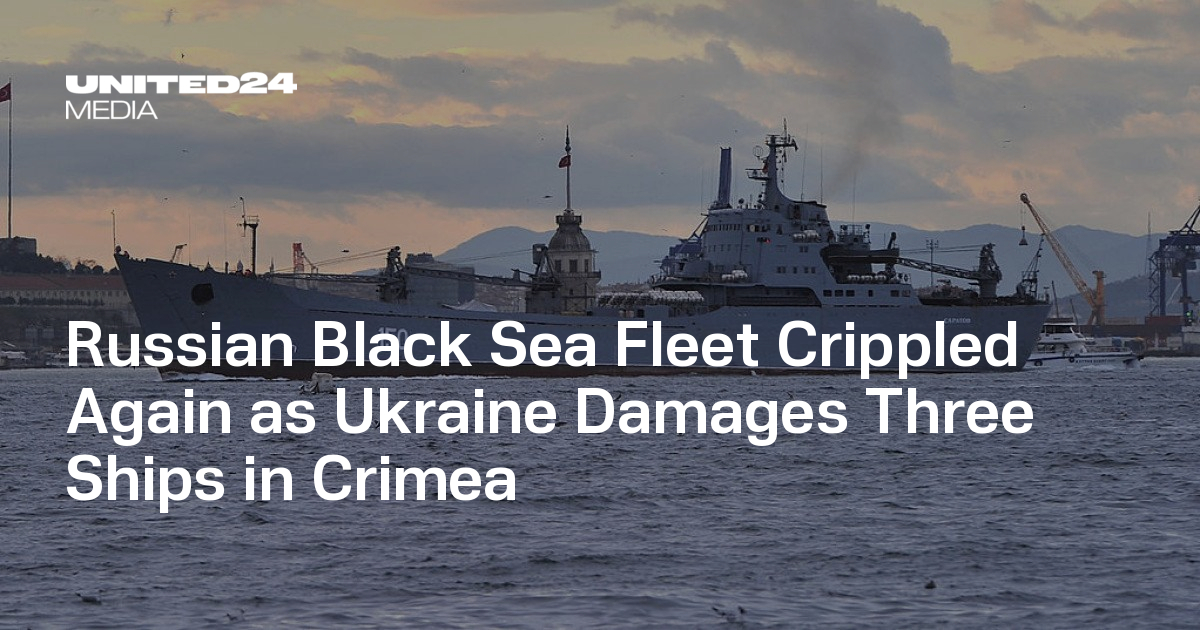
Ukraine’s SBU said it damaged three Russian military vessels in Crimea, including the large landing ships Yamal and Azov, and struck supporting radar, communications, and fuel infrastructure. The operation appears to further degrade Russia’s Black Sea Fleet logistics and force expanded defensive measures at other naval bases, including improvised anti-drone defenses in Kronstadt. The news is materially negative for Russian military capability and highlights escalating wartime risks across the Black Sea and Baltic theaters.
This is less about a single battlefield event and more about the acceleration of a structural denial campaign against Russia’s maritime logistics. The second-order effect is that every repair cycle now carries a higher probability of follow-on disruption, which raises the expected cost of keeping capital assets forward-deployed in contested basins and gradually degrades fleet readiness even when headline losses look modest. That dynamic is bearish for any Russian asset that depends on uninterrupted coastal logistics, fuel throughput, or military-industrial throughput tied to the Black Sea corridor.
The broader signal is that force protection burden is spreading geographically: if Moscow is forced to harden naval assets far from the Black Sea, it is effectively taxating its fleet with capex, manpower, and operational complexity. That tends to create a slow-burn advantage for Ukraine because asymmetric tools scale faster than fixed defenses; each new layer of protection is expensive, imperfect, and often redundant. For markets, the relevant implication is not just naval attrition, but a higher probability of intermittent shocks to Black Sea shipping insurance, grain routing, and energy-linked logistics premiums.
The contrarian angle is that near-term market impact may be overread if investors assume a linear escalation into broad Black Sea closure. Russia can absorb tactical losses for some time, and the real inflection only arrives if strike density forces persistent rerouting or materially reduces sortie rates over several months. So the trade is not to fade Russia risk outright, but to price a higher floor for disruption risk and a lower ceiling for any normalization in regional transport costs.
Watch the next 2-8 weeks for evidence that the campaign is expanding from military assets into dual-use logistics nodes; that is when the economic transmission becomes more investable. If damage remains episodic, the move in shipping and defense names should mean-revert; if it becomes systematic, insurers and shippers will reprice quickly, with the biggest move likely in lower-quality Baltic and Black Sea-exposed carriers.
AI-powered research, real-time alerts, and portfolio analytics for institutional investors.
Request DemoOverall Sentiment
strongly negative
Sentiment Score
-0.70
