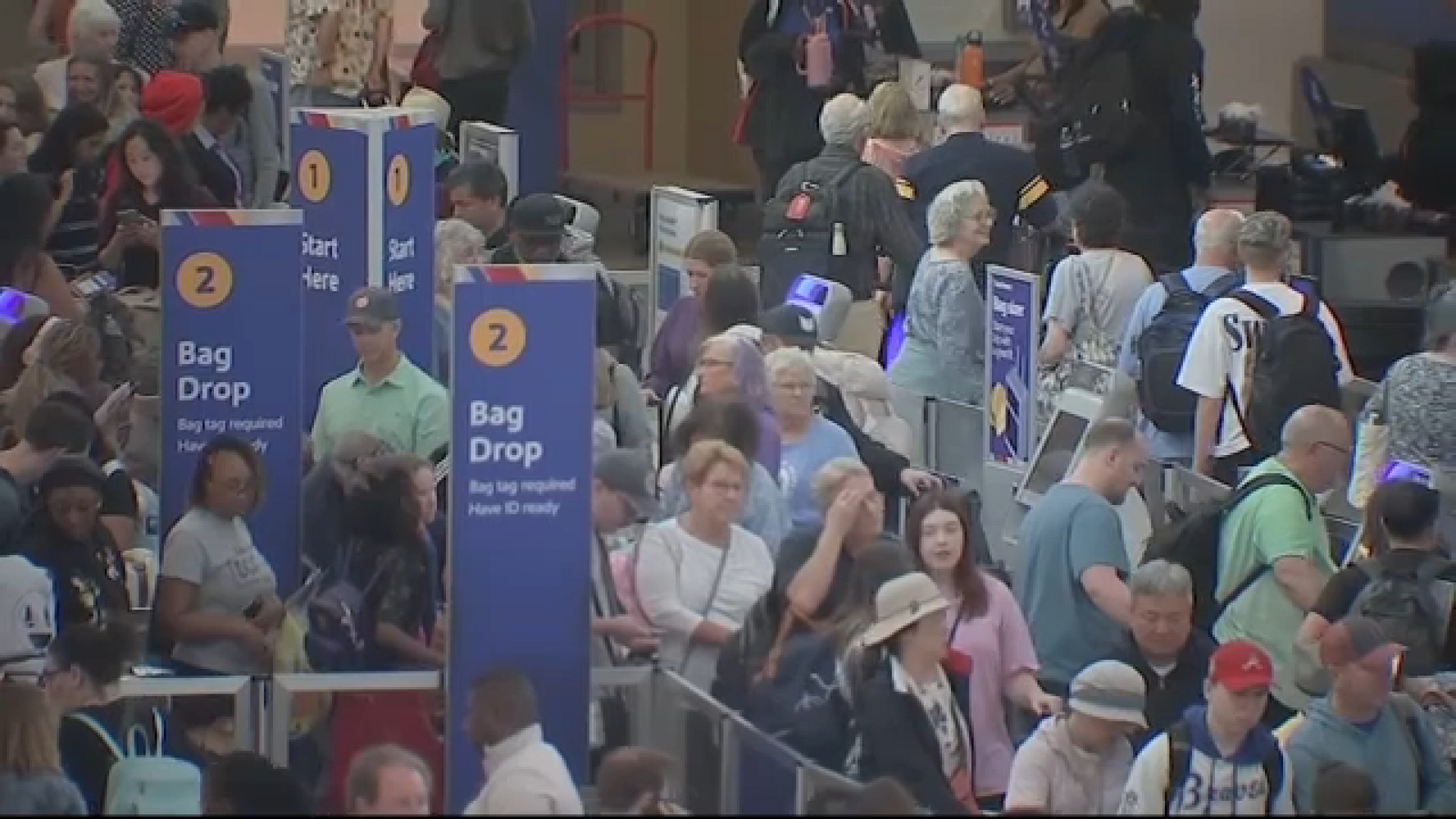
55% of TSA officers at Houston Hobby called out on Saturday—the highest single‑day national rate reported during the partial government shutdown—and roughly 60,000 TSA officers working during the shutdown will receive a zero‑dollar paycheck this week. CEOs of major airlines urged Congress to fund the Department of Transportation to restore pay as spring break drives >2 million travelers to Houston's Hobby and IAH, increasing the risk of longer lines, ground stops and schedule disruption. Operational and customer‑service pressure could hurt airline performance and punctuality in the near term but is unlikely to move broad markets unless the shutdown escalates further.
Operational fragility, not demand, is the immediate vector for earnings pressure: when checkpoints underperform, knock-on effects hit crew scheduling, turnaround times and aircraft utilization — each 1% drop in system-wide on-time performance can translate into 0.5–1.0 point of unit cost pressure over a quarter via increased overtime, rebooking and repositioning. Legacy carriers with tightly optimized banked schedules (American among them) are more sensitive to these micro-disruptions than carriers running looser point-to-point schedules because a single missed leg cascades through multiple markets and forces aircraft to operate sub-optimally for days.
Key catalysts live on two timelines. In days-to-weeks, spring break travel surges amplify the operational hit and will show up directly in weekly operational metrics and near-term revenue per available seat mile (RASM) prints; in weeks-to-months, federal funding resolution or legislation on backpay is the binary that can reverse pressure but may raise cash-payroll burdens via backpay liabilities. Tail risks include a protracted funding gap that shifts traveler behavior (higher cancellation rates, pullback in discretionary itineraries) and regulatory action against carriers for inadequate passenger accommodations, both of which would shift upside to incumbents with higher liquidity and robust recovery playbooks.
Consensus reaction will focus on headline throughput; the non-obvious opportunity is relative operational resiliency. Short-lived headlines get priced quickly; structural pain takes longer. If the shutdown resolves within 2–4 weeks, expect a sharp mean reversion in affected airline names; if it persists 6+ weeks, expect wider dispersion in market share and a re-rating of carriers with fragile schedule architectures.
AI-powered research, real-time alerts, and portfolio analytics for institutional investors.
Request DemoOverall Sentiment
mildly negative
Sentiment Score
-0.30
Ticker Sentiment
