



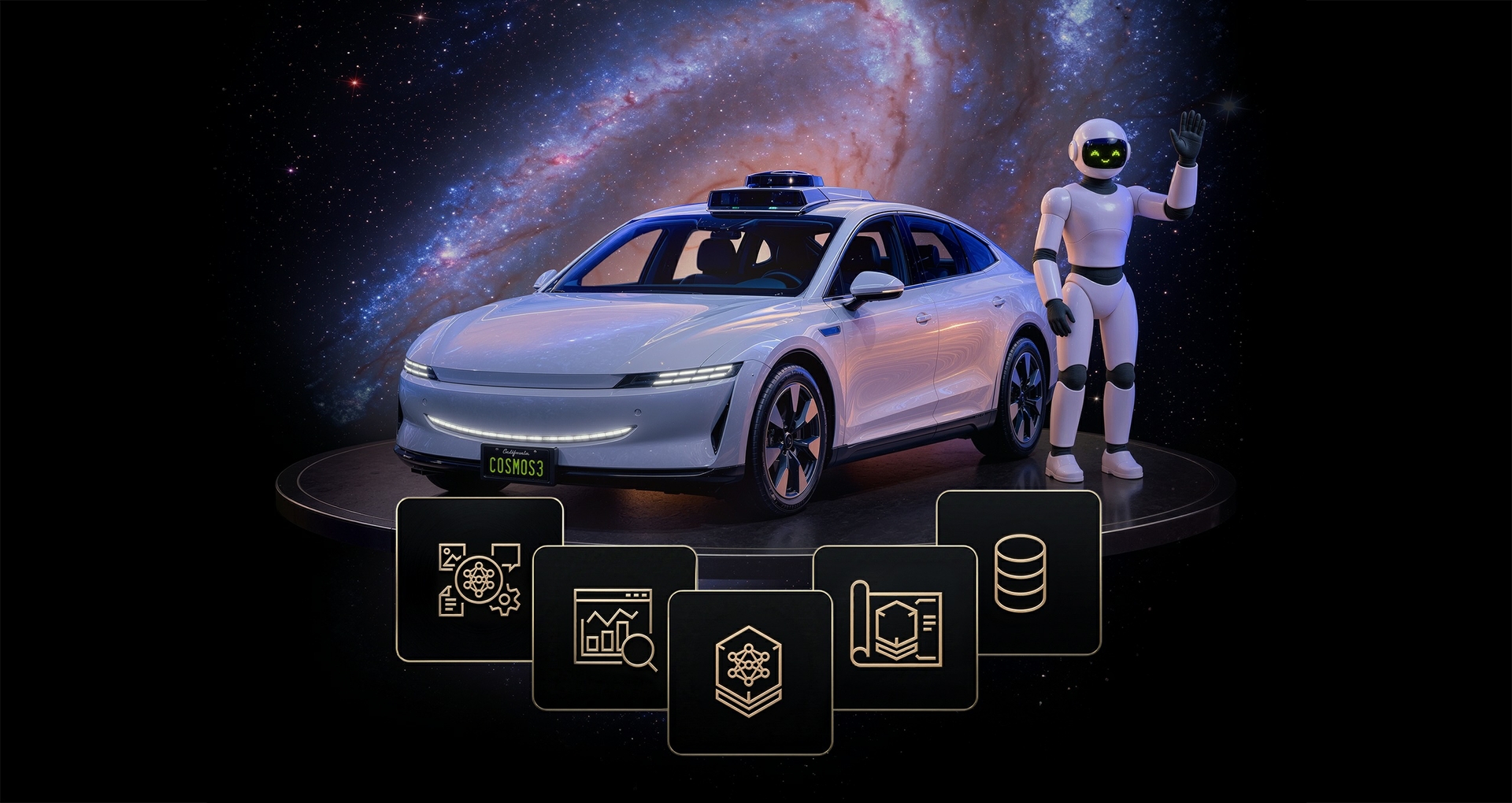
NVIDIA launched Cosmos 3, a new open physical AI foundation model built on a mixture-of-transformers architecture, alongside the Cosmos Coalition with partners including Agile Robots, Black Forest Labs, Generalist, LTX, Runway and Skild AI. Cosmos 3 is positioned as the world’s first fully open omnimodel for text, image, video, ambient sound and action generation, with top rankings on multiple physical AI benchmarks. The release strengthens NVIDIA’s physical AI ecosystem and could support adoption across robotics, autonomous vehicles and industrial vision applications.
This is more than a product announcement; it is NVIDIA trying to standardize the training stack for embodied AI the way CUDA standardized compute. If Cosmos becomes the default open substrate for synthetic data, simulation, and policy pretraining, it raises switching costs across robotics and AV developers while also pulling more inference, cloud, and tooling spend back into NVIDIA’s ecosystem. The near-term equity read-through is highest for NVDA, but the second-order winner is the infrastructure layer that can monetize repeated large-scale model iteration, especially partners that sit on the path between open weights and enterprise deployment.
The more important signal is ecosystem lock-in through openness. By making the model and tooling broadly accessible, NVIDIA is effectively subsidizing category expansion in robotics and industrial AI, which should increase demand for accelerators, networking, cloud capacity, and NIM-style deployment over the next 12-24 months. That is constructive for NVDA and for capacity-constrained AI clouds like CRWV and NBIS only if they can capture incremental training workloads fast enough; otherwise the value accrues upstream to NVIDIA while the hosting layer remains commoditized.
For Li Auto, the impact is indirect but real: better world models lower the cost of AV perception and simulation, compressing development timelines across autonomous driving and advanced driver-assistance stacks. The market may overestimate how quickly this translates into revenue; the first-order benefit is R&D efficiency, not immediate unit economics. The contrarian risk is that open models accelerate competition faster than monetization, pressuring software differentiation for AV/robotics vendors and causing a short-term capex boom without near-term margin expansion.
Catalyst timing is months, not days: the immediate move is sentiment-positive for NVDA, but the biggest fundamental inflection comes when partners begin announcing production workloads and cloud deployments. The main reversal risk is if benchmark leadership fails to translate into developer adoption or if alternative open world-model efforts fragment the ecosystem. In that case, the market could re-rate this as another strong demo rather than a durable platform shift.
AI-powered research, real-time alerts, and portfolio analytics for institutional investors.
Request TrialOverall Sentiment
strongly positive
Sentiment Score
0.78
Ticker Sentiment
