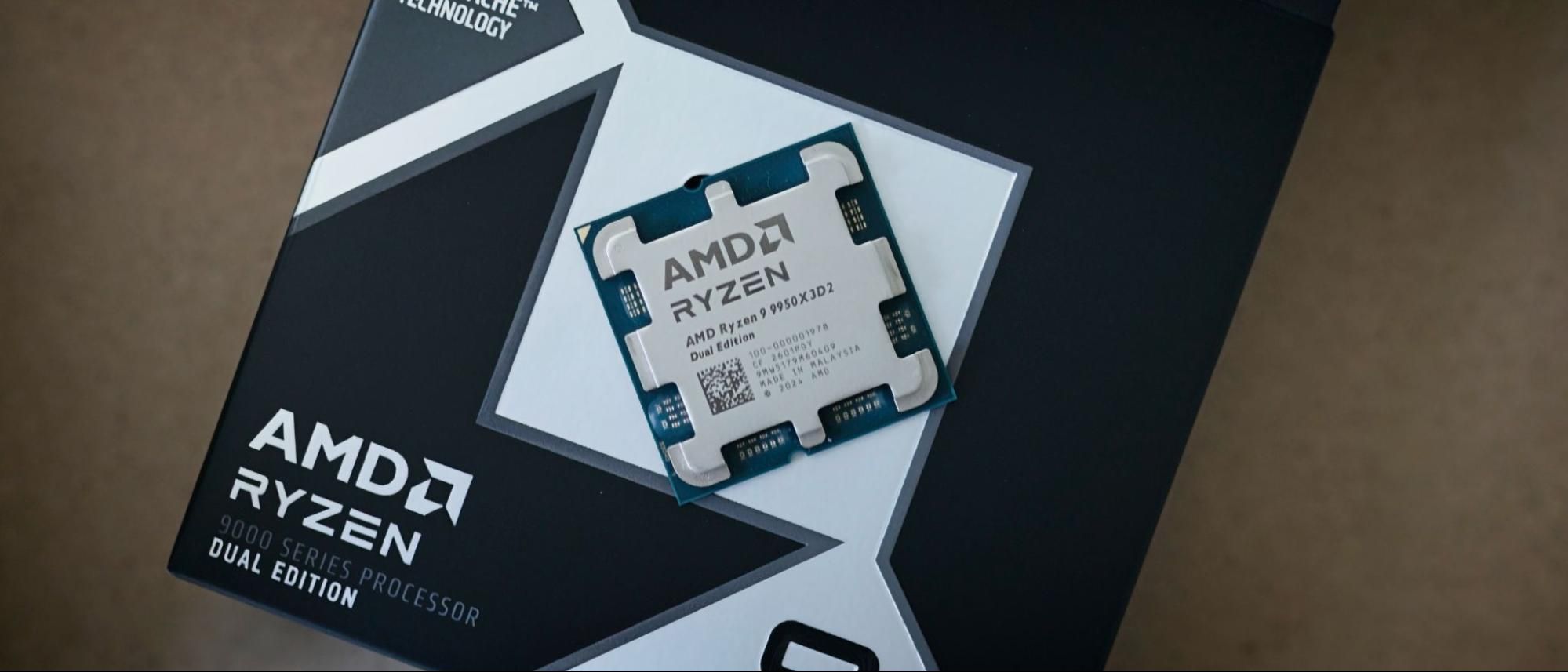
AMD’s Ryzen 9 9950X3D2 debuts as the company’s first dual-3D V-Cache CPU with a $899 MSRP, 16 cores/32 threads, 208MB of total cache, and a 200W TDP. The review says it matches the Ryzen 7 9800X3D in games and is about 4% faster than the 9950X3D in multithreaded work, but it remains too expensive and too niche for most buyers. Performance gains are concentrated in specialized workloads, with some double-digit improvements and up to 25% in select data-science-style tasks.
AMD is using a halo desktop part to sell a systems-level story: more cache on both CCDs reduces inter-CCD traffic, which matters less for average gaming and much more for latency-sensitive, coherence-heavy enterprise-like workloads that live in the gray zone between consumer and workstation. The second-order implication is pricing power, not unit volume; a $900 CPU with only niche uplift is a signal that AMD is trying to widen the AM5 value ladder and normalize a higher ASP ceiling for premium silicon.
The real competitive read-through is negative for Intel at the margin, but not because of direct share loss in gaming. It reinforces AMD’s lead in high-end DIY enthusiasm and workstation credibility while reminding buyers that Intel’s desktop value proposition is increasingly vulnerable when performance is measured in workload-specific pockets rather than broad averages. If this product gets any traction, it will likely come from creators, quant/dev, and data-science buyers who are already over-indexed to AMD; that is a small but sticky segment with high attachment rates to platform upgrades.
The risk is that the market overestimates how many applications can actually monetize extra cache versus simply benefitting from higher clocks or more cores. That means the uplift is more likely to show up over months as software vendors and workstation integrators validate use cases, not in an immediate broad-based demand surge. In the near term, the higher power envelope also creates an uncomfortable comparison versus cheaper X3D parts, which could cap enthusiasm if reviewers and builders anchor on value rather than halo performance.
Contrarian view: this may be less about selling CPUs and more about defending the premium mix in AMD’s broader platform business. If AMD can use a tiny volume product to pull ASPs upward and keep enthusiasts inside the ecosystem, the multiple expansion can come from better mix and brand elasticity even if standalone CPU units are negligible. The market may be underpricing the signaling value of a dual-cache design that makes AM5 feel less like a commodity socket and more like a premium platform.
AI-powered research, real-time alerts, and portfolio analytics for institutional investors.
Request TrialOverall Sentiment
neutral
Sentiment Score
0.05
Ticker Sentiment
