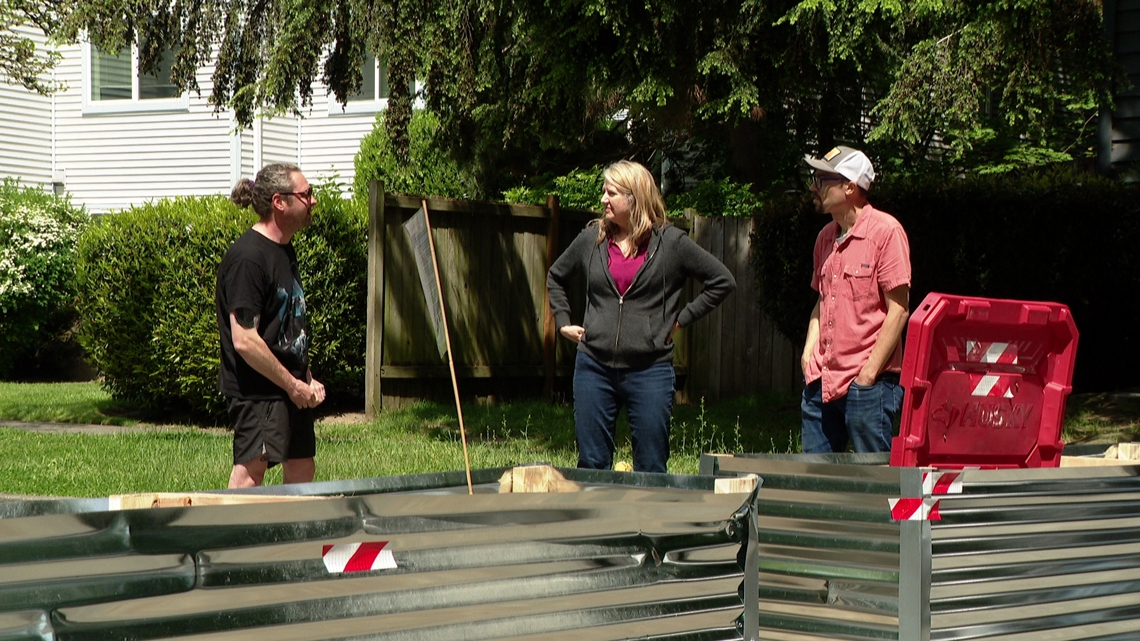
North Seattle residents built makeshift barricades on residential streets near Aurora Avenue after documenting at least 8 shootings in roughly 10 blocks over the past month. The barriers reflect rising safety concerns and a dispute over whether they could hinder emergency response, while Seattle rules require permits for public-street obstructions and allow fines or removal orders for unauthorized structures. The story is localized and unlikely to have broad market impact.
This is a localized public-safety failure that tends to spread beyond the immediate block once residents conclude formal policing is insufficient. The second-order risk is not just municipal liability; it is a feedback loop where self-help barriers, angry neighbors, and delayed emergency access create a higher probability of a single high-profile incident that forces rapid policy response. That makes the key horizon short: days to weeks for escalation, but months for city remediation, litigation, and permit enforcement.
The market angle is indirect but real for municipal credit, insurers, and any contractor/exposure tied to street access, emergency response, or city removal work. If the barricades persist, expect incremental spend on police overtime, code enforcement, towing/removal, and potentially civil claims if response times are blamed for a casualty event. The bigger operational risk is reputational: once residents start acting as de facto security providers, city authorities usually get pulled into a much larger political fight, which raises the odds of emergency appropriations or an injunction-driven cleanup.
The contrarian view is that this may be a symptom of under-enforced nuisance crime rather than a durable deterioration in neighborhood fundamentals. That means the most violent market reaction could be overdone if the city stages a visible enforcement surge, or if arrests/disruption of the underlying activity reduce the perceived need for barriers within 2-6 weeks. Still, the tail risk is asymmetric: one emergency access failure or child-injury headline would instantly convert a nuisance issue into a mayoral and legal crisis.
For investors, the tradeable expression is to lean into municipal stress rather than the headline crime itself. The setup favors long-duration caution on Seattle/King County tax-exempt credit versus broader AAA munis if the conflict persists and legal costs rise. In equities, the cleaner expression is via companies with municipal-removal or emergency-response exposure if a city cleanup campaign starts, but timing matters: enter only on signs of escalation or a formal enforcement notice, not on the initial media cycle.
AI-powered research, real-time alerts, and portfolio analytics for institutional investors.
Request DemoOverall Sentiment
moderately negative
Sentiment Score
-0.35
