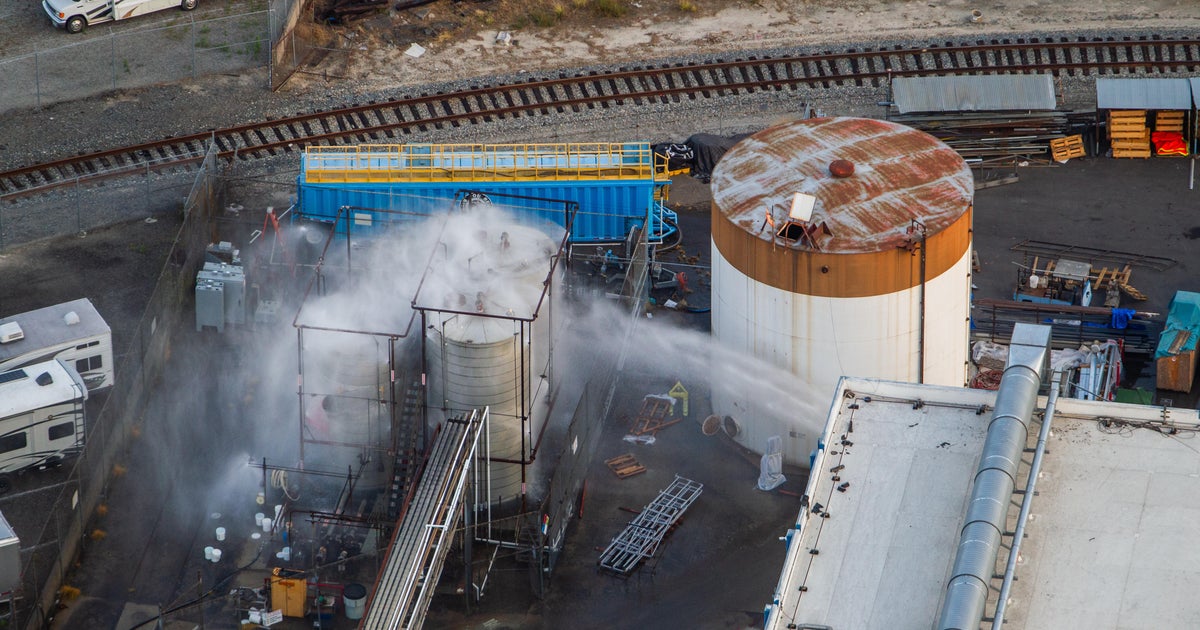
A leaking 7,000-gallon methyl methacrylate tank at GKN Aerospace in Garden Grove has forced roughly 50,000 evacuations, with officials warning the situation could still end in explosion or toxic release. California declared a state of emergency, Orange County prosecutors opened an investigation, and a class-action lawsuit has been filed against GKN Aerospace. While air monitoring has shown normal levels so far and crews may have found a pressure-relieving crack, the incident remains unresolved and disruptive for residents and local businesses.
This is a classic low-probability, high-severity industrial incident whose market relevance is less about the direct hazard than the regulatory and insurance overhang it creates. The immediate equity read-through is not broad risk appetite, but a localized liability stack: remediation, third-party claims, legal defense costs, and potential tightening of permits/inspections for similar chemical handling operations. The key second-order effect is that any confirmation of a crack/pressure-relief failure shifts the narrative from “accident” to “process-control breakdown,” which materially increases punitive exposure and expands discovery risk across the supplier and operator ecosystem.
The only ticker in scope, UBER, is mostly a beneficiary from displacement and mobility substitution near the evacuation zone, but that benefit is small and transient versus the broader risk-off tape. In the next 3-10 days, evacuees and responders can create a local bump in rides, yet that is too small to move company-level fundamentals; the more relevant angle is that recurring emergency logistics incidents normalize on-demand mobility as a resilience layer for municipalities and employers. Over months, if California responds with stricter hazardous-material transport and storage enforcement, logistics-heavy platforms could face indirect compliance friction at the margin, though not enough to alter the earnings case.
The contrarian point is that the event may be operationally negative but financially contained if monitoring continues to show no offsite release and the tank is stabilized without an explosion. That would compress the headline-risk premium quickly; the market will likely forget this within days unless there is evidence of systemic maintenance failure or wider plume impact. The highest-value catalyst to watch is whether the investigation uncovers negligent process control, because that would convert a one-off crisis into a litigation precedent for other industrial operators in California.
AI-powered research, real-time alerts, and portfolio analytics for institutional investors.
Request DemoOverall Sentiment
strongly negative
Sentiment Score
-0.65
Ticker Sentiment
