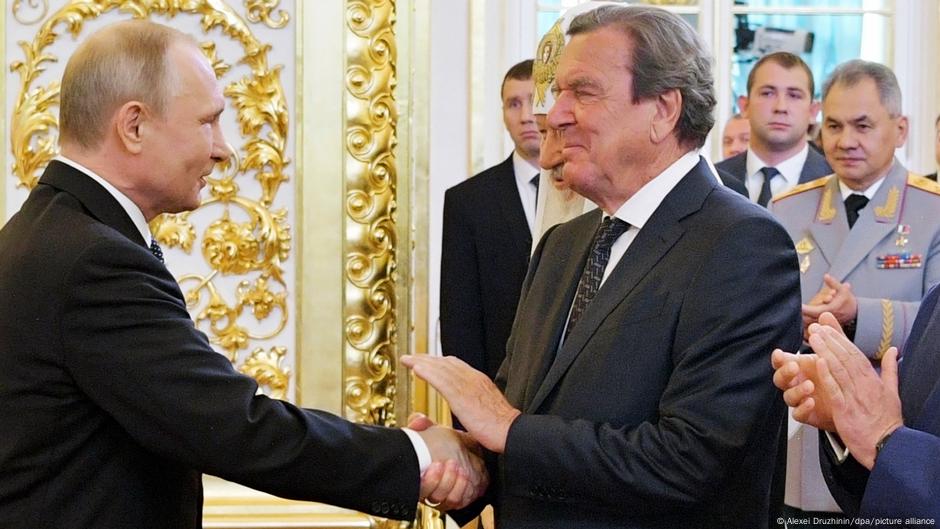
Vladimir Putin named former German chancellor Gerhard Schröder as his preferred European mediator for Ukraine peace talks, but Schröder's office declined to comment and German officials dismissed the idea as not credible. The article underscores ongoing diplomatic maneuvering around the Russia-Ukraine war, with Moscow still not seen as changing its ceasefire or peace terms. Market impact is limited, though the news reinforces geopolitical risk around the conflict and European energy/security policy.
This is less about Schröder himself than about the shape of any settlement process: Moscow is signaling it prefers intermediaries who can legitimize a softer European lane while preserving its maximalist negotiating stance. That creates a near-term optics trade in European politics, but the larger market implication is that any incremental peace chatter raises the probability of a compression in the risk premium embedded in European defense, LNG import dependence, and select industrials tied to wartime supply constraints.
The key second-order effect is timing: the next few weeks matter more than the next few quarters. If ceasefire language is extended or talks begin to look procedurally credible, defense names can de-rate before fundamentals roll over, because the market will start discounting fewer urgency-driven budget additions and slower replenishment cycles 6–18 months forward. Conversely, if Russia refuses to extend even a symbolic truce, this mediator angle becomes evidence of theater rather than progress, which likely re-floors risk premiums in European energy and defense.
The contrarian read is that the market may be too quick to treat any Putin “peace” signal as incremental de-escalation. A handpicked intermediary with political baggage could be a tactic to split the EU from the U.S. and expose fractures inside German coalition politics, not a genuine path to compromise. That would leave the structural winners unchanged: defense demand stays elevated, and Europe still needs redundant gas supply, even if headline volatility briefly softens.
AI-powered research, real-time alerts, and portfolio analytics for institutional investors.
Overall Sentiment
neutral
Sentiment Score
-0.05
