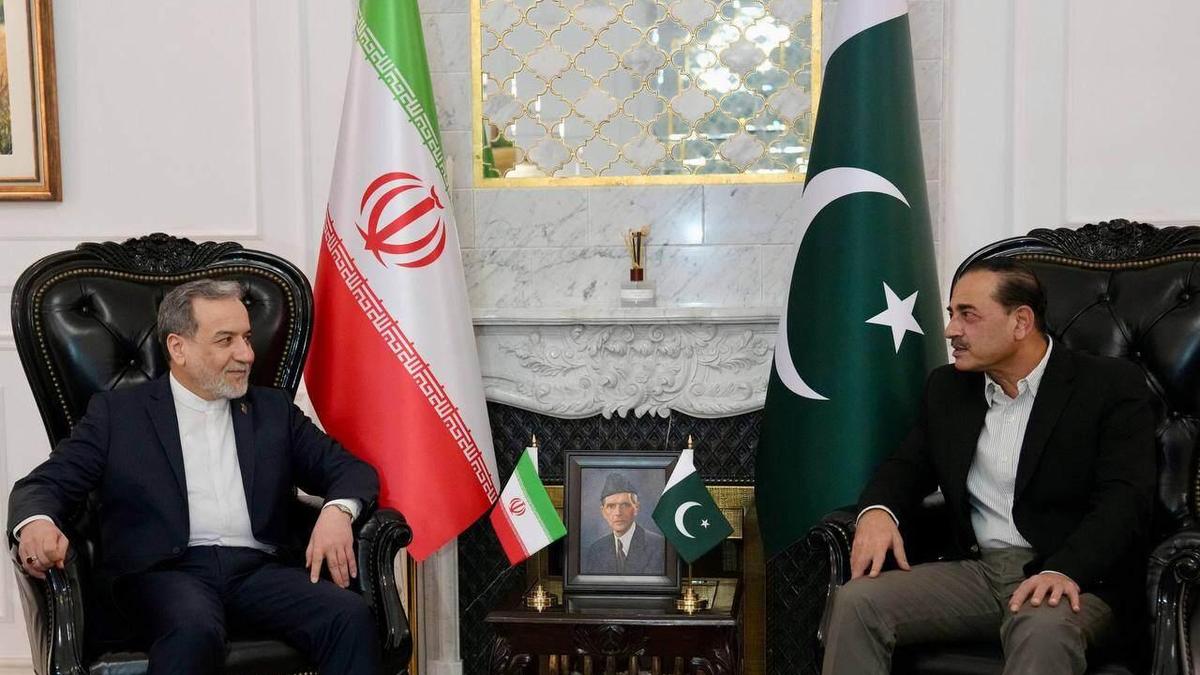
The U.S. is sending envoys Steve Witkoff and Jared Kushner to Pakistan on Saturday, April 24, 2026, for a new round of talks with Iran aimed at ending the war. Iran said no direct meeting with U.S. officials is planned during Foreign Minister Abbas Araghchi’s Pakistan visit, with Pakistani officials expected to relay messages instead. The developments point to continued high-stakes diplomacy and could affect regional risk sentiment and energy/geopolitical markets.
The market implication is less about the headline diplomacy and more about the probability distribution of outcomes. Even without a direct meeting, the mere existence of a mediated channel lowers the near-term probability of kinetic escalation, which should compress the geopolitical risk premium embedded in crude, freight, and defense-adjacent equities over the next few sessions. That said, the structure here is fragile: backchannel-only talks often produce noisy optimism, then retrace sharply if neither side can claim a concession win, so the first leg of asset repricing is likely faster than the second.
The biggest second-order effect is on assets that trade off “war prolongation” versus “contained settlement” rather than on obvious regional proxies. High-beta EM FX and sovereign spreads are vulnerable if this becomes a credible de-escalation path, because traders will rotate out of emergency hedges and back into carry. Conversely, any visible failure in the coming 1-2 weeks would likely reprice crude and defense names more aggressively than this article alone suggests, since positioning can build quickly around the perception of a diplomatic channel.
The contrarian read is that a mediated format may actually increase volatility: it creates optionality for both sides to harden positions while keeping markets leaning the wrong way. If investors over-interpret “talks” as a de-risking event, they may underprice the chance of a headline shock before or during the next negotiation window. That makes the key horizon days-to-weeks, not months, with the first real catalyst being whether intermediaries can convert messaging into a formal agenda and confidence-building steps.
AI-powered research, real-time alerts, and portfolio analytics for institutional investors.
Request DemoOverall Sentiment
neutral
Sentiment Score
0.00
