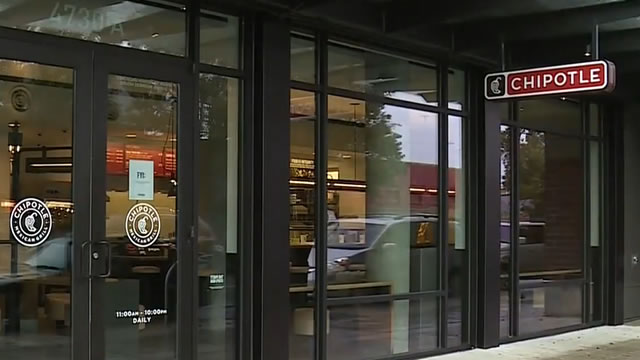
Chipotle’s “Recipe for Growth” strategy (five pillars) is anchored by operational excellence as its main competitive moat. It reported Q1 2026 restaurant-level operating margins of 23.7%, showing resilience despite inflationary pressures in a highly competitive fast-casual space.
CMG’s key equity implication is not the headline margin print itself, but what it says about the durability of labor productivity and throughput at scale. If unit economics are holding while inflation stays sticky, the market can keep assigning a scarcity premium to a business that behaves more like a branded growth compounder than a cyclical restaurant operator. That supports relative outperformance versus lower-margin fast-casual peers that need heavier discounting or capex just to defend traffic.
The second-order effect is competitive pressure: when one scaled operator sustains high restaurant-level margins, smaller peers are forced to choose between preserving margin or matching service speed, customization, and consistency. That tends to widen the gap between CMG and names like CAVA or broader restaurant baskets, because the winners can fund reinvestment while laggards burn operating leverage. The risk is that this is a lagging indicator; if the margin is being flattered by mix, pricing, or commodity timing, the next 1-2 quarters could normalize quickly.
The contrarian view is that the market may already be pricing CMG as a quasi-staple growth asset, so “good execution” may not be enough unless it translates into sustained traffic and AUV expansion. Falsifiers to watch: same-store sales deceleration, margin slipping back toward low-20s, or management sounding less confident on wage and food inflation. If any of those hit, the multiple can compress faster than EPS growth can offset it over a 6-18 month horizon.
AI-powered research, real-time alerts, and portfolio analytics for institutional investors.
Overall Sentiment
mildly positive
Sentiment Score
0.35
Ticker Sentiment
