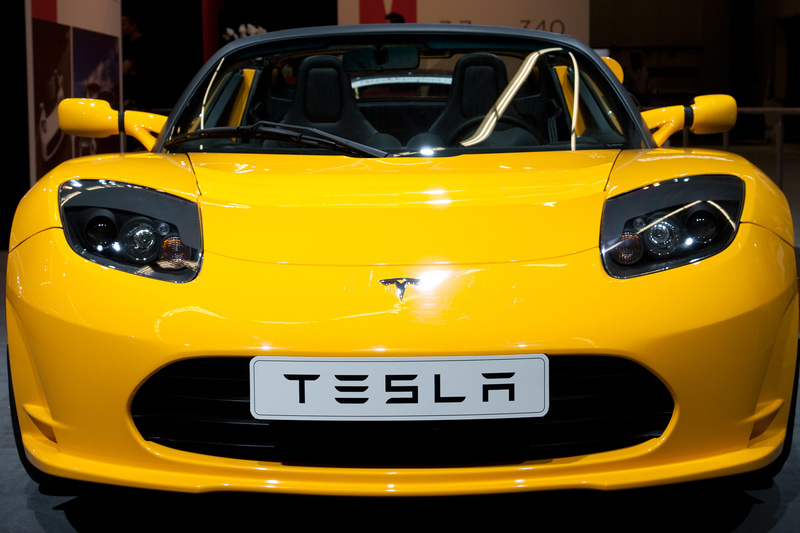
China's EV and hybrid exports hit a record 349,000 units in March, up 140% year‑on‑year, with BYD accounting for roughly one-third of shipments. Domestic sales weakened: EV and hybrid retail volumes fell 14% to 848,000 units in March (third straight monthly decline) and Q1 sales declined for the first time since 2020. BYD's China sales plunged over 40% in March while Tesla's China retail sales fell 24% even as shipments from its Shanghai factory rose about 9% YoY; the export surge is attributed in part to renewed global interest amid an energy shock tied to the Iran war.
Chinese OEMs are visibly pivoting production focus outward to offset weakening domestic demand; that pivot creates a two-tier market where scale-integrated players can defend margins while smaller OEMs and non-dedicated suppliers face ASP and utilization risk. Export-led volume growth is therefore not pure demand growth but a channel reallocation — expect inventory digestion in destination markets and a widening cohort of price-competitive models arriving within 3–12 months, which will exert downward pressure on realized ASPs outside China.
The immediate winners are firms that own cell-to-system vertical integration, long-term raw-material offtakes, and anchor logistics contracts; conversely, mid-tier module and parts suppliers with little pricing power are exposed to margin erosion and inventory write-downs. FX mechanics amplify this: a weaker RMB functions as an export subsidy in real terms, shifting currency exposure from domestic sales to USD/EUR revenues and increasing the importance of hedging for Chinese OEMs and suppliers over the next 6–12 months.
Key catalysts that could reverse the current export advantage include a rapid normalization of energy prices, trade policy responses (tariffs or EV import standards) from major Western markets, or a logistics shock that raises outbound costs — any of these can materialize within days to months and would disproportionately hit export-dependent players. Over a longer horizon (12–24 months), battery raw-material tightness or conversely a rush of new capacity could swing margins for upstream miners and refiners, so positioning should be dynamic around commodity curves and capacity additions.
The common narrative — that higher energy prices are uniformly bullish for EV names and upstream commodities — is incomplete. The export surge masks weakening domestic replacement and first-time buyer demand, so tactical alpha will come from pairing scale-integrated Chinese OEM longs and upstream raw-material longs with selective shorts in higher-cost OEMs, parts suppliers, and consumer-facing retailers whose domestic sales are contracting.
AI-powered research, real-time alerts, and portfolio analytics for institutional investors.
Request DemoOverall Sentiment
mixed
Sentiment Score
0.05
Ticker Sentiment
