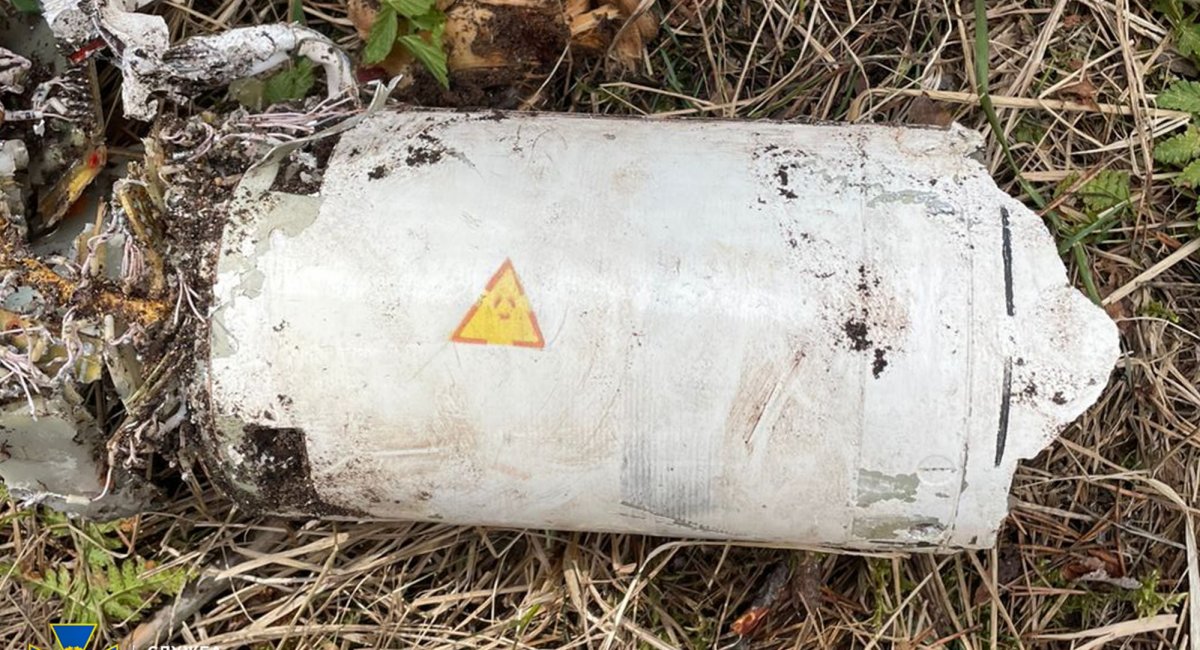
Ukraine's Security Service reported elevated gamma radiation of about 12 µSv/h in fragments of an R-60 missile mounted on a Geran-2 loitering munition, far above normal background levels of 0.1-0.2 µSv/h. The warning underscores radiological risks from unexploded ordnance and burned debris, especially where depleted uranium may be present in certain Soviet- and Russian-origin weapons. The immediate market impact is limited, but the report reinforces battlefield contamination and ordnance-handling concerns in the Russia-Ukraine war.
This is less a direct market catalyst than a reminder that the war is creating a persistent "hazmat layer" on top of kinetic risk. The second-order effect is higher operational cost and slower tempo for demining, reconstruction, logistics, and insurance underwriting in Ukraine and bordering transit corridors; even a small increase in perceived contamination raises cleanup timelines from weeks to months and widens contingencies for contractors and lenders. That matters for any business model exposed to postwar rebuild timing, not because of one fragment, but because it reinforces the thesis that clearance demand will remain structurally elevated even if front-line intensity eases.
The more tradable angle is not radiation itself, but the policy and procurement response: more spending on detection, protective gear, remote handling, and environmental remediation. That benefits niche industrial and security vendors with exposure to CBRN detection, robotics, and site assessment, while penalizing companies relying on rapid restart assumptions in Eastern Europe. A slower demining cycle also indirectly supports defense primes by extending demand for ISR, clearance support, and battlefield engineering over a multi-year horizon.
The contrarian view is that headline risk may overstate incremental market impact because the absolute dose levels described are still a site-specific operational issue, not a broad public-health shock. The market may briefly overprice "radiation" risk into Ukraine-linked assets, but the durable implication is simply a longer tail on reconstruction rather than a new category of systemic contamination. If there is a reversal, it would come from official testing showing the fragments were a one-off anomaly rather than evidence of widespread radiological debris; that would compress any short-lived risk premium within days, not months.
AI-powered research, real-time alerts, and portfolio analytics for institutional investors.
Request DemoOverall Sentiment
moderately negative
Sentiment Score
-0.20
