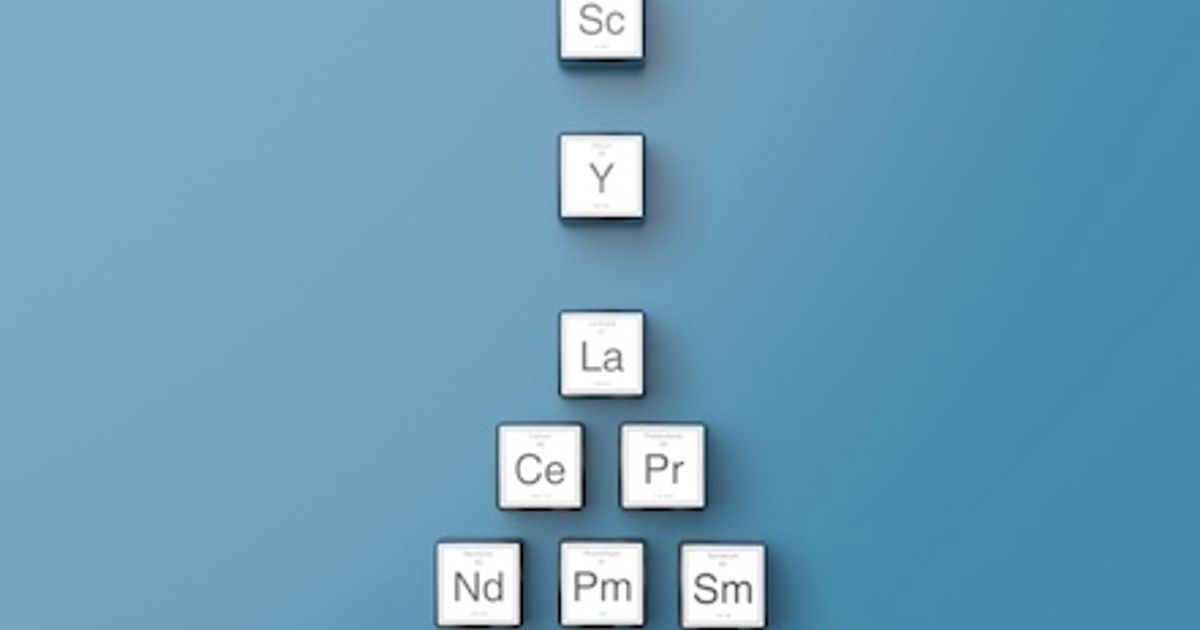
Century Lithium reported that testing of a 500-tonne bulk sample from its 100%-owned Angel Island claystone project in Nevada showed potentially meaningful rare earth element (REE) content—0.024% TREO and 1,101 ppm lithium—with chloride leaching producing 210 mg/l Li and 36 mg/l TREO and ion-exchange achieving near-100% recoveries for key REEs including Nd, Pr, Dy, Tb, Y and Sc. About 75% of the recovered REEs were light rare earths and 25% were yttrium/heavy REEs; Century says its patent-pending chloride-based process could enable REE recovery in parallel with lithium, supporting North American critical-mineral supply and potential by-product revenues. The company plans to process 2.75–5.5 million tonnes of claystone annually (yielding 10–20 million tonnes of leach solution) as it advances permitting and an updated feasibility study, but has not yet quantified the economic impact of REE recovery.
Century Lithium reported that chloride-based leaching and targeted ion-exchange on a 500-tonne Angel Island claystone bulk sample returned 1,101 ppm lithium and 0.024% total rare earth oxides (TREO), with leach solutions measuring 210 mg/l Li and 36 mg/l TREO and near-100% ion-exchange recoveries for Nd, Pr, Dy, Tb, Y and Sc. CEO Bill Willoughby said the patent-pending process enables parallel recovery of REEs with lithium and the sample composition consisted of roughly 75% light REEs and 25% yttrium/heavy REEs.
The reported TREO grade (0.024%) sits below the lower end of cited benchmarks in the article (global ion-adsorption clays 0.03–0.15% TREO; US projects 0.05–0.20% TREO), but the company plans to process 2.75–5.5 million tonnes of claystone annually (producing 10–20 million tonnes of leach solution), indicating modest grades could be economically relevant at scale. Near‑100% recoveries for strategic elements and the ability to capture REEs as a by-product would improve project revenue mix and bolster North American critical-minerals supply if converted into saleable products.
Key near-term uncertainties are economic: Century has not quantified the incremental capital or operating cost impact of REE recovery and must demonstrate pilot-scale reproducibility, product separation/purity and permitting progression. Primary catalysts that would de-risk the thesis are an updated feasibility study with REE economics, independent metallurgical validation of recovery rates, and clear permitting milestones; failure on any of these would materially reduce the significance of the announced results.
AI-powered research, real-time alerts, and portfolio analytics for institutional investors.
Request DemoOverall Sentiment
mildly positive
Sentiment Score
0.25
Ticker Sentiment
