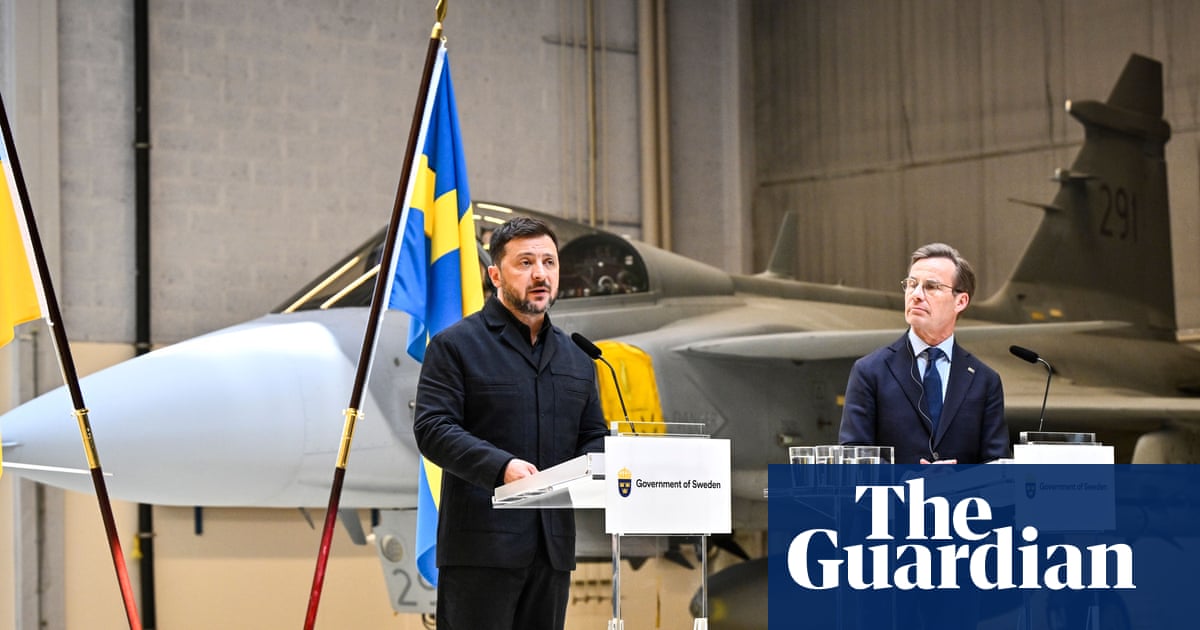
Sweden will donate 16 existing Gripen fighter jets to Ukraine, with delivery in early 2027, and Ukraine plans to buy an initial 20 Gripen E jets, with a long-term deal potentially covering up to 150 aircraft. The announcement strengthens Ukraine’s air-defense and broader military procurement outlook, while EU and US officials signaled continued support for Kyiv. The article also highlights escalating wartime spillovers, including attacks on Russian oil infrastructure and drones hitting shipping and border areas in the Black Sea region.
This is a multi-year positive for Europe’s defense industrial base, but the first-order market impact is less about the donated legacy airframes and more about the financing, munitions, and sustainment stack that follows. The real economic lift sits with Saab’s production cadence, radar/electronics suppliers, and especially missile inventory replenishment across NATO, because every delivered jet implies follow-on demand for training, spares, upgrades, and air-defense interceptors. In other words, the catalyst is not the headline sale itself; it is the normalization of a Swedish-led rearmament pipeline that can pull forward orders over several budget cycles.
The second-order winner is Europe’s sovereign air-defense ecosystem. If Ukraine’s future fleet mix leans European rather than US-centric, that marginally reduces dependence on US political approvals and creates a larger addressable market for Meteor-adjacent and EW/avionics suppliers. That matters because the current conflict is proving that survivability, sensor fusion, and missile depth are more economically important than platform count; a smaller number of higher-end aircraft with better weapons can still force Russia to spend disproportionately on air-defense depletion.
The sanctions/energy angle is more tactical but tradable: attacks on Russian-linked shipping and refining add variance to Black Sea freight, insurance, and regional product balances. The market likely underprices tail risk around spillover to non-combatant shipping routes and winter heating constraints, but the bigger medium-term issue is that persistent strikes on export infrastructure can tighten diesel and middle distillates before they move headline crude. That supports refiners with flexible crude slates and keeps a bid under European defense and cyber names as hybrid warfare escalates.
The contrarian read is that this is not a clean de-escalation signal; it is evidence that both sides are locking into a longer-duration attritional posture. That means defense outperformance can continue even if peace headlines emerge, because procurement urgency, interceptor consumption, and air-defense replenishment all rise when diplomacy stalls. The market may be too focused on ceasefire probability and not enough on the budgetary permanence of wartime procurement.
AI-powered research, real-time alerts, and portfolio analytics for institutional investors.
Request DemoOverall Sentiment
mildly positive
Sentiment Score
0.20
