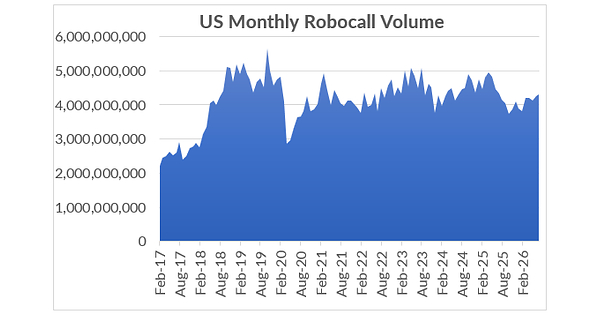
YouMail’s Robocall Index shows U.S. consumers received just over 4.35B robocalls in July 2026 (+1.5% vs June), with July also reaching the highest volume since July 2025 (just above 4.3B). Unwanted robocalls rose nearly 6% to over 2.1B, while wanted calls declined slightly, keeping the mix at roughly 49% likely unwanted. The report highlights a major scam pattern around pre-approved loan offers (one campaign generated well over 40M calls in July), reinforcing the need for continued robocall-blocking protections.
This is not a revenue event; it is a sentiment/tolerance signal. The real market mechanism is not the raw call count but the persistence of fraud pressure, which keeps compliance, authentication, and call-filtering spend from normalizing. That is mildly supportive for telecom customer-experience metrics and for private fraud-defense vendors, but the effect on public equities is too diffuse to justify a standalone trade today.
The second-order loser set is broader outbound-call businesses: debt collectors, subprime lenders, and any consumer originator whose conversion depends on trust at the point of contact. Even if the aggregate number is noisy, more scam activity makes consumers more skeptical of unknown numbers, which can lower answer rates and push higher acquisition costs over the next 1-3 quarters. Carriers also face a slow-burn margin drag from mitigation and complaints, though that is usually absorbed inside existing opex rather than a discrete earnings hit.
Contrarian view: the headline may be overstating deterioration because app-based detection can improve measured volume even when actual nuisance intensity is flat. The sharper thesis is that enforcement and authentication budgets will stay elevated for 6-18 months, but that mostly benefits private vendors and incumbent carriers’ churn control, not a clean public-market pair. What would falsify the read-through is a meaningful drop in complaint rates or a carrier-led reduction in spam flags on next quarter’s churn/NPS commentary.
AI-powered research, real-time alerts, and portfolio analytics for institutional investors.
Overall Sentiment
mildly negative
Sentiment Score
-0.15
Ticker Sentiment
