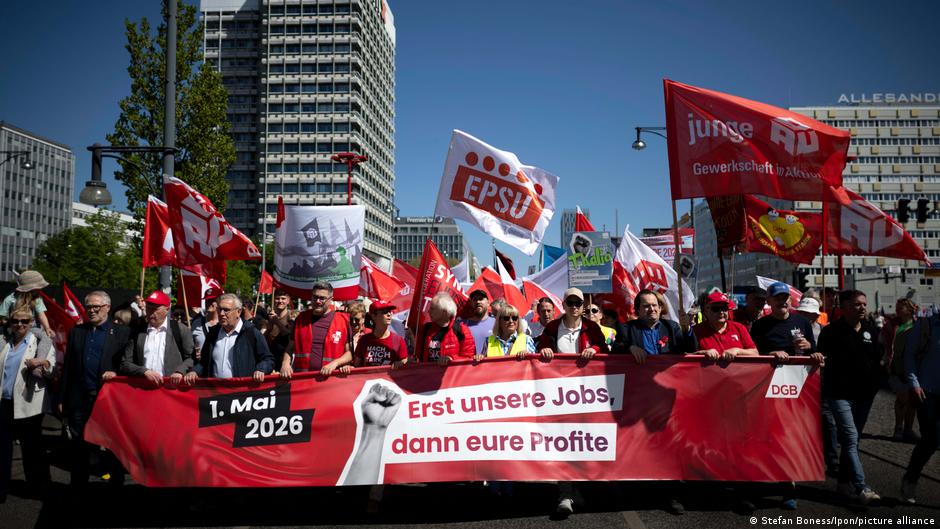
May Day protests centered on higher wages, pension protection, and opposition to cuts in benefits, with labor unrest flaring in Turkey, Germany, and Argentina. In Turkey, police arrested over 500 demonstrators and used tear gas and water cannon to block marches toward Taksim Square. The article also highlights Germany’s union push against planned social-security cuts and Argentina’s labor backlash to Milei’s labor-law overhaul.
This is less a labor-story headline than a read on where political risk is migrating: from pricing power in goods to wage-setting and fiscal legitimacy in developed markets, and from reform to repression in select EMs. The market implication is that labor unrest is becoming a second-order inflation input through services, public payrolls, and pension politics, even as headline energy shocks fade; that keeps real rates and duration assets exposed if governments respond with looser compensation, subsidies, or slower austerity.
The clearest equity winners are employers with high domestic labor intensity and limited automation buffers, especially retail, transport, food service, and public-facing banks in jurisdictions where unions can still force concessions. Conversely, utilities, healthcare payers, and government-linked contractors face margin risk from benefit protection campaigns because they sit directly in the crosshairs of cost-push politics. In Turkey, crowd-control and metro disruption risk are more relevant than the arrests themselves: repeated friction around symbolic protest sites tends to deter foreign capital at the margin and raises the equity risk premium for domestically exposed assets over the next 1-3 months.
In Germany, the more important signal is that pension and benefit reform is now a coalition-fracturing issue; that increases odds of watered-down austerity and a slower path to fiscal consolidation, which is structurally supportive for long-duration European bonds but negative for banks and cyclicals tied to domestic demand confidence. In Argentina, labor-code backlash raises the probability of a policy overcorrection cycle: either reforms are diluted, hurting medium-term productivity, or they proceed and trigger higher strike intensity. The consensus is likely underpricing how quickly labor friction can translate into lower output, higher wage inflation, and political hesitation — a combination that can compress multiples even without an earnings recession.
AI-powered research, real-time alerts, and portfolio analytics for institutional investors.
Request DemoOverall Sentiment
mildly negative
Sentiment Score
-0.15
