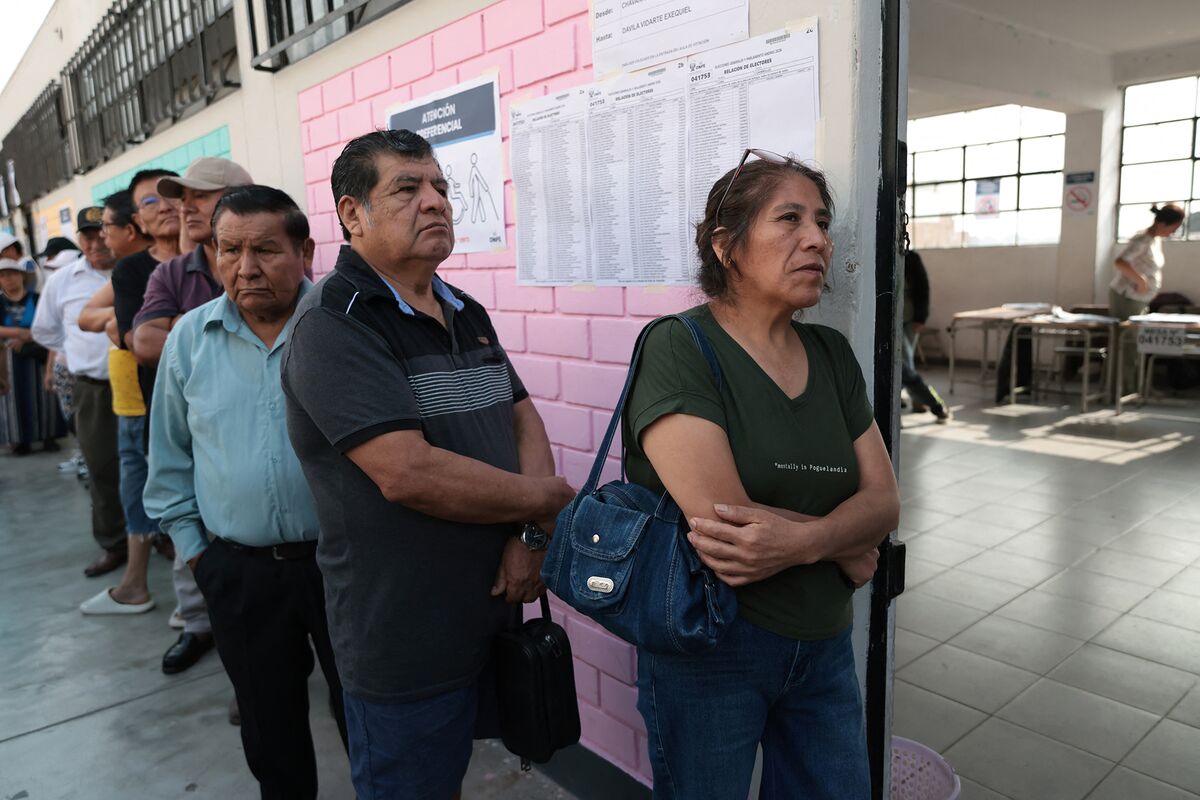
Peru will hold repeat voting in parts of Lima after ballots failed to arrive on election day, leaving 52,000 people unable to vote. The delay could affect results in a tight race, while authorities continue counting Sunday’s ballots. Polling sites are also being reopened for expatriates in New Jersey and Florida.
The immediate market read is not about Peru’s political direction but about execution risk in a thin-liquidity emerging-market venue. A visibly broken voting process raises the probability of a disputed result, which typically widens local risk premia first through FX, local sovereigns, and any domestically oriented corporates with weak governance or state exposure. The second-order effect is that the transport/logistics failure becomes a governance signal, which can matter more than the election outcome itself for foreign capital allocation. This is usually a short-horizon volatility event unless it triggers allegations of selective disenfranchisement or delays in certification. The tail risk is not a “policy regime change” so much as institutional credibility erosion: if the race is tight, even a small procedural failure can extend uncertainty for days to weeks, forcing local asset managers and offshore funds to de-risk into USD. That tends to pressure the currency and steepen any local sovereign curve through term-premium, while improving the relative appeal of hard-currency issuers versus domestic funding names. The more interesting contrarian angle is that the market may overdiscount the macro importance because the failure is operational, not ideological. If authorities rapidly re-run the affected precincts and certify cleanly, the entire episode may compress into a one- to three-day volatility spike. In that scenario, the best opportunities are usually in short-dated hedges and FX implied volatility rather than directional bets on Peru’s long-run fundamentals. A subtle beneficiary is any competing logistics provider or insurer operating in the region: one vendor’s failure strengthens procurement discipline across election-adjacent and public-sector contracts. Over a months-long horizon, this could marginally help firms with audited delivery capability, compliance track record, or multinational balance sheets, while hurting smaller local contractors if agencies tighten vendor selection after the fact.
AI-powered research, real-time alerts, and portfolio analytics for institutional investors.
Request DemoOverall Sentiment
mildly negative
Sentiment Score
-0.20
