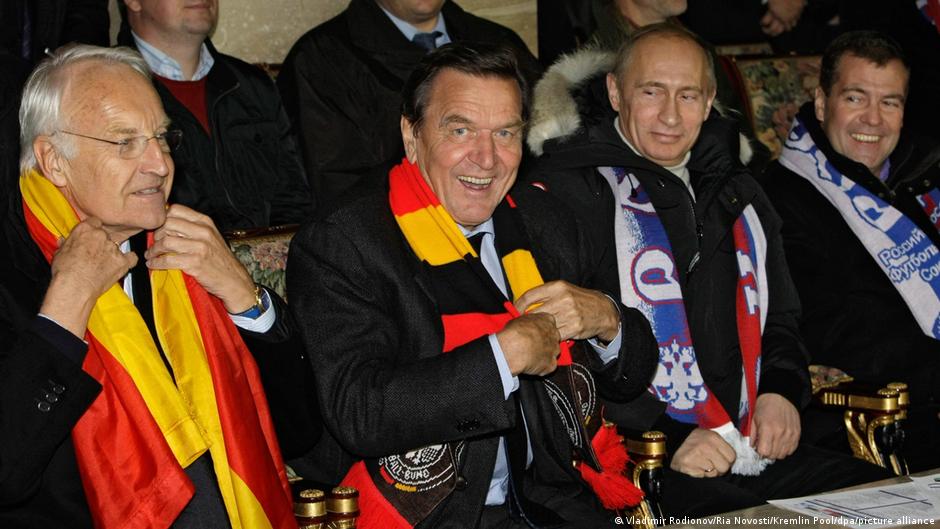
The article centers on Gerhard Schröder's potential role as a mediator in Ukraine peace talks, following Vladimir Putin's suggestion that the former German chancellor could help negotiate an end to the war. It also revisits Schröder's long-standing ties to Russia and his support for restarting Russian energy imports, which remain politically controversial in Germany. The piece is mainly political and historical commentary, with limited immediate market impact.
This is less a peace-process catalyst than a signaling event about the probability distribution of European policy drift. A credible backchannel through a politically toxic intermediary would matter mainly if it widens the menu of acceptable concessions on sanctions, energy flows, and ceasefire sequencing; the market impact is therefore skewed toward tail-risk repricing rather than immediate cash-flow changes. The first-order beneficiaries would be assets most exposed to a normalization of Russian gas and fertilizer/commodity logistics, but the bigger second-order effect is a compression in the geopolitical risk premium embedded across European power, gas, and defense-sensitive equities.
The key timing issue is that mediation talk can move markets in days, while any durable policy shift takes months and is still hostage to coalition politics in Berlin, Kyiv, and Washington. In practice, any perceived opening lowers implied volatility in European gas and power, but only briefly unless it is paired with a verifiable roadmap for sanctions easing; without that, the move tends to fade as investors remember that personality-based diplomacy has poor conversion to enforceable agreements. The more interesting trade is not directional peace, but the gap between the market’s quick desire to price lower energy risk and the reality that European governments cannot pivot back to Russian molecules at scale without domestic backlash.
The contrarian read is that a Schröder-style channel may actually be more useful as a Kremlin signaling device than as a negotiation vehicle, meaning the probability of a genuine settlement may be lower than the headline implies. That creates an attractive setup in assets that would rally on de-escalation but remain structurally challenged if peace talks fail, especially European utilities and gas-linked cyclicals. Defense names are the cleanest hedge: if this is mostly performative, the “peace premium” should be sold, and rearmament/munitions demand should persist through at least the next budget cycle.
AI-powered research, real-time alerts, and portfolio analytics for institutional investors.
Request DemoOverall Sentiment
neutral
Sentiment Score
-0.10
