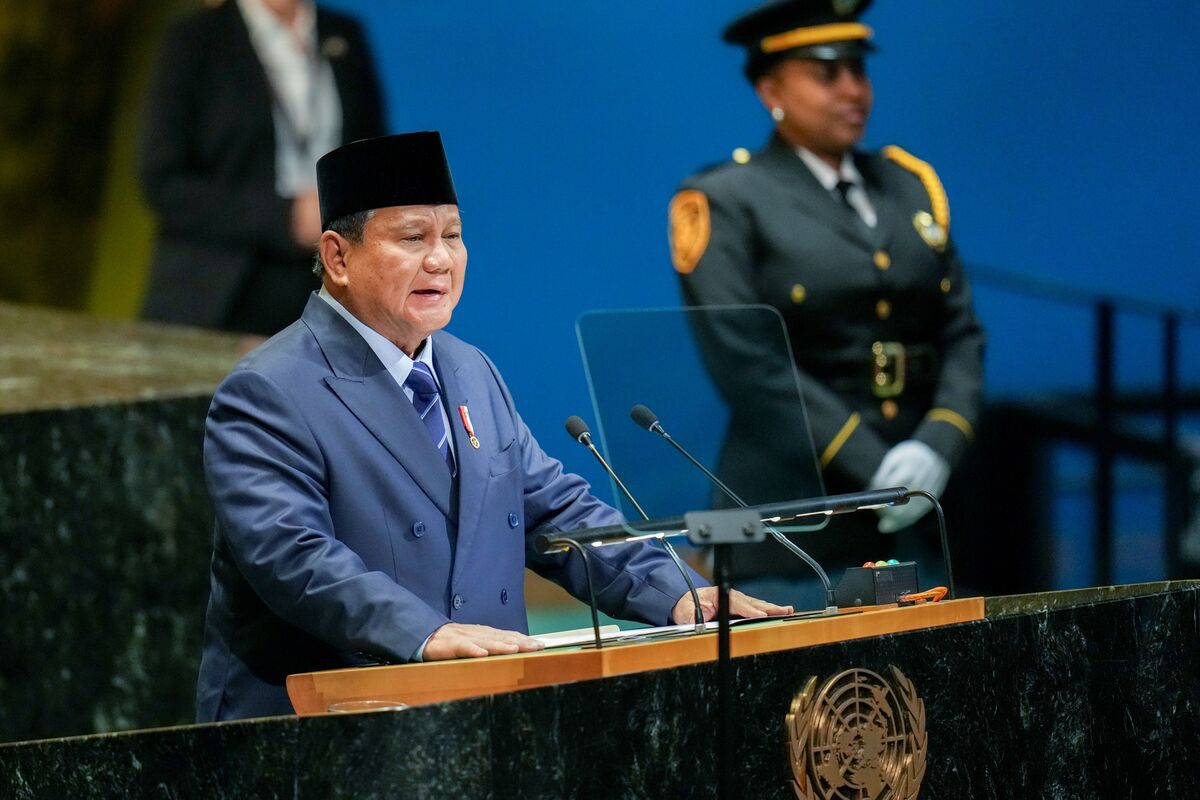
Indonesian President Prabowo Subianto, addressing the United Nations General Assembly, reiterated his country's "complete support" for a two-state solution, emphasizing the necessity of an independent Palestine while also guaranteeing Israel's safety and security. He noted growing international sentiment advocating for Palestinian statehood, signaling a potentially evolving diplomatic landscape concerning the Israeli-Palestinian conflict.
Indonesian President Prabowo Subianto's address to the United Nations General Assembly reaffirms the country's established diplomatic stance on the Israeli-Palestinian conflict. The call for a two-state solution, which includes both an independent Palestine and guaranteed security for Israel, represents a continuation of existing policy rather than a new initiative. The statement is significant as it comes from the leader of the world's most populous Muslim-majority nation, but its balanced nature is typical of diplomatic discourse on this issue. The president's observation of a 'growing cohort' of nations supporting Palestinian statehood suggests a potential shift in international diplomatic momentum, although the article lacks specific details on this trend. The provided signals, including a neutral sentiment and a very low market impact score of 0.1, indicate that financial markets do not perceive this speech as a catalyst for immediate geopolitical or economic change.
AI-powered research, real-time alerts, and portfolio analytics for institutional investors.
Request DemoOverall Sentiment
neutral
Sentiment Score
0.00
