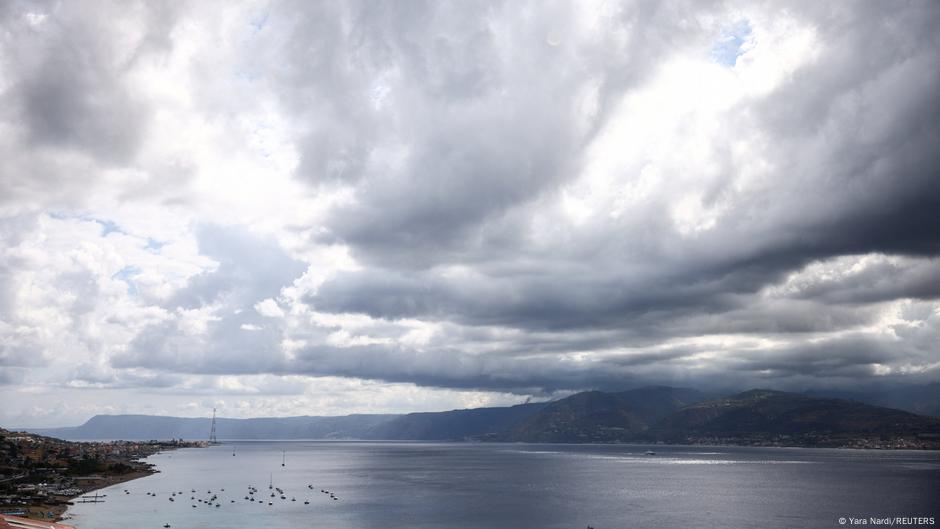
Italy's government has approved the controversial €13.5 billion ($15.6 billion) Strait of Messina Bridge project, aiming for completion by 2032, which would make it the world's longest suspension bridge. Proponents, led by Prime Minister Meloni's coalition, champion it as a crucial economic boost and development accelerator for the country's impoverished south. However, the project faces significant criticism due to its location in an earthquake zone, potential environmental damage, fears of mafia infiltration in contracts, and concerns over its immense cost and feasibility.
The Italian government has formally approved the €13.5 billion ($15.6 billion) Strait of Messina Bridge project, a state-funded initiative aimed for completion by 2032. Proponents in the Meloni government frame it as a landmark infrastructure investment, the largest in the West, designed to act as a "development accelerator" for Italy's southern regions by drastically improving transportation logistics. The project, which would create the world's longest suspension bridge, also has stated potential for dual military use. However, the approval is met with substantial controversy and risk, reflected in the mixed market sentiment. Critics and opposition parties highlight severe execution hurdles, including its location in a known earthquake zone, formal environmental complaints filed with the EU, and significant fears of mafia infiltration into the massive construction contracts. The project's long history of discussion since the 1960s without materializing fuels deep skepticism about its feasibility, while its immense cost raises concerns about it becoming a "gigantic black hole" for public resources, impacting Italy's fiscal position.
AI-powered research, real-time alerts, and portfolio analytics for institutional investors.
Overall Sentiment
mixed
Sentiment Score
-0.10
