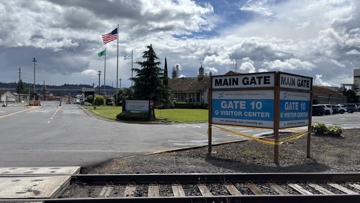
At least one person was killed and nine employees remained unaccounted for after a caustic chemical tank ruptured at Nippon Dynawave’s Longview facility, with 10 people hospitalized and emergency recovery operations ongoing. The incident involved a large white liquor tank used in pulp production, initially described as 80,000 gallons and later revised to 900,000 gallons, with up to 90,000 gallons still inside the unstable vessel. The event is a severe operational and safety shock for the plant, but likely limited to company-specific and local industrial implications rather than broad market impact.
This is a classic low-probability, high-severity industrial accident that should be treated less as a one-day headlines event and more as a multi-month operating and liability overhang. The immediate market effect is not on the facility itself alone; it is on the entire reliability premium for pulp/paper and bulk-chemical logistics in the Pacific Northwest, where one disruption can force customers to re-source feedstock, reroute freight, and carry higher safety inventory. That tends to benefit nearby substitute suppliers, tanker/chemical transport operators with compliant capacity, and environmental remediation vendors, while pressuring any peer asset with a similar process-safety profile or older infrastructure.
The second-order risk is regulatory and legal contagion. Expect a fast-moving sequence of OSHA, EPA, state environmental, and plaintiff-bar filings that can persist for quarters, with the highest risk of punitive cost escalation if investigators find maintenance, training, or container-integrity failures rather than a pure mechanical fault. The key timing distinction is that the operational shock is days to weeks, but the financial shock—insurance recoveries, remediation scope, downtime, and potential consent decrees—plays out over 6-18 months and can easily dwarf the initial incident cost.
The consensus may underappreciate how a temporary outage can reprice a niche industrial network. If this facility is a meaningful regional supplier of pulp-linked intermediates or packaging output, customers will likely lock in replacement supply at premium pricing, which can create a modest but real earnings tailwind for competitors with spare capacity. Conversely, any listed name exposed to industrial chemical handling, mill operations, or heavy logistics should see a higher discount rate until incident-specific inspections establish whether this was isolated or symptomatic of broader asset-quality risk.
The contrarian read is that the equity impact on the broader industrial complex may be overdone if investors extrapolate catastrophe across the sector. The more durable trade is not "short Industrials" indiscriminately, but to own the beneficiaries of substitution and compliance spend while fading complacent operators with similar process-risk footprints. In other words, the market likely overprices headline risk to the segment but underprices the earnings transfer to remediation, inspection, and replacement-capacity winners.
AI-powered research, real-time alerts, and portfolio analytics for institutional investors.
Request DemoOverall Sentiment
extremely negative
Sentiment Score
-0.95
