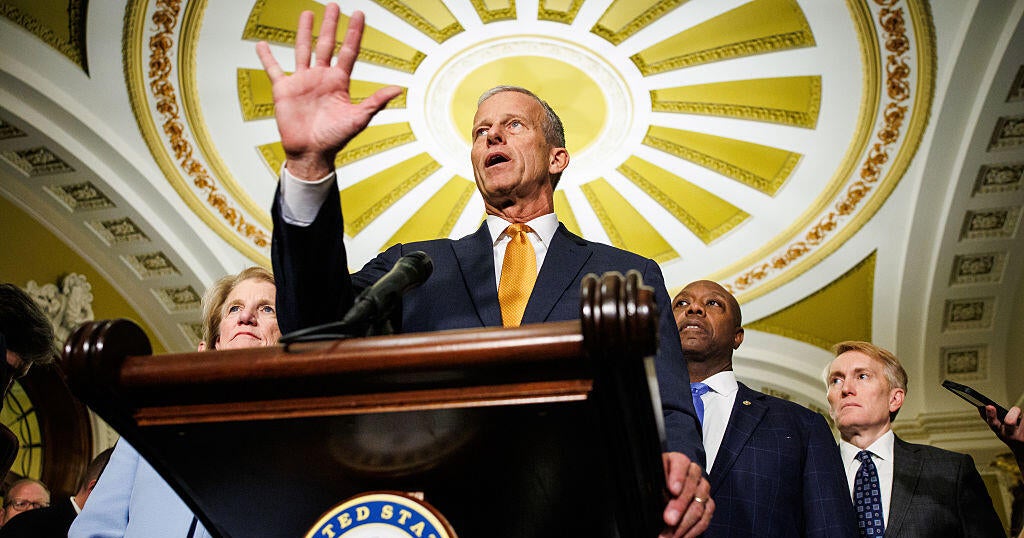
A potential bipartisan deal is emerging in the Senate to end the ongoing government shutdown, poised to become the longest in history. The proposed agreement involves funding the government via a continuing resolution alongside a package of full-year appropriations bills, in exchange for a vote on extending health insurance tax credits. While some senators express cautious optimism for a resolution this week, securing sufficient Democratic votes and agreeing on the duration of the stopgap funding, particularly given House Speaker Johnson's opposition to a December deadline, remain key hurdles. This development signals a potential off-ramp from the fiscal impasse, which could impact market stability.
A bipartisan deal is emerging in the Senate to end the government shutdown, which is nearing a historic length. The proposed agreement involves a continuing resolution (CR) to fund the government, a "minibus" package of full-year appropriations bills, and a vote on extending Affordable Care Act (ACA) health insurance tax credits, a key Democratic demand. This framework aims to address immediate funding needs and facilitate a return to regular appropriations.
Despite cautious optimism from senators like John Thune and Susan Collins for a resolution this week, significant hurdles persist. Republicans require at least five more Democratic votes for a short-term measure, and the CR's duration is contentious. House Speaker Mike Johnson has ruled out a December CR, contrasting with some senators' preference for it to avoid omnibus legislation.
The overall sentiment is mildly positive, reflecting a potential reduction in fiscal uncertainty, though the tone remains cautious. A market impact score of 0.55 suggests moderate potential for market reaction, primarily driven by the resolution of the shutdown and its implications for government spending. The tight timeline, with the current CR funding only until November 21, adds pressure for a comprehensive agreement.
AI-powered research, real-time alerts, and portfolio analytics for institutional investors.
Overall Sentiment
mildly positive
Sentiment Score
0.35
