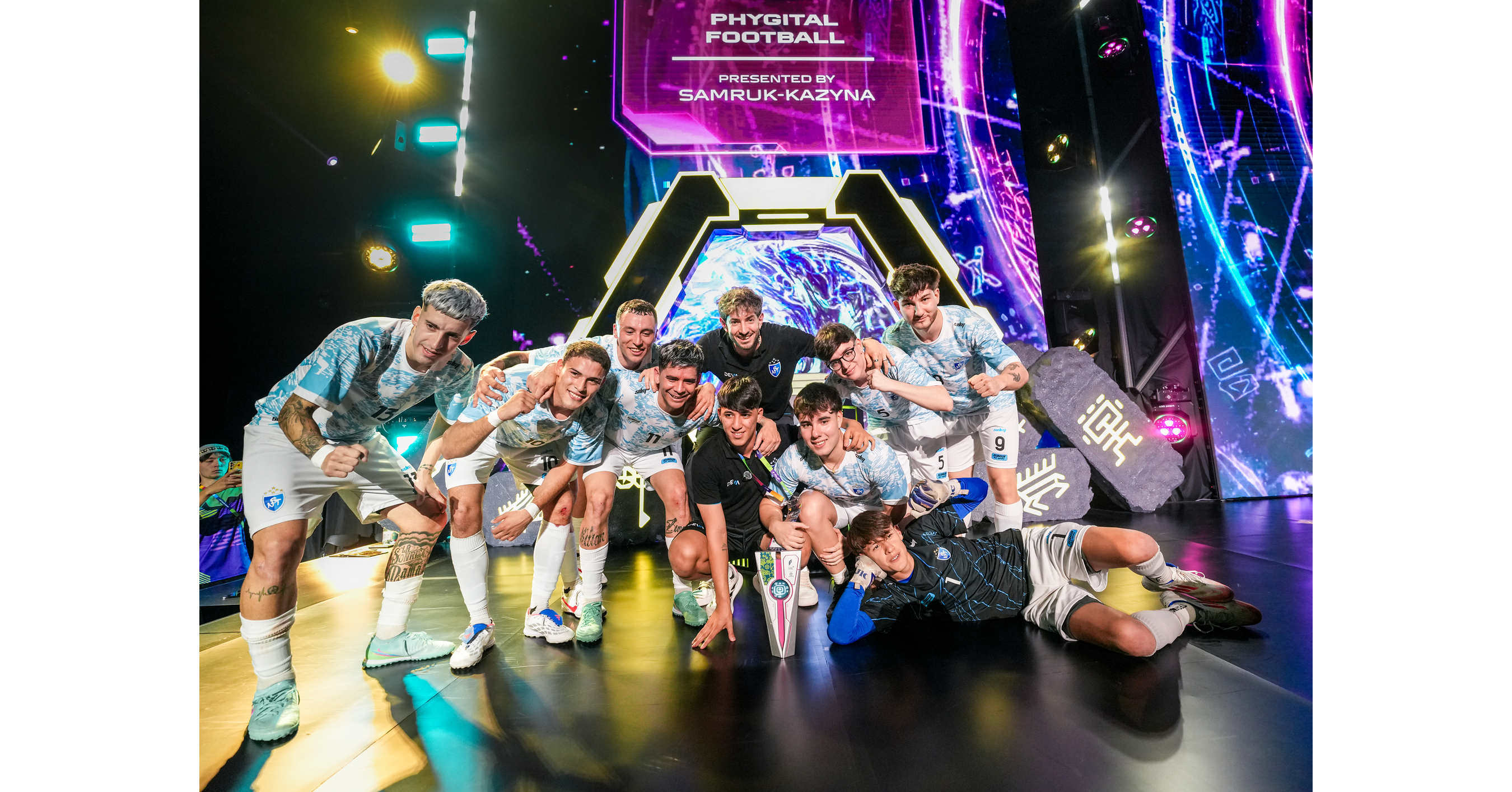
The Games of the Future Astana 2026 concluded with eight champions across phygital and esports disciplines, including 17 Gaming winning Battle Royale PUBG for a US$300,000 top prize. Phygital Basketball was won by Wilders (US$100,000), while PlayTime, NS Team, Team KZ, Archangel Michael, and Bigetron by Vitality each took titles in their respective categories. The event drew participation from ministers and delegates from 60+ countries, and coverage via 289 distribution outlets across 150+ countries, signaling strong global traction for the phygital sports format.
This looks more like a sponsor-funded proof-of-concept than an earnings-relevant event. The immediate market impact is effectively zero because the economic loop is still opaque: audience impressions and venue optics are not the same as recurring revenue, and any real monetization is likely trapped in event budgets, government support, and ad inventory rather than a scalable public-company stream.
The second-order read-through is to live-event and gaming infrastructure providers that can sell around the edges of this format, but even there the bar is high. If the next 1-3 months do not bring disclosed sponsor renewals, platform retention, or measurable conversion into app usage and bookings, this remains a branding exercise, not a durable category.
Contrarian take: the market should be careful not to extrapolate distribution breadth into TAM expansion. High distribution counts and official attendance can still coexist with weak monetization and low repeat engagement. The move would only become investable if 6-18 month data show that phygital formats actually shift DAU, ARPU, or sponsorship pricing for a real platform operator.
AI-powered research, real-time alerts, and portfolio analytics for institutional investors.
Overall Sentiment
mildly positive
Sentiment Score
0.15
Ticker Sentiment
