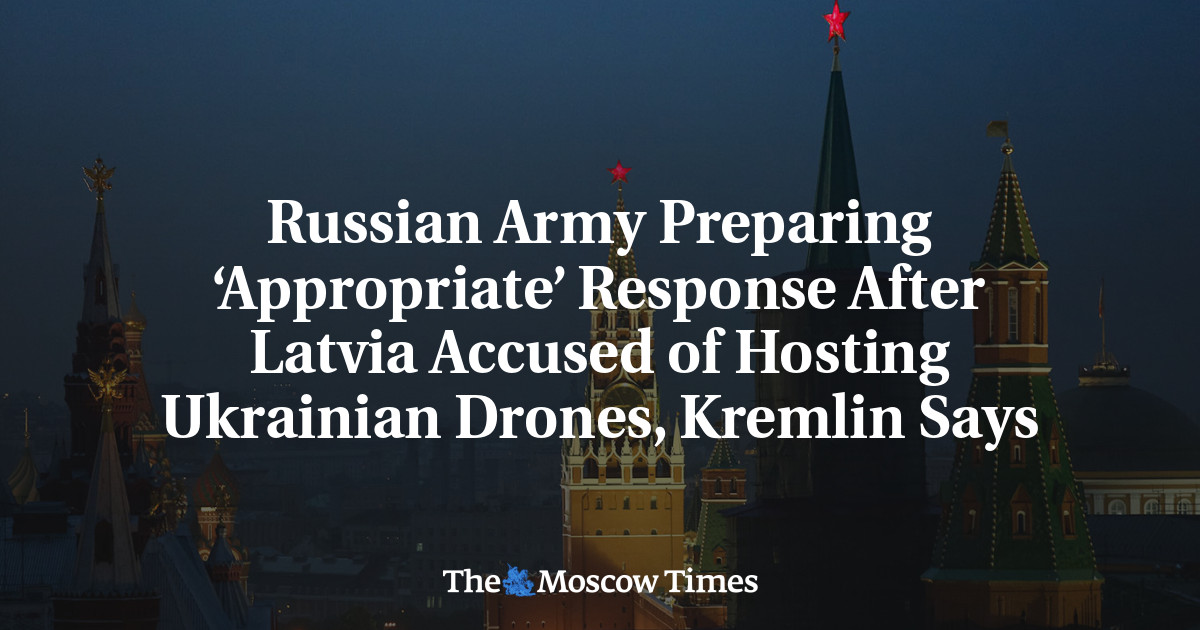
Russia said its military is preparing an "appropriate" response after accusing Ukraine of using Baltic territory for drone attacks, while the SVR separately threatened Latvia over alleged drone launches from inside NATO borders. Estonia said a NATO jet shot down a Ukrainian drone in its airspace, and Lithuania issued and later lifted a drone alert that forced evacuations to underground shelters in Vilnius. The developments underscore rising NATO-Russia tensions and repeated drone incidents across the Baltics, with potential implications for regional defense readiness and risk sentiment.
The market implication is less about immediate kinetic escalation and more about a step-change in perceived spillover risk for the Baltic/Nordic security perimeter. That tends to reprice defense procurement, air-defense interceptors, drone countermeasures, and dual-use surveillance infrastructure before it shows up in broader geopolitical risk premia. The first-order beneficiary set is Europe-focused primes and selected small/mid-cap electronic warfare names; the second-order winners are Baltic logistics, cyber, and critical-infrastructure hardening contractors as governments move from episodic response to standing preparedness budgets.
The more interesting read-through is on NATO cohesion and air-defense inventory economics. Each low-cost drone incident forces the alliance to spend expensive interceptor assets and manpower, which is structurally favorable for manufacturers of layered counter-UAS systems and unfavorable for legacy point-defense stockpiles. If these alerts continue for several weeks, the budget conversation shifts from one-off incidents to persistent sovereign resilience spending, creating a multi-quarter procurement tailwind even without a formal escalation.
Tail risk is not a direct conventional clash, but a policy overreaction that raises alert levels, disrupts transport, and pressures insurers, airlines, and regional utilities. The key catalyst window is the next 1-4 weeks: repeated airspace violations or a misattributed launch origin would push governments toward emergency procurement and tighter border controls, while a visible de-escalation or credible NATO-Russia signaling would unwind the premium quickly. The consensus may be underpricing how often these low-intensity events translate into real capex, because defense spending decisions are being pulled forward by operational embarrassment rather than by treaty commitments alone.
A contrarian angle is that the rhetoric is noisy but the Baltic states are already adapting, so the headline risk may fade faster than implied-volatility models suggest. That creates an attractive setup to own the structural winners on pullbacks rather than chase the first headline spike. The best risk/reward is in names that benefit from sustained counter-drone spending, not in broad European equities where geopolitical alpha tends to decay once markets realize the event is localized and not immediately systemic.
AI-powered research, real-time alerts, and portfolio analytics for institutional investors.
Request DemoOverall Sentiment
moderately negative
Sentiment Score
-0.35
