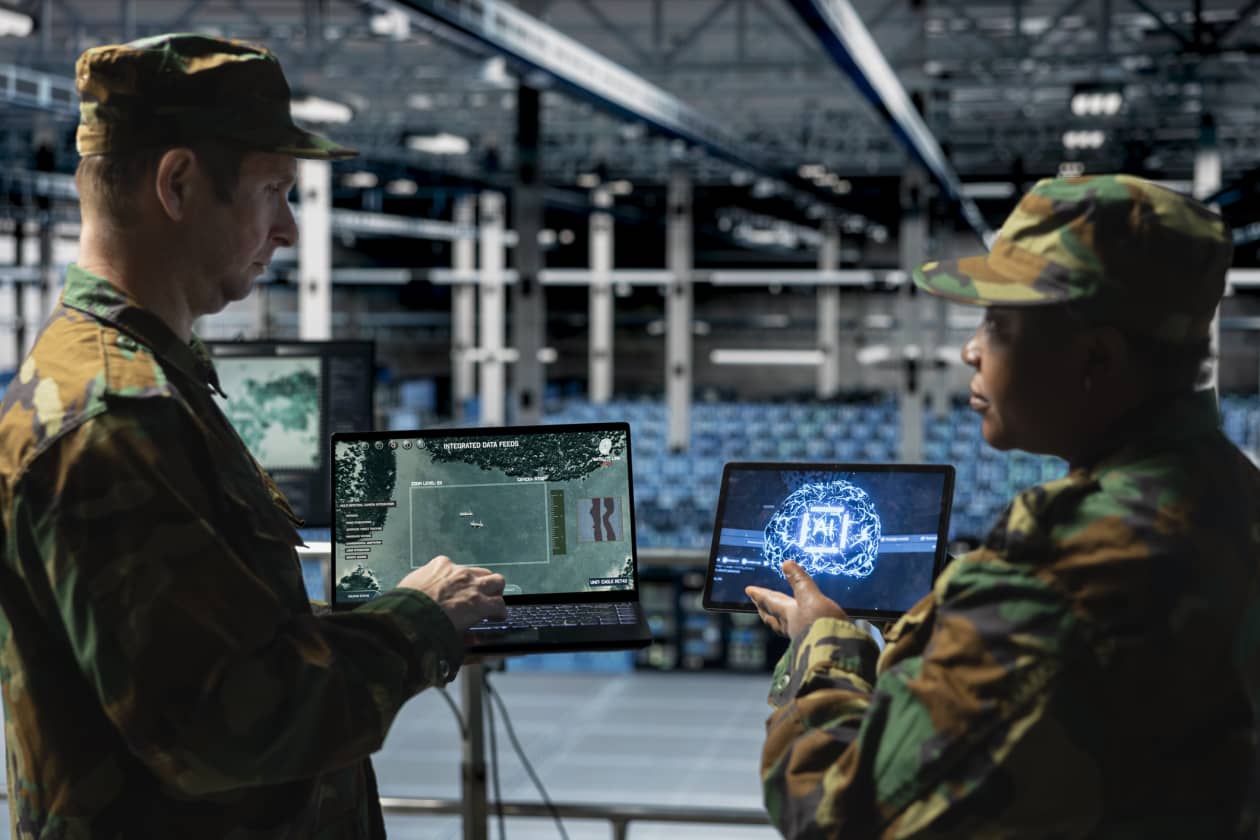
The Pentagon said it has signed agreements with seven frontier AI firms, including OpenAI, SpaceX, Nvidia, Microsoft, Google and Amazon, to make their AI available for classified use. The deals support the Defense Department’s push to build an 'AI-first fighting force' and broaden government adoption of advanced models. The news is constructive for the named companies and signals a meaningful new demand channel for frontier AI infrastructure and software.
This is less a near-term revenue event than a durable procurement signal: the government is creating a parallel demand channel for frontier models that is insulated from consumer cyclicality and, critically, from some commercial procurement scrutiny. The first-order winners are the platform vendors with the deepest compliance, security, and deployment stacks; the second-order winner is the compute layer, because classified adoption tends to expand inference loads faster than headline seat counts, which supports sustained GPU and cloud utilization rather than one-off license fees.
The more interesting implication is competitive moat expansion. Once these models are embedded in defense workflows, switching costs rise sharply because retraining, accreditation, and audit trails become part of the product, not just the contract. That favors incumbents with federal relationships and deployment capability, while smaller frontier labs may be forced into either niche specialization or acquisition discussions if they cannot clear security and reliability hurdles at scale.
The main risk is timing mismatch: investors may front-run a multi-year revenue stream as if it were immediate. Any slip in security certification, export-control concerns, or political backlash over “AI militarization” could push monetization several quarters out, and defense budgets can re-prioritize quickly if the macro backdrop tightens. The contrarian view is that the market may be underpricing the indirect beneficiaries more than the headline names — especially suppliers of AI infrastructure, networking, and data-center power — because classified workloads are power- and latency-intensive and tend to pull through capex long before they generate visible software ARR.
AI-powered research, real-time alerts, and portfolio analytics for institutional investors.
Overall Sentiment
mildly positive
Sentiment Score
0.35
Ticker Sentiment
