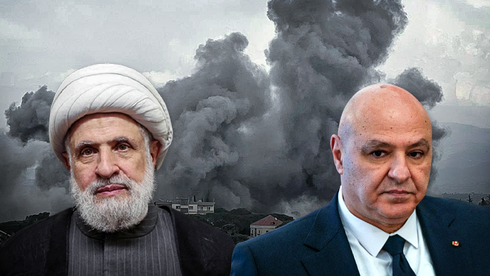
The article describes a renewed escalation in the Israel-Hezbollah conflict, with the IDF striking Hezbollah targets in the Bekaa Valley and other areas of southern Lebanon, including weapons storage and rocket-launch infrastructure. Hezbollah threatened further escalation, including suicide bombers, while President Joseph Aoun accused the group of treason and pushed for negotiations to end the war. The confrontation increases regional security risk and keeps the ceasefire under severe strain.
This is less about Lebanon per se and more about the market pricing a widening probability distribution for a broader regional security regime failure. Once a ceasefire is visibly non-binding, the marginal buyer in defense and cyber is no longer the tactical dip buyer but the strategic allocator who can underwrite multi-quarter budgets, which tends to extend the trade well beyond headline spikes. The second-order effect is on logistics and insurance: even if the conflict stays geographically contained, elevated perceived missile/drone risk around Levantine air and sea corridors can tighten war-risk premia and raise delivery frictions for anyone with Mediterranean exposure.
The biggest near-term beneficiary is the Israeli defense stack, but the more interesting long trade is into companies with replenishment exposure rather than one-time procurement. If escalation continues, the winners are those tied to interceptors, sensors, counter-UAS, and rapid munition restocking; the losers are import-sensitive industrials and regional carriers with any Middle East routing optionality. A deeper conflict also increases the odds that European defense names with air-defense capacity get incremental order flow, since stockpiles are the real bottleneck and procurement lead times are long.
The contrarian risk is that the rhetoric is outpacing actual state capacity. Hezbollah can create tactical volatility, but sustained conventional pressure plus domestic Lebanese political fragmentation may force a visible de-escalation faster than consensus expects, especially if non-state force projection becomes too costly. That suggests the trade should be sized as a volatility expression, not a duration bet: the regime change in odds is immediate, but the upside from a full-blown regional spillover is less certain and likely capped by exhaustion on all sides.
AI-powered research, real-time alerts, and portfolio analytics for institutional investors.
Request DemoOverall Sentiment
strongly negative
Sentiment Score
-0.72
