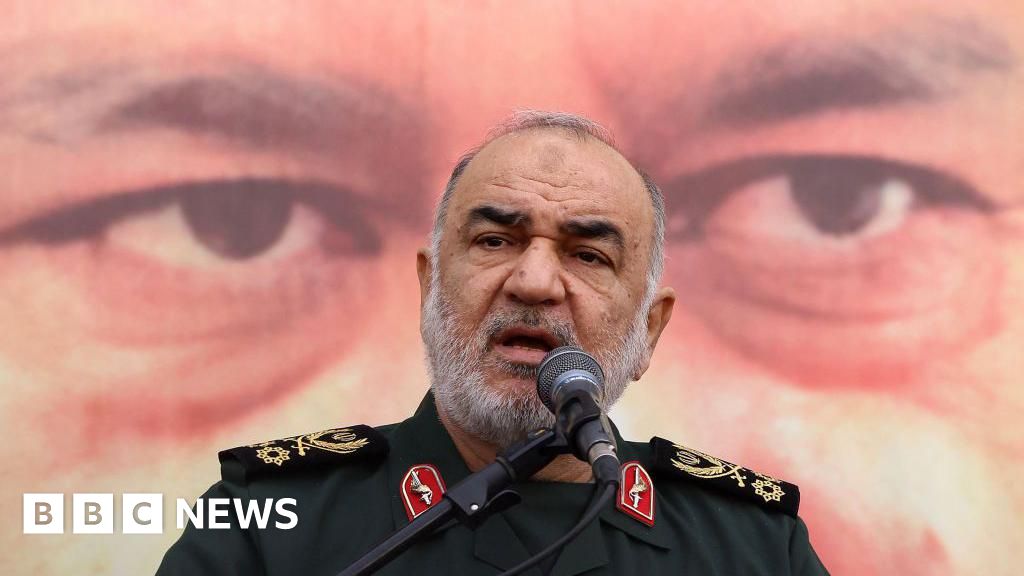
Hossein Salami, commander of Iran's Islamic Revolutionary Guard Corps (IRGC), was killed in Israeli strikes, marking the most senior Iranian leader fatality in the attacks. The strikes, which targeted nuclear facilities, ballistic missile factories, and military commanders, have escalated tensions, with Iran vowing a "heavy price" for the attacks that also killed other high-ranking military officials and nuclear scientists. This event raises concerns about a potential full-scale war in the region, especially given Salami's hardline stance against Israel and the US, and his previous warnings of retaliation against any attack.
The reported killing of Hossein Salami, commander of Iran's Islamic Revolutionary Guard Corps (IRGC), alongside other senior military figures including Chief of Staff Mohammad Bagheri and deputy commander Gholamali Rashid, in Israeli strikes targeting nuclear facilities, ballistic missile factories, and military commanders, marks a severe escalation in regional hostilities. Salami, the most senior Iranian leader killed in these attacks and known for his hardline stance and prior threats of significant retaliation, including a warning that Tehran would "open the gates of hell," has prompted Iranian vows to exact a "heavy price," significantly increasing the risk of a wider conflict. This development occurred despite reported warnings from US President Donald Trump to Israel against jeopardizing potential nuclear deal talks. The IRGC, a formidable force with over 190,000 active personnel, its own armed forces branches, control over strategic weapons, the Basij Resistance Force, an estimated one-third of Iran's economy, and the influential Quds Force, is central to the Iranian regime's power structure, making this event a direct and substantial blow. The associated "strongly negative" sentiment (-0.8) and "high" market impact score (0.85) underscore the profound geopolitical instability and potential for widespread repercussions, aligning with themes of "Geopolitics & War" and potential sanctions implications.
AI-powered research, real-time alerts, and portfolio analytics for institutional investors.
Request DemoOverall Sentiment
strongly negative
Sentiment Score
-0.80
