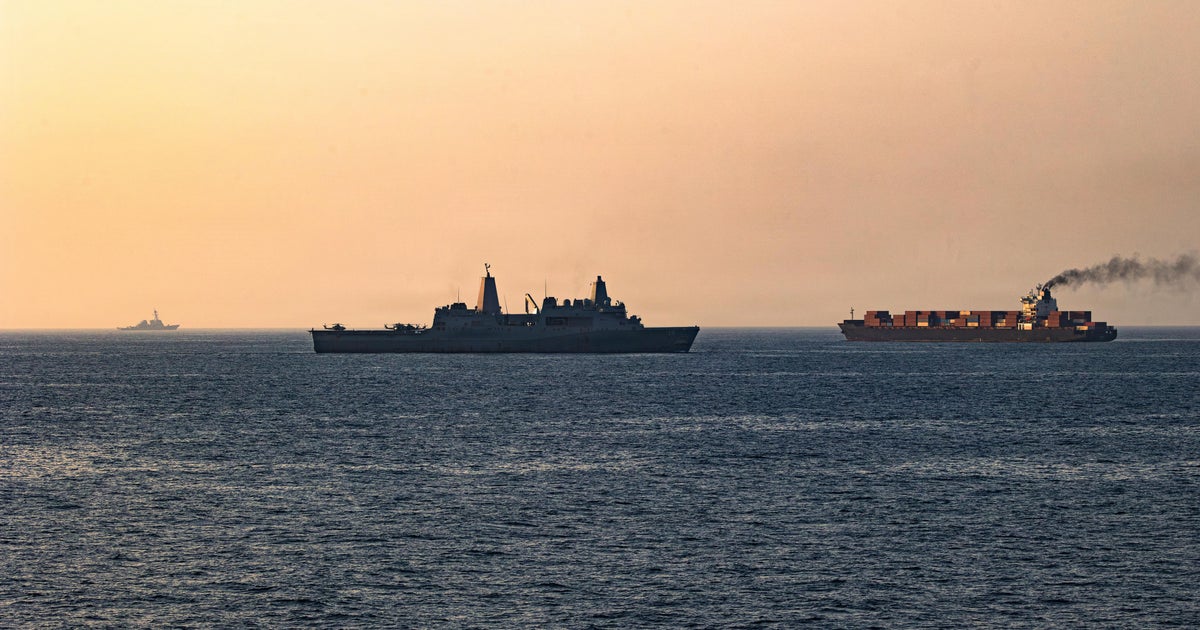
At least two ships were attacked in the Strait of Hormuz, with the UKMTO reporting gunfire damage to a container ship's bridge and a second cargo vessel stopping in the water; the IRGC later said both vessels were intercepted and escorted to the Iranian coast. The incidents raise immediate risks to one of the world's most critical shipping chokepoints and could disrupt crude flows, freight rates, and broader trade routes. The attacks occurred just after President Trump extended the Iran ceasefire deadline, increasing geopolitical tension and the chance of further escalation.
The market’s first-order reaction should be higher freight, higher insurance, and a steeper risk premium across any asset with even indirect exposure to Gulf chokepoints. The more important second-order effect is that this is not just an energy story: repeated interruptions in one of the world’s narrowest transit lanes create a time-to-delivery shock that can cascade into inventory rebuilding, charter-rate spikes, and margin pressure for industries that rely on just-in-time inputs. That tends to hit European industrials, Asian exporters, and retailers before it shows up in headline inflation prints.
The biggest beneficiary is not necessarily crude outright, but volatility in oil and shipping. Short-dated energy vol should stay bid because the market now has a plausible path to a supply shock without needing a formal broader war, and that keeps prompt spreads, tanker rates, and marine insurance elevated even if physical barrels keep moving. On the loser side, airlines, chemical manufacturers, and container-heavy importers face a nasty asymmetry: fuel and freight costs can reprice in days, while pass-through is often measured in quarters.
The key catalyst is whether this remains a one-off enforcement action or becomes a pattern that forces carriers to reroute or self-sanction Gulf transits. If more ships turn back over the next 24-72 hours, the move can accelerate quickly because voyage disruption feedback loops tend to be nonlinear: fewer transits, less visibility, more precautionary avoidance. The counter-risk is diplomatic de-escalation or a verified corridor arrangement, which would crush the risk premium faster than it built because much of the upside is event-driven rather than fundamental.
Consensus may be underestimating how much of the damage can occur without a lasting closure of the strait. Even a brief campaign of harassment can lift delivered energy costs, raise working capital needs, and tighten global shipping capacity for weeks. That means the tradable opportunity is less about forecasting a prolonged war and more about monetizing a spike in volatility and logistics stress before policymakers reassert control.
AI-powered research, real-time alerts, and portfolio analytics for institutional investors.
Request TrialOverall Sentiment
strongly negative
Sentiment Score
-0.80
