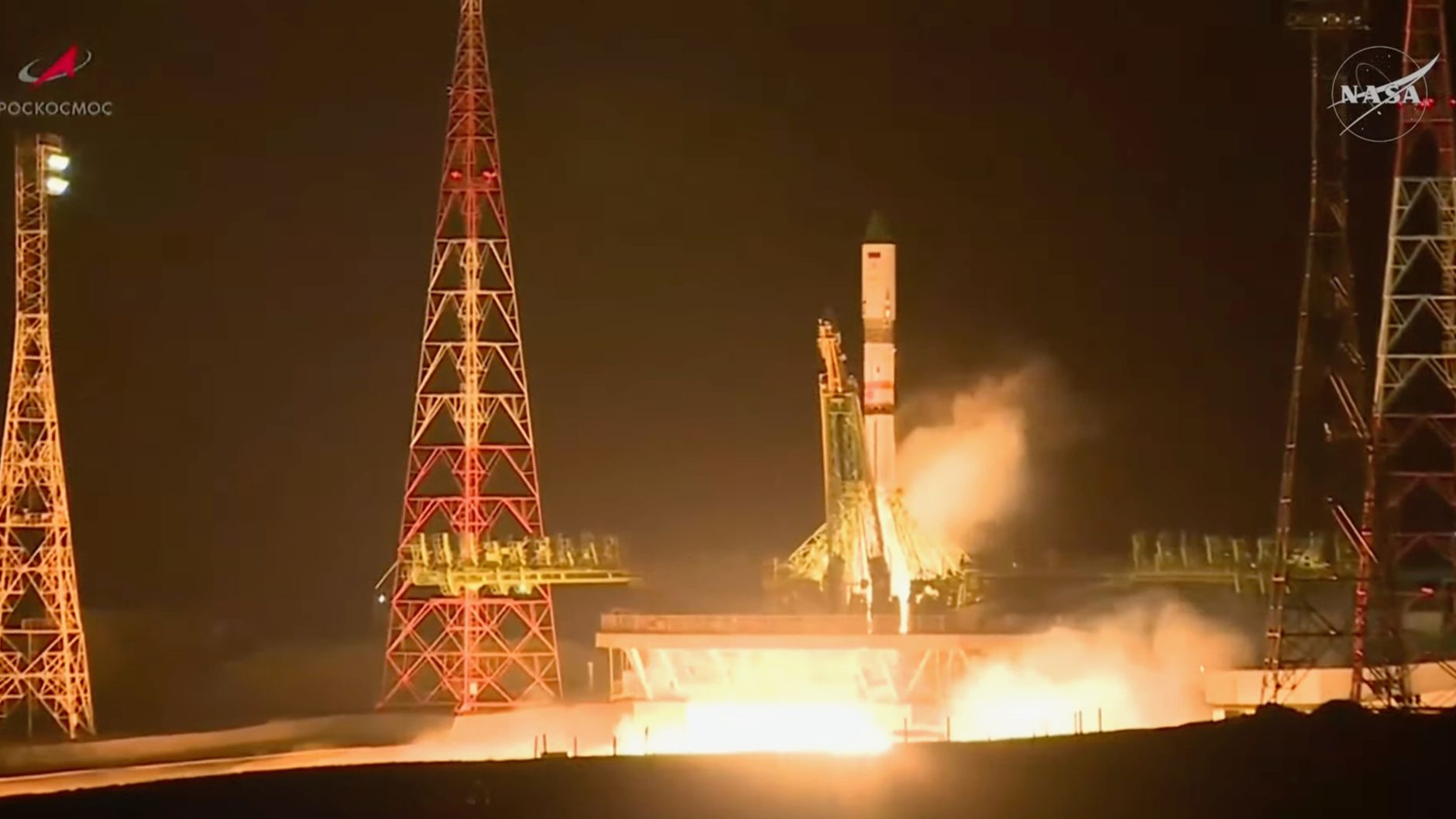
Russia launched the Progress 95 cargo ship carrying about 3 tons of food, propellant and other supplies to the International Space Station from Baikonur Cosmodrome on April 25. The freighter is scheduled to dock on April 27, marking the year's second Progress mission and continuing routine ISS resupply operations. The article is factual and operational, with minimal direct market impact.
This is a modestly positive operating signal for the incumbent Russian launch ecosystem, but the market read-through is more about reliability than revenue. For defense/infrastructure names, repeated successful ISS logistics flights help preserve the perception that Russia still has a credible human-spaceflight and orbital servicing stack despite sanctions, which matters for maintaining launch cadence, subcontractor utilization, and bargaining power with state customers. The economic impact is limited in absolute dollar terms, but the second-order effect is that stable sortie tempo reduces the risk of a visible program disruption that could force expensive redesigns or emergency Western replacement capacity.
The more interesting lens is competitive positioning against U.S. and allied resupply capacity. Every clean Progress mission slightly lowers urgency for NASA/partners to overpay for near-term contingency logistics, while any failure would have strengthened alternatives in Northrop/SpaceX/other suppliers. The fact that the mission included propellant and station-critical consumables also underscores how tightly ISS operations depend on predictable lift, so launch reliability is effectively a geopolitical service metric.
The contrarian view is that this is not a tradable positive for Russia-linked industrial exposure because success is the base case and the capital market has already discounted a status quo that avoids escalation. The real risk lies in the next 1-2 missions: if cadence slips or docking issues recur, the narrative flips quickly from routine maintenance to degraded reliability, which could accelerate Western de-risking of any remaining cooperative space arrangements. For NOC, the read-through is neutral-to-slightly positive only insofar as sustained ISS servicing keeps the station alive longer and preserves demand for station support, but there is no direct earnings catalyst here.
AI-powered research, real-time alerts, and portfolio analytics for institutional investors.
Request DemoOverall Sentiment
neutral
Sentiment Score
0.05
Ticker Sentiment
