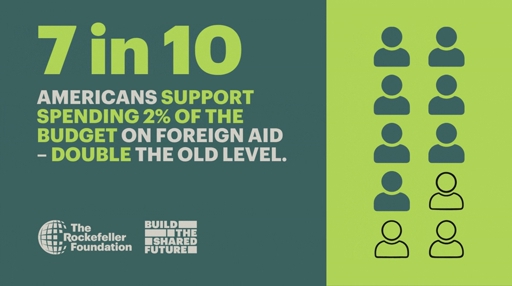
A new Echelon Insights/Rockefeller Foundation poll finds 54% of Americans view U.S. foreign aid favorably a year after USAID’s dismantlement, rising to 70% once respondents learn more about costs and outcomes (+16 points). It also shows strong support to reform and strengthen rather than eliminate foreign aid (81% overall; 83% among Republicans) and a majority backing a doubled allocation to 2% of the federal budget (70%, including 49% of Trump supporters). The survey’s findings are supportive of maintaining or restoring global health and humanitarian funding amid the 2026 Ebola outbreak, with 70% saying they would restore aid if cuts are estimated to cause 9M+ deaths by 2030.
This is a sentiment signal, not a cash-flow event. The only tradable angle is a potential re-rating of programs and vendors that can prove measurable outcomes, but that requires actual budget language, not survey data. In the meantime, the market should treat this as a mild tailwind for firms with compliance, monitoring, and global-health delivery capabilities, while purely grant-dependent NGOs and small implementers remain exposed to appropriations churn.
The second-order dynamic is reallocation, not expansion: if policymakers respond, dollars likely shift toward auditable, outcome-based channels rather than a broad restoration of legacy aid structures. That favors large-platform beneficiaries in data, logistics, surveillance, and diagnostics over boutique contractors. It also means any uplift is likely to show up first in procurement frameworks and multiyear programs, not in near-term revenue prints.
Contrarian view: consensus may be overpricing the idea that public support translates into spending. Deficit politics, election timing, and the fact that aid is still an easy bargaining chip mean the base case remains status quo-plus-small changes over the next 1-3 months. The thesis breaks if appropriations text, OMB guidance, or campaign messaging fails to convert this sentiment into line-item funding; absent that, the move is mostly headline noise.
AI-powered research, real-time alerts, and portfolio analytics for institutional investors.
Overall Sentiment
mildly positive
Sentiment Score
0.15
Ticker Sentiment
