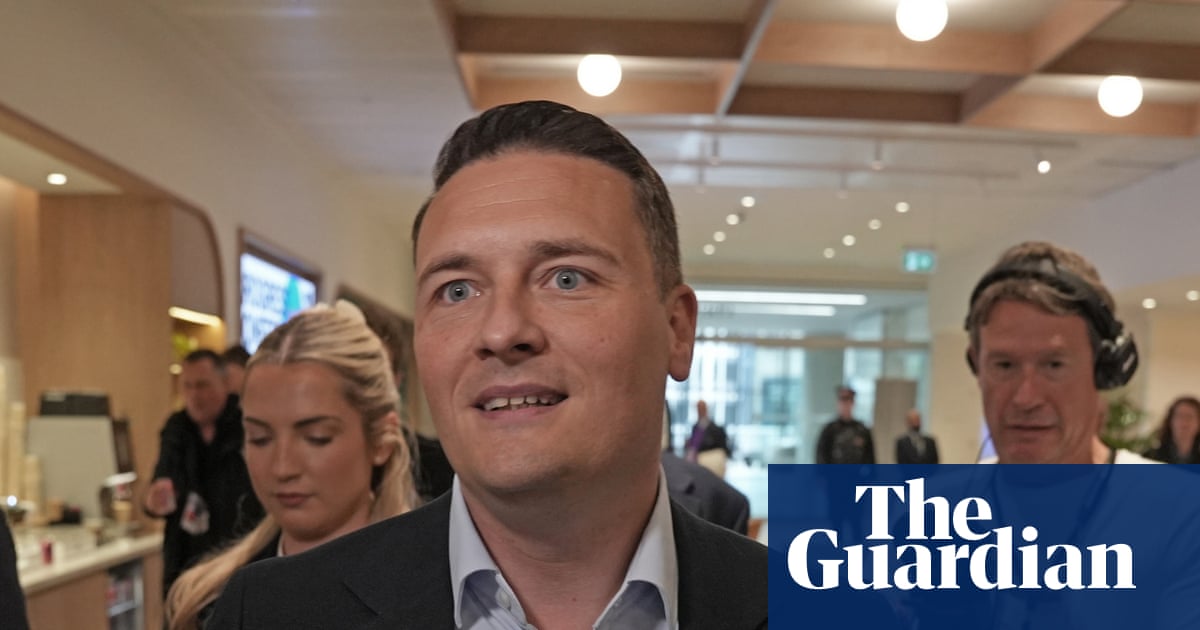
Wes Streeting said he would run in any Labour leadership contest and called for a "proper contest," while criticizing Keir Starmer’s leadership style and the government’s readiness after two years in power. He backed rejoining the EU, described Brexit as a "catastrophic mistake," and argued closer ties to Europe would support trade, defence, and economic rebuilding. The remarks heighten Labour leadership speculation around Streeting and Andy Burnham, but the immediate market impact is limited.
This is not a policy event yet; it is an early signal that Labour’s internal cohesion is weakening at the exact moment investors want execution certainty. The market implication is a higher probability of policy drift, especially on fiscal restraint, trade alignment with Europe, and technology regulation, because a leadership fight forces contenders to sharpen identities rather than optimize governability. That typically widens the gap between headline rhetoric and actual implementation, which matters most for domestic UK cyclicals, consumer confidence, and sterling-sensitive assets.
The second-order winner is the opposition ecosystem: any prolonged contest increases the odds of a softer, more Europe-friendly Labour platform, which would be mildly positive for UK midcaps with EU revenue exposure and for sectors dependent on smoother trade flows. The loser is the government’s ability to anchor expectations around budgets and spending priorities; if this escalates, the risk is a creep in long-dated gilt term premium as investors demand more compensation for political instability. The effect should show up first in 1-3 month horizon instruments rather than outright macro deterioration.
The contrarian point is that markets may overstate the probability of an immediate rupture. A leadership challenge is still constrained by parliamentary arithmetic, so the more tradable signal is not regime change but a higher variance outcome distribution: more policy concessions, more cabinet churn, and less legislative throughput. That is usually bearish for domestically levered UK assets, but not uniformly — companies with UK regulation exposure and low international revenue are the most vulnerable, while exporters and large-cap global earners are relatively insulated. If Burnham/Streeting competition becomes concrete, expect volatility to cluster around polling and byelection milestones rather than in a straight line.
AI-powered research, real-time alerts, and portfolio analytics for institutional investors.
Request DemoOverall Sentiment
mildly negative
Sentiment Score
-0.15
