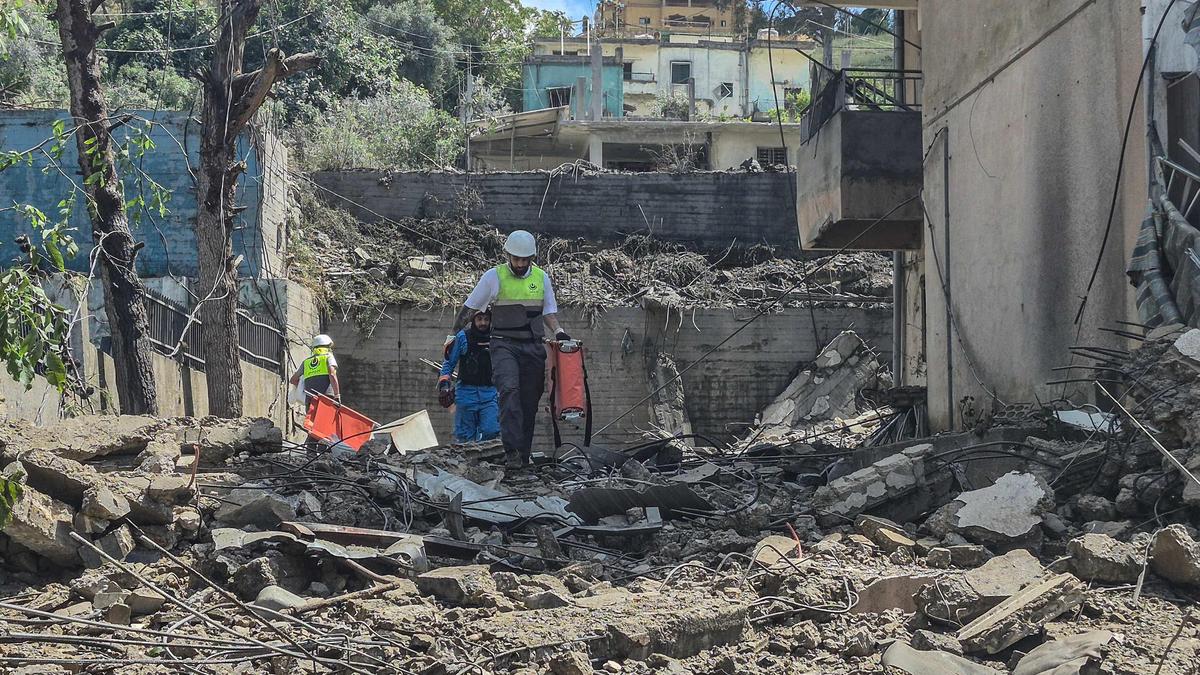
The U.S. conducted self-defence strikes in southern Iran on missile launch sites and boats placing mines, while saying it is still using restraint during the ceasefire. Israel also warned residents of 10 villages in southern Lebanon to evacuate ahead of expected strikes on alleged Hezbollah targets. Trump said negotiations were proceeding nicely and Rubio suggested a possible deal announcement, but the article overall points to elevated geopolitical and military risk.
The key market signal is not the strike itself but the mismatch between diplomatic messaging and military execution. That combination usually widens the probability distribution for outcomes: headline risk rises, but so does the chance of a fast de-escalation if both sides want to preserve a face-saving off-ramp. In the next 3-10 trading days, the most sensitive assets are those priced for a durable ceasefire and lower regional tail risk; any evidence that the runway to a formal deal is longer than implied will hit that basket first.
Second-order effects should show up less in broad oil beta than in shipping, industrials with Middle East exposure, and defense logistics. Even limited strikes can prompt insurers and charterers to re-rate transit risk, which can lift freight premiums before actual supply disruption appears. That creates a cleaner expression than outright energy longs if the market continues to discount a contained conflict.
The contrarian read is that restraint itself may be bullish for risk assets if the U.S. is signaling a controlled escalation path to improve bargaining leverage, not a broader war. If so, the downside in equities may be shallow and short-lived, while vol sellers get punished on any miss in the diplomatic timeline. The real tail risk is a miscalculation around mines or proxy retaliation, which would convert a negotiated process into a months-long risk premium reset.
For defense names, the opportunity is not the initial headline but the expectation of higher replenishment and readiness budgets if this becomes a pattern rather than an event. That thesis plays out over quarters, not days, and is strongest if policymakers start framing the strikes as a model for future containment. The near-term trade is therefore about optionality on escalation rather than directional conviction on war.
AI-powered research, real-time alerts, and portfolio analytics for institutional investors.
Request DemoOverall Sentiment
mildly negative
Sentiment Score
-0.35
