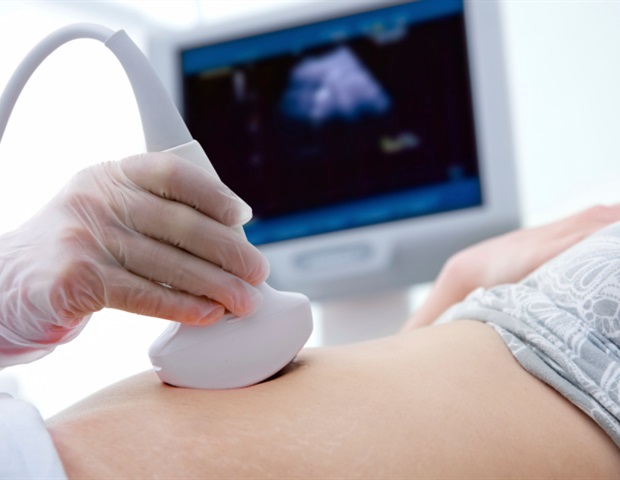
UC San Diego researchers developed a wearable ultrasound patch that continuously monitored 62 pregnancies for hours at a time, including high-risk cases, with measurements closely matching standard handheld ultrasound. In one clinical case, it detected prolonged abnormal fetal signals that led to an early Cesarean delivery, highlighting potential to improve outcomes in complicated pregnancies. The device could broaden access to prenatal monitoring in low-resource settings, and the team plans a wireless version next.
This is not a near-term revenue event for public markets so much as a validation milestone for a new monitoring modality: the moat is shifting from imaging hardware to software-defined, longitudinal diagnostics. The real economic winner set is likely to be companies that own obstetrics data workflows, remote maternal-fetal monitoring platforms, and payers that can monetize avoided NICU stays and emergent deliveries; the first device vendor to pair continuous sensing with reimbursement and hospital integration could create a sticky, high-margin consumables/software annuity.
The second-order effect is pressure on the current prenatal care model. If continuous monitoring meaningfully lowers intervention latency in high-risk pregnancies, then high-acuity OB practices and tertiary centers gain triage efficiency, while standalone ultrasound workflow becomes more commoditized over a 2-5 year horizon. The loser is not ultrasound as a category, but point-in-time interpretation labor: technicians and manual review processes become less differentiated if autonomous tracking proves robust across larger, messier cohorts.
The contrarian miss is that clinical utility is not the same as adoption velocity. Obstetrics is one of the slowest reimbursement environments in medicine, and a device that proves it can detect earlier deterioration still needs clear outcomes data, CPT coverage, workflow integration, and medico-legal comfort before it scales. The most likely failure mode is not technical; it is a protracted gap between promising pilot data and payer/provider willingness to pay for continuous surveillance.
Risk/reward is asymmetric over 12-36 months: upside if the platform becomes a standard for high-risk pregnancies, but downside if adoption remains confined to academic centers and emergency-edge cases. Expect the first commercialization value to accrue in partnerships, licensing, and venture-backed private companies rather than immediate public-market multiple expansion.
AI-powered research, real-time alerts, and portfolio analytics for institutional investors.
Request DemoOverall Sentiment
moderately positive
Sentiment Score
0.65
