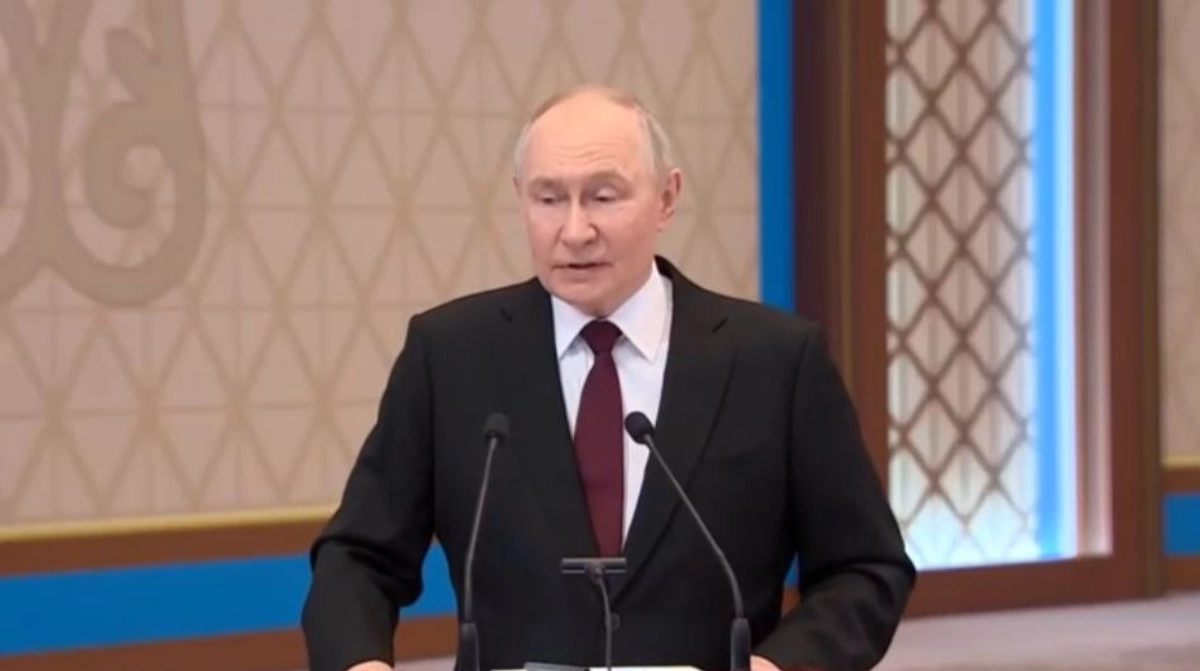
Putin reiterated that the war in Ukraine is, in his view, approaching its end, citing battlefield advances, but he declined to give any timeline while military operations continue. He also repeated that he is willing to meet Zelenskyy in a third country only to sign a final peace agreement. The remarks reinforce the prospect of negotiations but do not signal an immediate ceasefire or concrete de-escalation.
The market implication is not that the war is ending; it is that Moscow is trying to reset expectations around duration while preserving optionality on escalation. That matters because any perception of a near-term path to settlement can compress the geopolitical risk premium in European defense, energy logistics, and select industrials even if the underlying probability of a durable ceasefire remains low. The first-order move is usually in sentiment; the second-order move is capital allocation as European governments face pressure to justify incremental defense spending if headline risk appears to be receding.
The bigger read-through is to suppliers tied to replenishment cycles rather than headline conflict intensity. If investors start discounting a slower-war scenario, defense primes can de-rate on lower urgency, but ammunition, air defense, and infrastructure hardening budgets are often sticky for 12-24 months because procurement lags the political narrative. That creates a divergence: visible headline names may wobble, while the subcontractors and electronics/content suppliers with multi-year backlogs stay supported as governments continue rebuilding inventories.
For commodities and shipping, the risk is less about immediate disruption and more about a sharper left-tail if diplomacy fails after positioning has shifted toward complacency. A failed negotiation or renewed battlefield escalation would reprice European gas and diesel shipping routes quickly, and those moves tend to be violent because speculative shorts build on peace headlines. The highest-beta window is the next few weeks, when each public statement can whipsaw defense and energy exposure without any actual change in battlefield fundamentals.
Consensus may be overestimating how much a rhetorical thaw can change procurement behavior. Even if ceasefire odds improve, NATO members are unlikely to unwind spending commitments fast enough to hurt the defense ecosystem meaningfully this year, while any delay in peace keeps the market underexposed to a renewed flare-up. That asymmetry argues for fading the most obvious 'peace trade' beneficiaries and owning the names with budget durability or conflict re-escalation convexity.
AI-powered research, real-time alerts, and portfolio analytics for institutional investors.
Request DemoOverall Sentiment
neutral
Sentiment Score
-0.10
