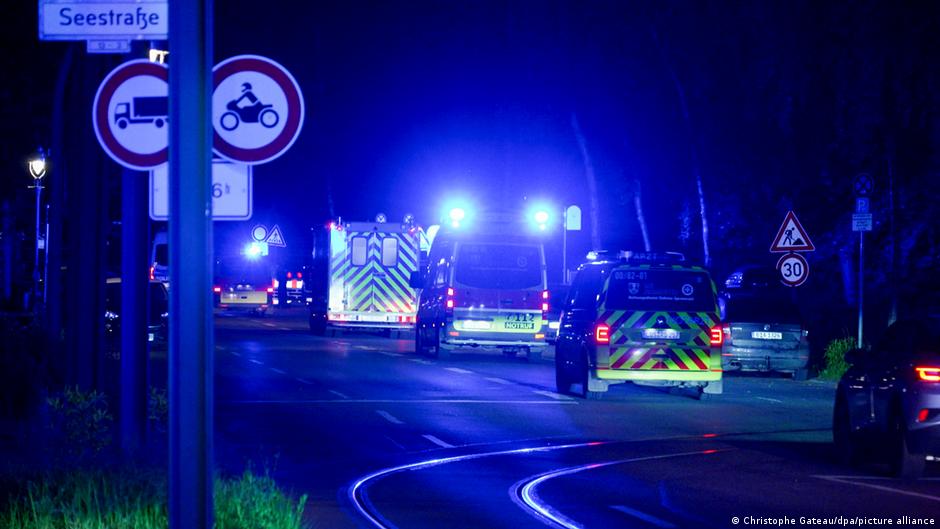
A US doctor infected with Ebola is being treated in Berlin’s Charite high-level isolation unit after contracting the disease in the Democratic Republic of the Congo. The article highlights Germany’s seven specialized isolation facilities, the logistics of medical evacuation, and the role of global coordination in containing outbreaks. The piece is informational rather than market-moving, with limited direct financial impact.
This is a reminder that biosecurity is increasingly a logistics and capacity trade, not just a clinical one. The market implication is less about the single patient and more about the premium assigned to jurisdictions with hardened containment infrastructure, which should incrementally benefit specialized hospital operators, air-medical transport, and biosafety equipment vendors over the next 6-24 months. The second-order effect is reputational: countries that can safely absorb rare high-consequence cases strengthen their standing as hubs for advanced medicine, which can pull referral flow and research activity toward them.
The bigger risk is operational spillover rather than broad public-health disruption. In the near term, any adverse event in transport or isolation protocols would quickly reprice exposure to medical logistics and trigger regulatory review of cross-border evacuation procedures; that tail risk is low probability but high severity over days to weeks. Over months, the more durable catalyst is policy: outbreaks like this often justify higher funding for isolation units, biodefense stockpiles, and hospital surge capacity, especially in Europe where current coverage is concentrated in a small number of centers.
The contrarian point is that the event is probably underpriced as a long-duration capex and procurement theme. Investors tend to treat Ebola headlines as transient, but the real trade is on the normalization of preparedness budgets and recurring training, filtration, waste handling, and negative-pressure infrastructure. That argues for looking through the headline noise to beneficiaries with recurring revenue tied to containment readiness rather than one-off crisis response.
I would not fade the immediate risk-off impulse in aviation or travel because the article itself argues for containment, not contagion; the cleaner expression is to own the picks-and-shovels layer. The key question is whether governments convert this into multi-year funding, and that is where the asymmetry sits: if they do, the move is early; if not, the trade dies quietly after the news cycle fades.
AI-powered research, real-time alerts, and portfolio analytics for institutional investors.
Request DemoOverall Sentiment
neutral
Sentiment Score
-0.10
