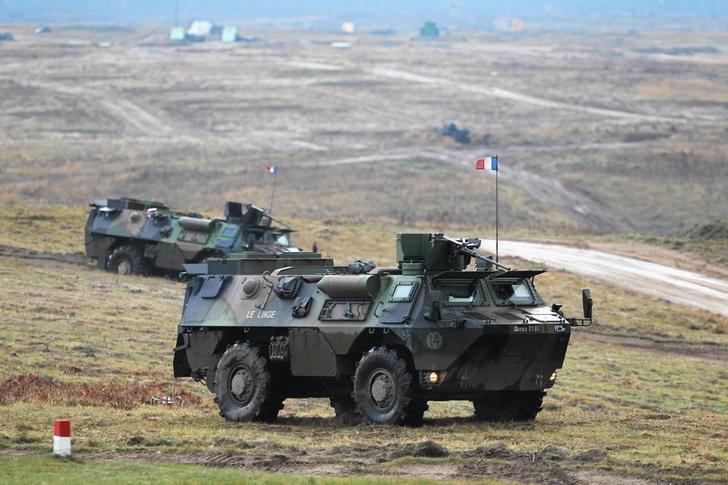
NATO says it remains on track to meet its higher defense-spending goals, with members moving toward 3.5% of GDP for core defense and an additional 1.5% for related security measures. Admiral Giuseppe Cavo Dragone said cooperation with the U.S. remains stable despite pressure from Washington and recent criticism from Defense Secretary Pete Hegseth. The article reinforces a constructive backdrop for European defense budgets and defense contractors, but it is largely qualitative and unlikely to move broad markets on its own.
The market is underpricing the duration of the defense capex cycle. Once allied budgets move from rhetoric to appropriations, the second-order winner is not the prime contractors alone but the European industrial base: ammunition, short-cycle munitions, secure comms, drones, EW, and maintenance-heavy land systems should see faster order conversion than big-ticket platforms with multi-year procurement lead times.
The more interesting trade is on the supplier bottleneck. If Europe shifts spending faster than its domestic manufacturing capacity can absorb, margins accrue to firms with inventory, tooling, and export-friendly production footprints, while pure-play primes with stretched backlogs may see working capital pressure before revenue shows up. That makes this a better relative-value setup than a simple beta-long defense basket, especially if governments front-load procurement into 2026 budgets.
Consensus is focused on higher topline defense spending, but the hidden catalyst is fiscal reprioritization: defense outlays will compete with welfare, housing, and climate budgets, creating political volatility in the weaker-credit sovereigns. That can widen dispersion across European sovereign spreads and favor contractors with U.S. exposure or NATO-standardized products, while more domestically dependent names face procurement delays if coalition politics shift.
The contrarian risk is that the market is extrapolating headline spending without realizing execution risk: if alliance members rely on accounting reclassification, the spend can look large while near-term cash orders remain modest. A de-escalation in U.S.-Europe rhetoric or a paused summit outcome would likely compress defense multiples first, but the broader cycle should still persist over 12-24 months because replenishment demand is now structural, not event-driven.
AI-powered research, real-time alerts, and portfolio analytics for institutional investors.
Request TrialOverall Sentiment
neutral
Sentiment Score
0.10
