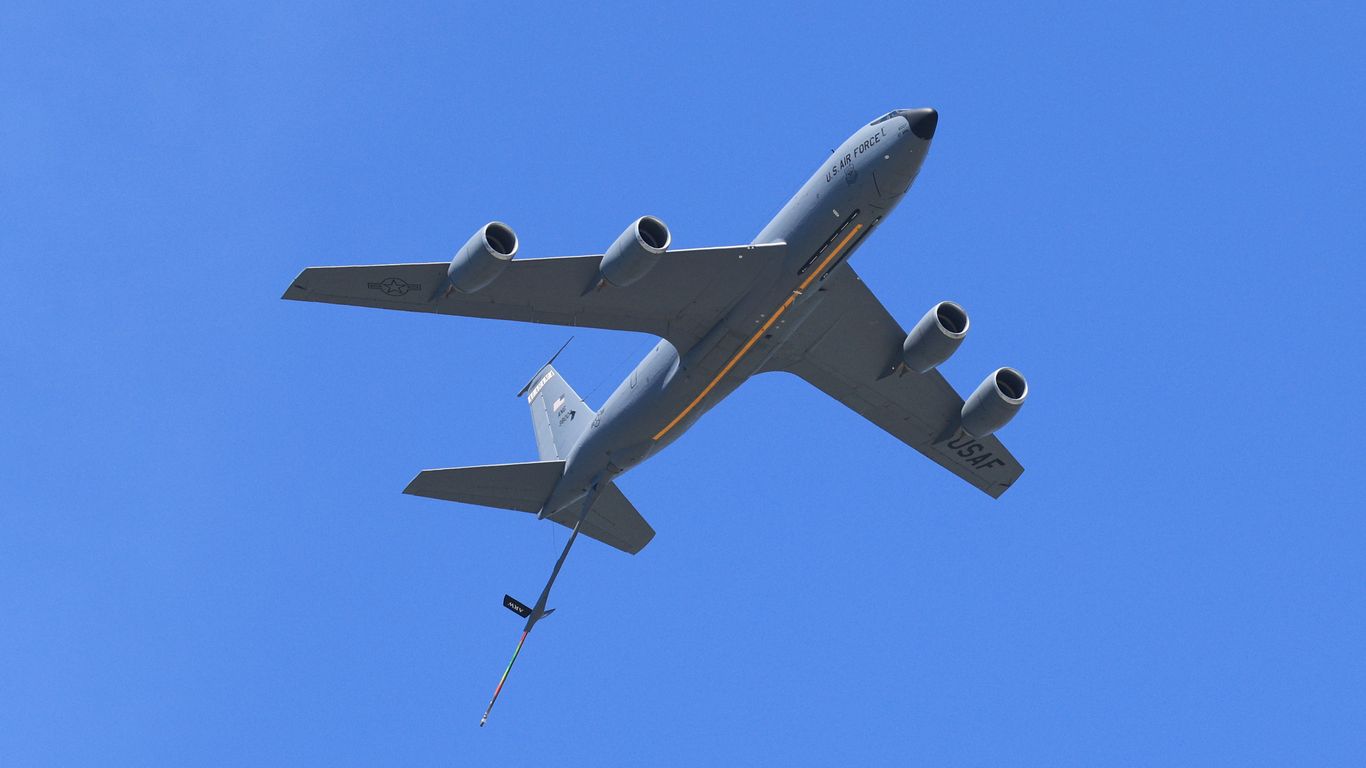
Six crew members died when a U.S. KC-135 refueling tanker crashed after colliding with another aircraft over western Iraq, bringing the U.S. death toll in the Iran war to 13. U.S. Central Command says the loss was not due to hostile or friendly fire and the incident is under investigation; the second aircraft landed safely. Monitor for modest near-term risk-off pressure on defense and regional energy risk sentiment if the conflict escalates or prompts policy changes.
A single loss of air-refueling capacity in an active theater has outsized operational consequences because tankers are high-signal, low-redundancy assets: expect immediate sortie-planning friction that reduces regional mission throughput by a non-trivial single-digit percent for days-to-weeks while replacement/maintenance capacity is mobilized. That operational pinch transfers revenue almost immediately to MRO and spare-parts vendors (billing is time-and-materials and cycles up with utilization), while demand for replacement platform procurement is a multi-quarter-to-year political process that benefits primes differently than aftermarket specialists.
Competitive dynamics favor integrated MRO/spares specialists and parts suppliers in the near term and platform primes if Congress accelerates replacement buys. The bottleneck to capture upside for primes is not demand but production cadence and certification lead times — any acceleration of KC-46 or follow-on tanker buys will show up as order flow 3–12 months out, while MRO revenue is realized in 0–90 days. Expect supplier margin dispersion: larger primes can absorb capacity strain, smaller OEMs with constrained tooling or single-source components may see price power and outsized margin expansion.
Key catalysts that will move markets are twofold and time-boxed: (1) DoD operational notices and temporary grounding/inspection directives in the next 0–14 days, which lift MRO names; (2) Congressional appropriations or formal requests for accelerated tanker procurement over 30–180 days, which re-rates primes. Tail risks include rapid geopolitical escalation (weeks) that pushes general defense spending and energy-risk premia higher, or a clear finding of operator error/maintenance fault that concentrates downside on specific suppliers — either outcome can reverse current micro trade signals quickly.
AI-powered research, real-time alerts, and portfolio analytics for institutional investors.
Request DemoOverall Sentiment
strongly negative
Sentiment Score
-0.60
