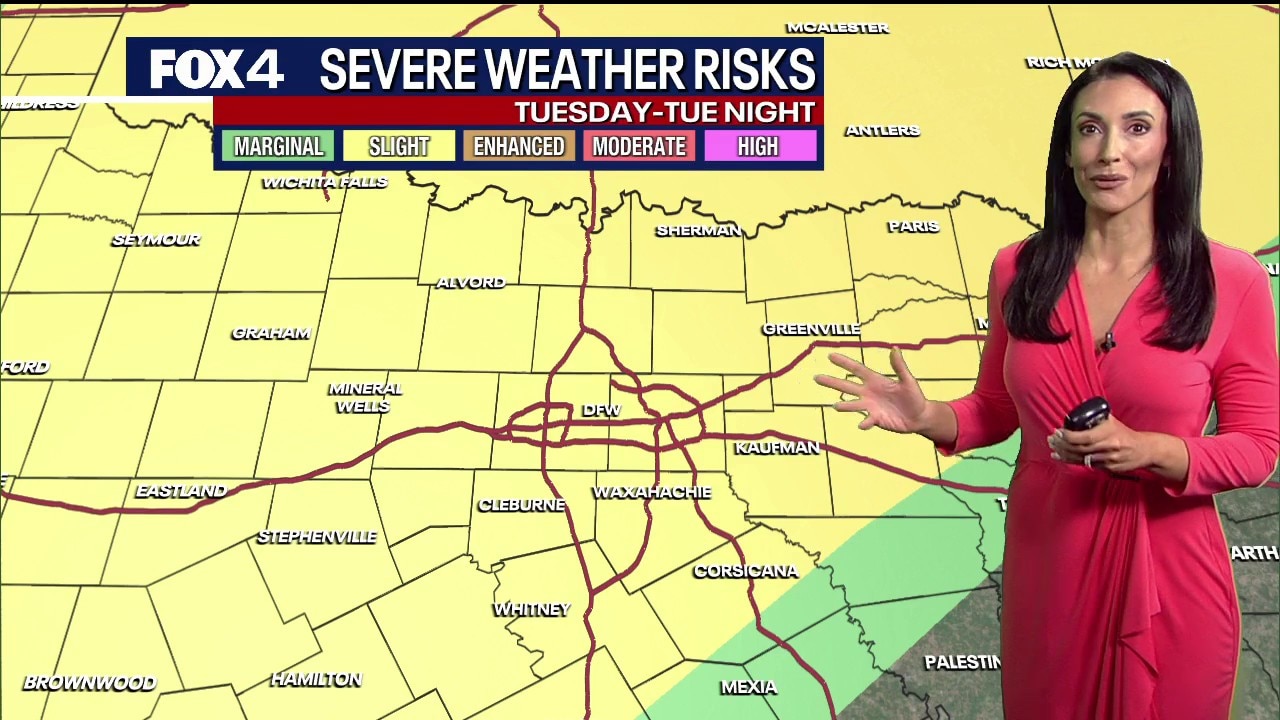
Multiple rounds of storms are expected this week, with a heightened severe threat Tuesday and again Wednesday (primary risks: large hail, damaging winds and isolated tornadoes). Morning showers Monday precede the main systems; the region should clear late Wednesday with cooler highs near the mid-60s Thursday and a rebound to the mid-80s by the weekend. Information sourced from the National Weather Service and FOX 4 forecasters.
When severe convective events intersect a major logistics + residential hub, losses concentrate in a narrow timeframe but produce a multi-week revenue tail for building-materials and auto-glass suppliers; expect a 1–4 week uplift in retail sales for discretionary roofing/repair categories and a 4–12 week uplift in contractor billings as insurance checks roll out. Labor and local contractor capacity (roofers, glaziers, HVAC techs) are the choke points — when utilization approaches 80–90% in a single metro, price realization for materials and emergency services increases, extending retail margin benefits beyond the first sales spike.
Insurers and reinsurers face the classic convex risk: many small-to-medium claims (hail-damaged panels, broken glass) can aggregate into meaningful P&C reserve draws without single-event headline losses. A concentrated loss in commercial parking areas or an airport-adjacent industrial park can push a quarterly loss ratio several hundred basis points higher for regional writers and reinsurers that under-hedged event correlation; those effects show up in reported combined ratios within one quarter and in reinsurance renewal pricing over 3–12 months.
Logistics and airline operations are second-order exposure: even short-lived localized damage to ATC infrastructure, ground support, or key cargo nodes produces 24–72 hour chokepoints that cascade across domestic schedules. For investors that model short-dated operational delta, assume 1–3% unit-cost hits for carriers exposed to the affected metro for 3–7 days, with asymmetric downside if ground equipment fleets (ramp vehicles, towed carts) take hail damage.
Tail risks and catalysts: a tornado striking dense commercial clusters or a multi-day convective outbreak magnifies losses into the high hundreds of millions to >$1bn insured-loss band, triggering reserve recognition and potential impairment of prior-year earnings guidance; conversely, a miss or highly rural track would rapidly revert market pricing. Watch real-time loss indicators (satellite damage imagery, municipal outage maps, parking-lot vehicle damage photos) in the 0–72 hour window — they materially change probabilistic loss estimates and tradeable opportunity sizes.
AI-powered research, real-time alerts, and portfolio analytics for institutional investors.
Request DemoOverall Sentiment
neutral
Sentiment Score
0.00
