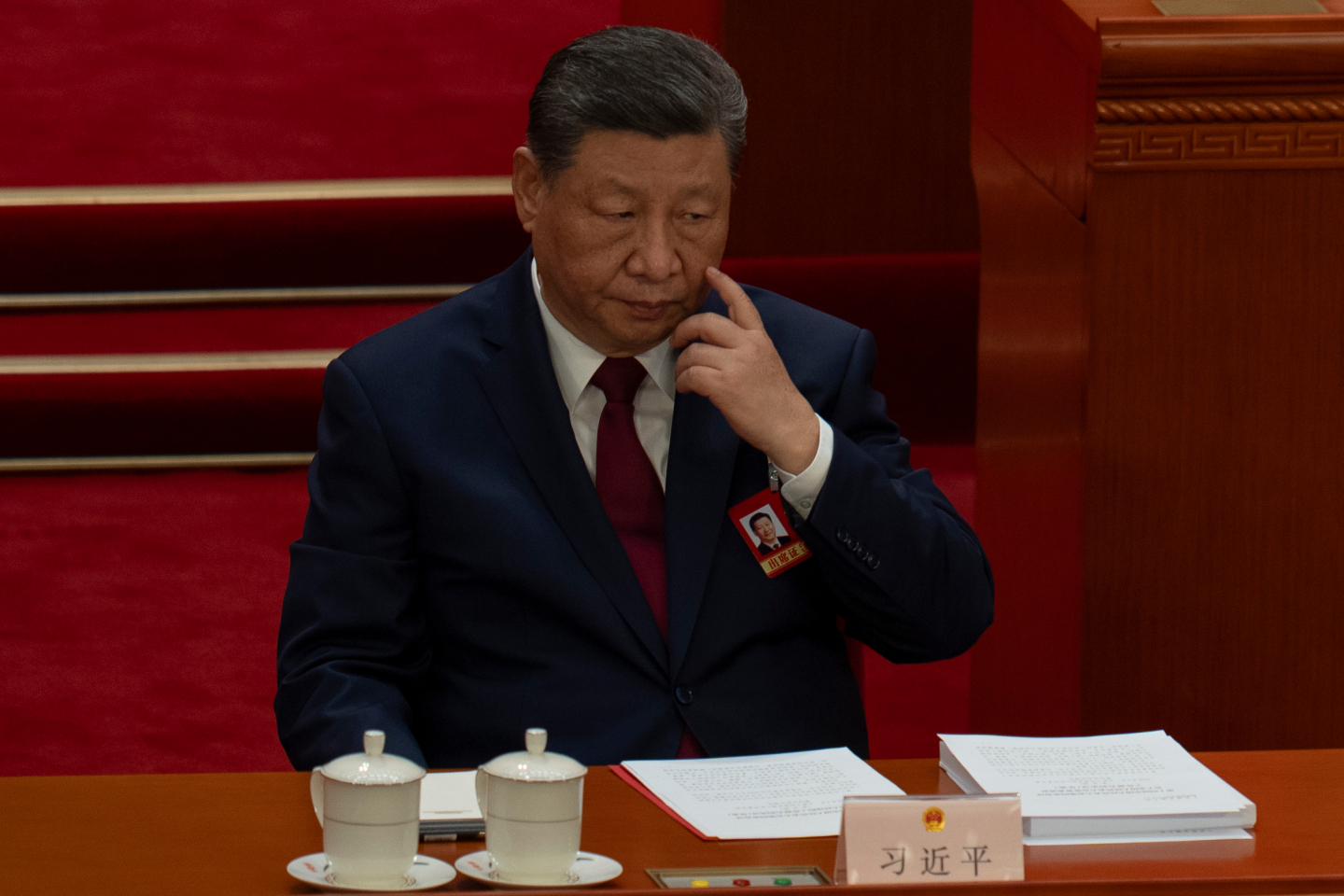
The article argues that Xi Jinping’s decision-making on Taiwan may be driven less by rational deterrence than by legacy pressure, information distortion, and a shrinking strategic window, raising the risk of coercive action or military escalation. It highlights multiple PRC coercive tools beyond amphibious invasion, including blockade, cyberattacks, economic coercion, and seizure of outlying islands, while warning that U.S.-China political dynamics could further increase miscalculation risk. The piece is broadly supportive of arming Taiwan, but its core message is elevated geopolitical risk for Taiwan, U.S. allies, and defense-related markets.
The market implication is not a near-term invasion premium so much as a persistent coercion premium across East Asia industrials, semis, shipping, and cyber-adjacent infrastructure. The largest second-order risk is that Beijing can pursue a sequence of gray-zone actions that are individually below the threshold of war but cumulatively force Taiwan, Japan, Korea, and US primes to spend more on resilience, inventories, and contingency logistics. That favors defense electronics, undersea sensing, hardened communications, and satellite connectivity while pressuring Taiwan-exposed contract manufacturers whenever headline risk spikes.
The contrarian miss is that a “no invasion” view can be dangerously bullish for complacent assets. If Xi is boxed in, the path of least resistance is often blockade rehearsal, seizure of an outlying island, or a cyber/financial shock designed to test alliance resolve. Those scenarios can hit within days to weeks and are harder for markets to discount because they do not require amphibious force mobilization; they instead create episodic air/sea insurance repricing, freight disruption, and inventory hoarding across Northeast Asia supply chains.
The key catalyst window is the next 3-12 months, where US political signaling, Taiwan domestic politics, and PLA readiness perceptions can move faster than fundamentals. The biggest reversal would be credible de-escalation paired with visible Taiwan defense reinforcement and clearer US alliance commitments, which would compress risk premia but not eliminate them. Absent that, the market should treat every incremental coercive act as a probability-raising event for sanctions, export controls, and selective disruption rather than as a binary war/no-war outcome.
AI-powered research, real-time alerts, and portfolio analytics for institutional investors.
Request DemoOverall Sentiment
mildly negative
Sentiment Score
-0.35
