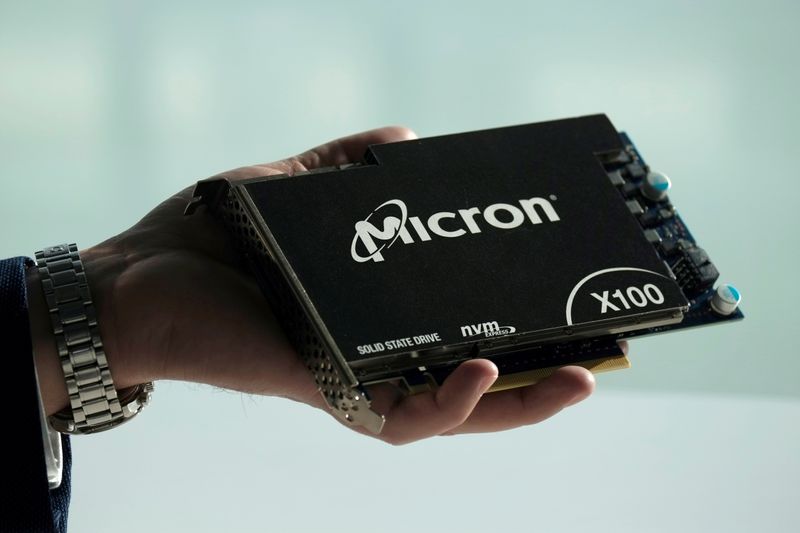
Micron reported a strong quarter and issued guidance implying $19.15 EPS versus a ~ $12 consensus, prompting multiple price-target raises (Stifel $550, Raymond James $530, Needham $500, Morgan Stanley $520; Goldman Sachs maintained Neutral at $400). Aletheia and company commentary attribute a larger, longer memory cycle driven by agentic AI, with demand expanding across HBM, server DRAM/LPDDR5X, 3D NAND and SRAM; supply-side constraints (limited cleanroom capacity and chip-equipment tightness) likely prevent meaningful new memory supply before mid-2027, supporting pricing and margins.
The most direct second-order winner is vertically integrated memory suppliers and their tool vendors: constrained cleanroom capacity and equipment tightness create a >12–15 month supply lag that should sustain ASPs and margin expansion for manufacturers who can scale wafer starts. System OEMs and server builders face the flip side — rising BOM inflation (memory mix shifting to premium HBM/LPDDR5X/3D NAND/SRAM) will compress gross margins unless they secure supply or pass-through pricing quickly.
Near-term catalysts are demand-side (AI hardware refreshes and multi-hardware form factors increasing memory per rack) and supply-side (tool shipments, fab ramp schedules, and firm customer purchase commitments) — the interplay of these drives both revenue visibility and volatility in forward guidance. Reversal risks cluster around a demand shock (model consolidation, cloud capex pullback) or a faster-than-expected easing of equipment bottlenecks, which would flip ASP tailwinds into cyclical weakness by mid- to late-2027.
Consensus currently prizes the memory cyclical but underestimates the structural shift in mix: agentic AI increases not just total bytes but the share of high-margin, low-latency memory (HBM, SRAM), a non-linear uplift to vendors with specialized fabs. Conversely, the market may be underpricing political and supply-chain tail risk — import/export controls or accelerated Chinese brownfield retooling could truncate the cycle and re-rate winners within 6–18 months.
AI-powered research, real-time alerts, and portfolio analytics for institutional investors.
Overall Sentiment
strongly positive
Sentiment Score
0.78
Ticker Sentiment
