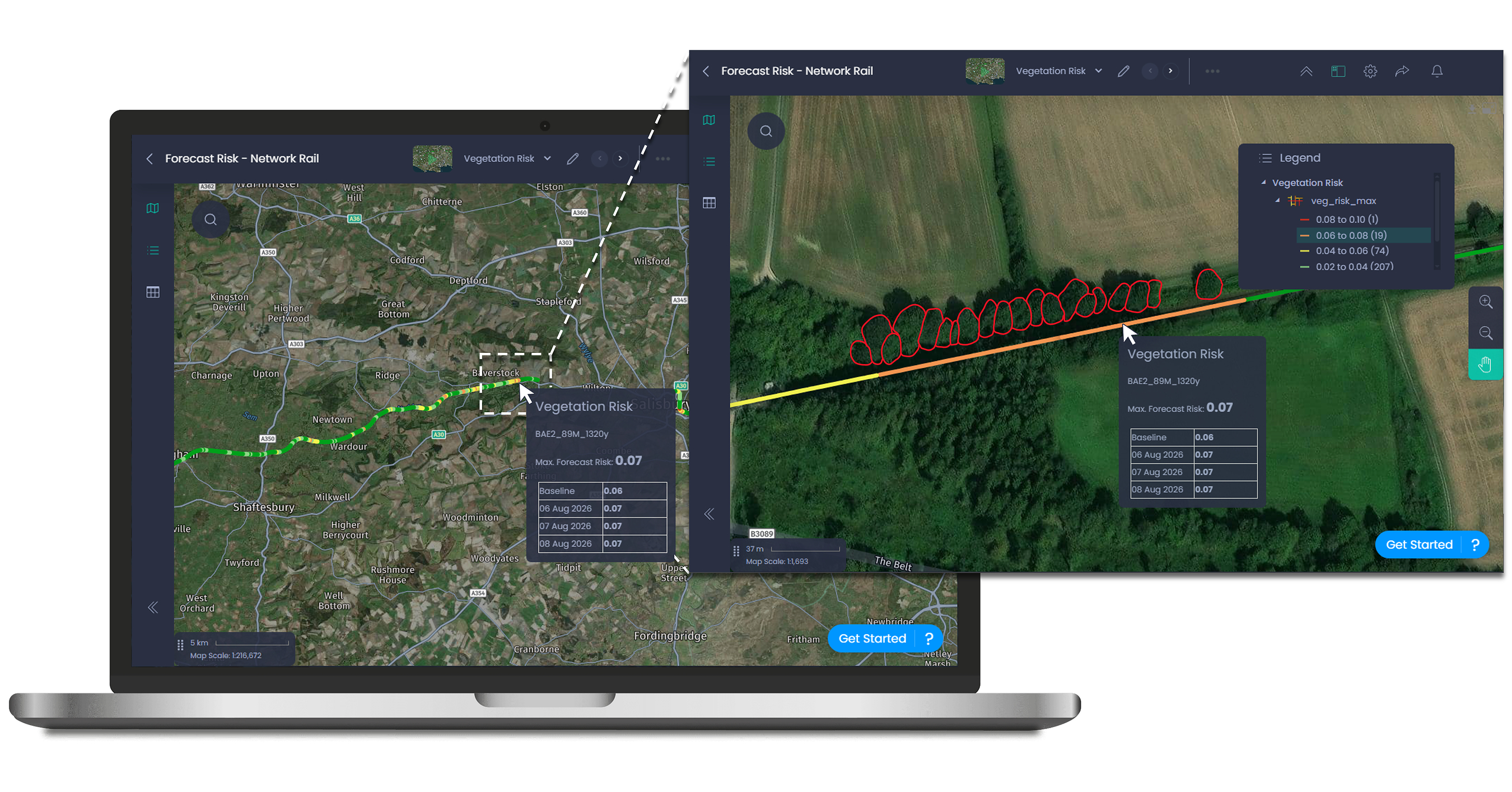
Network Rail and CATALYST completed a 12-week pilot using satellite Earth observation (including InSAR), vegetation modeling, and short-term weather forecasts to identify flood and vegetation risk on the Wessex rail line up to 3 days ahead. The prototype generates location-specific risk forecasts across three categories (ground deformation, vegetation collapse, flooding) via a two-layer vulnerability framework and a daily traffic-light dashboard for three rail segments. Early operational feedback broadly matched known risk areas and highlighted tree-fall risk, with plans to validate and potentially expand the approach across the network.
This is less a rail story than a proof-of-work for climate-risk data monetization. The real commercial value sits with geospatial analytics vendors that can turn raw satellite feeds into operational decisions; if this moves beyond a pilot, the spend shifts from periodic field surveys and reactive callouts toward recurring software/data subscriptions. The second-order loser is the labor-intensive inspection and vegetation-management stack, which faces pricing pressure as operators ask why they should pay for blanket checks when a daily risk model can narrow the dispatch list.
Near term, the market should not extrapolate revenue from a 12-week pilot into a meaningful P&L event. The gating item over the next 1-3 months is procurement: does Network Rail convert this into a paid, multi-route deployment with integration into operations, or does it stay in innovation theater? The key risk is model friction—false positives, data latency, and integration costs can easily overwhelm the theoretical savings from fewer disruptions. If the alerting system does not measurably cut emergency interventions or improve punctuality metrics, the pilot has no budget gravity.
The contrarian view is that the consensus is still underestimating how slowly public infrastructure buyers adopt AI, even when the use case is obvious. That makes this a better watchlist than immediate alpha: the upside is a multi-year widening of the addressable market for Earth-observation software, while the downside is that the procurement cycle drags so long that enthusiasm fades before contracts land. The thesis is falsified if there is no follow-on tender or funded rollout by the next fiscal budget cycle, or if subsequent deployments show noisy alerts that ops teams ignore.
AI-powered research, real-time alerts, and portfolio analytics for institutional investors.
Request DemoOverall Sentiment
mildly positive
Sentiment Score
0.25
