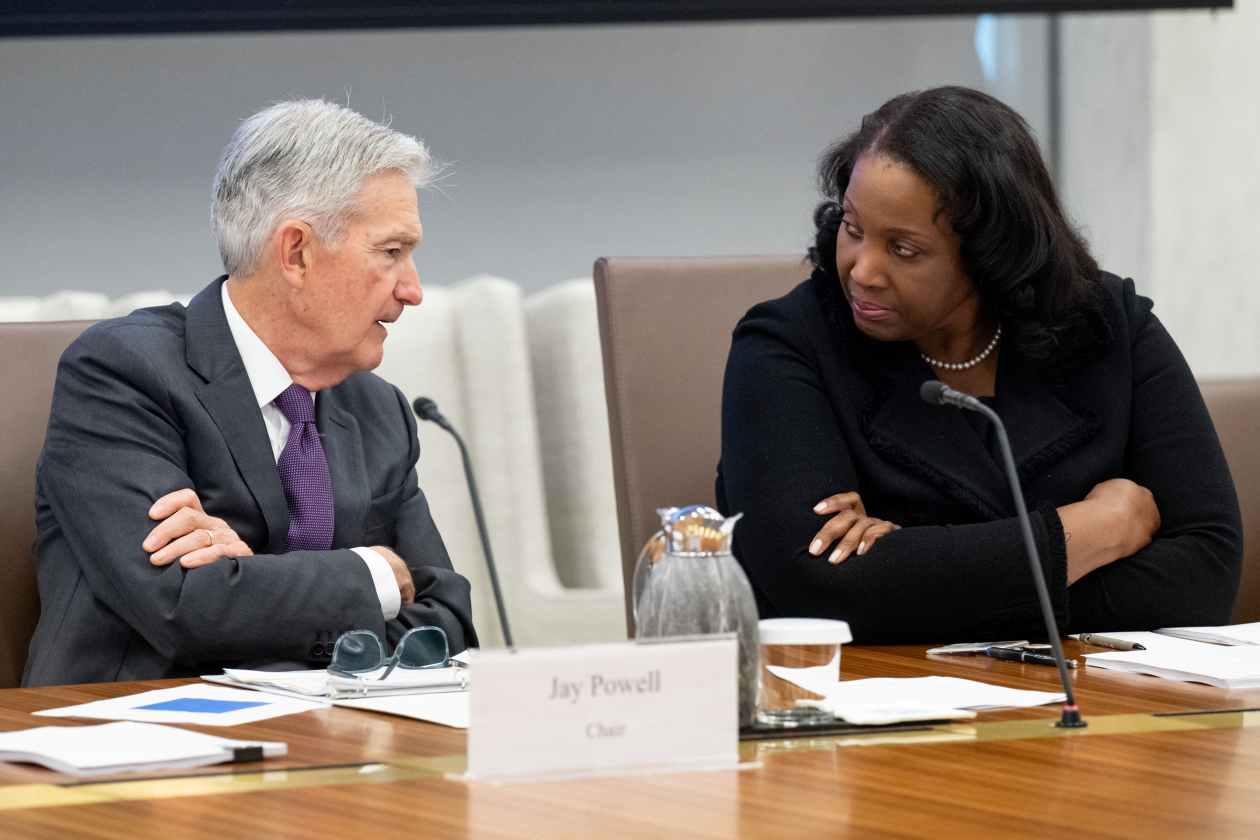
Federal Reserve Governor Lisa Cook stated the central bank is actively integrating artificial intelligence for internal operations, including writing, coding, and research, and is exploring large language models for economic insights and machine learning for financial crisis forecasting. Crucially, Cook emphasized that AI is not used for developing or setting monetary policy decisions. She highlighted AI's significant economic implications, noting its potential to enhance productivity and reduce inflationary pressures, while also acknowledging the possibility of interim price increases due to increased investment, underscoring the necessity for the Fed to study AI's net economic effects for future policy formulation.
Federal Reserve Governor Lisa Cook has clarified the central bank's current engagement with artificial intelligence, confirming its integration into operational tasks such as writing, coding, and research, but explicitly stating it is not used for setting monetary policy. The Fed is actively studying AI's capabilities, with internal research papers exploring the use of Large Language Models (LLMs) to interpret economic discussions and machine learning to forecast financial crises. Cook highlighted the significant, yet dual-natured, economic implications of AI, noting its potential to enhance productivity and ultimately lower inflationary pressures. Conversely, she cautioned that a surge in aggregate investment related to AI adoption could create interim price increases. This suggests the Federal Reserve views AI as a critical long-term economic variable whose net effects on inflation and growth must be carefully studied to inform future policy, rather than a tool for immediate decision-making.
AI-powered research, real-time alerts, and portfolio analytics for institutional investors.
Overall Sentiment
neutral
Sentiment Score
0.00
Ticker Sentiment
