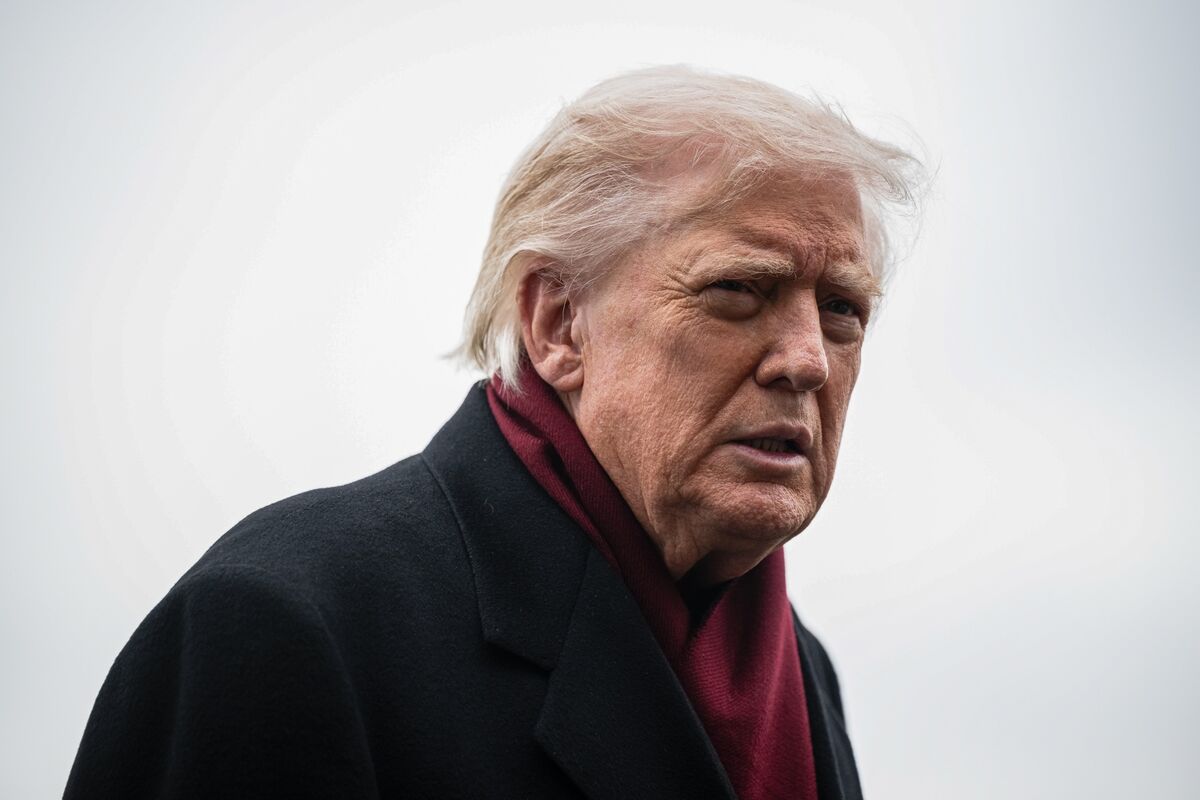
President Trump has delayed a promised proposal to tackle healthcare costs that was expected this week, leaving policy details unsettled and timing unclear. The pause prolongs uncertainty around potential regulatory and fiscal changes affecting healthcare providers, insurers and related sectors; markets should monitor for a concrete proposal or legislative push that could drive sector re-pricing but immediate market impact is limited.
Market structure: The delay maintains a quasi-status-quo that favors large incumbents with pricing power (large-cap pharma, national insurers/PBMs) and penalizes challengers that need regulatory change to scale (value-based care startups, small biotechs). Expect muted near-term volatility in equities but compressive pressure on small-cap healthcare — relative spreads between UNH/HUM/CVS and XBI/IBB are likely to widen by 200–500bp if no proposal appears within 30–60 days. No immediate supply shock in services or drugs; demand-side patient volumes remain unchanged, so revenue trajectories stay intact absent legislative text.
Risk assessment: Tail risk is a late, aggressive cost-control package (e.g., $50B+/yr drug pricing carve-outs or Medicare negotiation) that would trigger 10–30% drawdowns in exposed names; probability increases in the 3–9 month pre-election window. Short-term (days) market impact minimal; medium-term (weeks–months) hinge on text/CBO scoring; long-term (quarters–years) depends on implementation and legal challenges. Hidden dependency: coordination with budget reconciliation or executive actions could fast-track impact; watch CBO scoring and House/Senate timelines as accelerants.
Trade implications: Favor size-in packs: overweight large-cap insurers/pharma and underweight small-cap biotech and value-based care IPOs. Use directional exposure via equities (UNH, HUM, PFE) sized 1–3% each, and tactical short via XBI/IBB to capture dispersion. Use options for asymmetric payoff — 2–4 month put spreads on XBI and covered-call overlays on UNH to monetize compressed volatility; if a proposal is released, expect IV to jump 20–60% in affected names.
Contrarian angles: Consensus underestimates pre-election policy timing risk — delay may presage a more politically potent package rather than de-escalation. Historical parallels (2019–2020 drug pricing talk) show delayed proposals often return stronger and targeted; incumbents may paradoxically gain if negotiation power cements PBM/insurer roles. Avoid large single-name exposure; favor relative-value pair trades and option structures that profit from a later shock rather than front-running uncertain timing.
AI-powered research, real-time alerts, and portfolio analytics for institutional investors.
Request DemoOverall Sentiment
neutral
Sentiment Score
0.00
