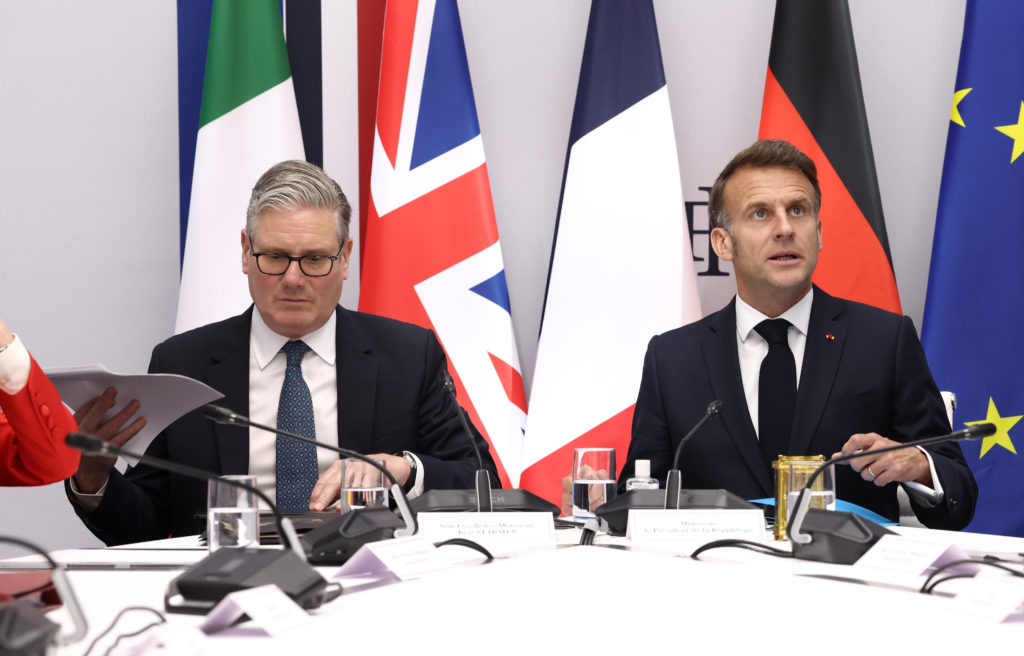
France and the U.K. said the Strait of Hormuz must be permanently reopened and announced plans for an international maritime security mission, with military planners to meet in London next week. The article highlights the strait’s importance for roughly 20% of global oil flows, after prices surged when Iran effectively shut the route and then fell when Iran and the U.S. said it was open to commercial vessels. The news is geopolitically constructive but still highly uncertain, with ongoing risks to shipping, energy prices, and global trade.
The market is likely underpricing how much this shifts the risk premium from a binary disruption story to a prolonged, low-grade security regime. Even if throughput is “open,” the operational friction from inspections, rerouting, insurance surcharges, and convoy coordination can keep effective capacity below normal for weeks to months, which matters more for refined product spreads and tanker rates than headline crude itself. The first-order price reaction may fade, but the second-order effect is stickier: higher freight/insurance costs can widen delivered-energy dislocations across Asia and Europe even if Brent retraces.
The clearest winners are not the obvious majors; it is the maritime logistics stack with pricing power and the defense-enablement vendors tied to mines, drones, ISR, and secure comms. Tanker owners and select shipping insurers should see sustained multiple support if the market believes a defensive coalition is needed, while port operators and downstream consumers of imported energy remain exposed to intermittent bottlenecks. A more subtle beneficiary is U.S. LNG and Atlantic Basin refiners if Asia faces episodic Middle East supply uncertainty and buyers keep optional barrels in inventory.
The key risk is that this becomes a “ceasefire premium” that compresses too quickly. If the ceasefire holds and the coalition proves mostly symbolic, energy volatility collapses and the trade flips against momentum longs within days. But if there are even minor incidents near the strait, the market could reprice the tail within 2-4 weeks because insurers and charterers react to realized, not promised, security.
The contrarian view is that the real signal is political, not physical: Europe is trying to build an ex-U.S. maritime security architecture under stress, and that implies higher recurring defense and surveillance spending even after the current flare-up ends. That is bullish for European defense primes and select unmanned systems vendors on any pullback, while the commodity move itself may be too headline-driven to chase outright. In short, fade the reflexive crude spike, but own the cash flows tied to persistent naval insecurity and trade-route hardening.
AI-powered research, real-time alerts, and portfolio analytics for institutional investors.
Request TrialOverall Sentiment
mildly negative
Sentiment Score
-0.15
