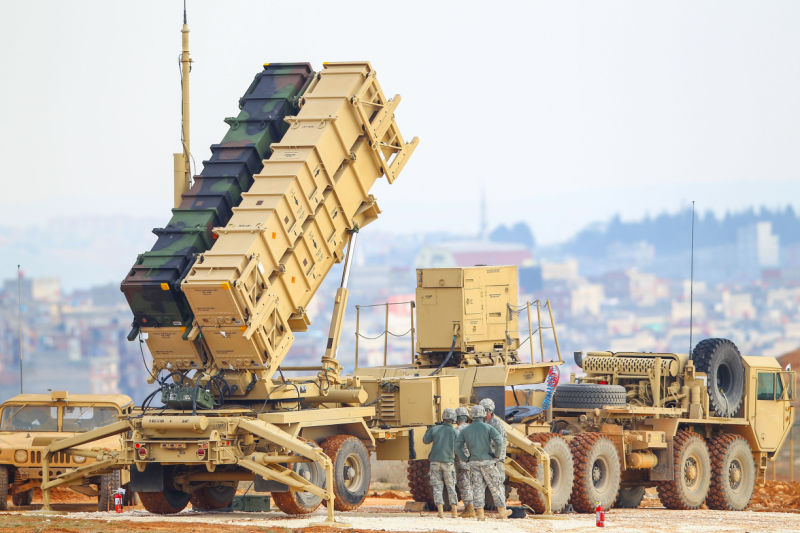
The Trump administration approved more than $8.6 billion in emergency military sales to Israel, Qatar, Kuwait, and the UAE, bypassing standard congressional review. The packages include $4.01 billion of Patriot missile defense replenishment for Qatar, $2.5 billion for Kuwait’s integrated battle command system, and multiple APKWS sales totaling over $1.1 billion. The move underscores escalating regional instability and supports major defense contractors including BAE Systems, RTX, Lockheed Martin, and Northrop Grumman.
This reads less like a one-day defense headline and more like a multi-quarter re-rating of regional air-defense demand. The most important second-order effect is that emergency approvals compress procurement timing, which benefits the primes with the cleanest production capacity and the strongest installed-base replacement cycles; that favors RTX first, then LMT and NOC through systems integration and networked C2, while smaller subcontractors may face margin pressure as delivery schedules get pulled forward.
The market may underappreciate that replenishment demand is the more durable revenue stream than new platform sales. Missile-defense interceptors, command-and-control upgrades, and precision-guided munitions create a repeat ordering cadence after each escalation episode, so the real upside is in backlog quality and aftermarket/upgrade attach rates rather than headline contract value. If regional tensions remain elevated for 1-2 quarters, the mix should skew toward higher-margin sustainment and integration work, which is more accretive to earnings than the initial contract awards imply.
The main risk is political, not operational: any de-escalation or shift back to congressional scrutiny could slow follow-on awards and compress sentiment before revenue catches up. A second-order downside is export-control and human-rights scrutiny, which can create headline volatility even as fundamentals improve; that tends to cap multiple expansion in the near term. The contrarian view is that the move is probably not overdone in the cash-flow sense, but it may be overowned tactically after a strong defense bid, so relative-value matters more than outright longs.
From a trading perspective, RTX looks best positioned because it sits at the intersection of missile defense replenishment and command-system penetration, while LMT and NOC appear more like delayed beneficiaries. The bigger medium-term winner could be supply-chain and munitions names not named here, but the article implies the market has not fully priced recurring replacement demand if this becomes a pattern rather than a one-off emergency.
AI-powered research, real-time alerts, and portfolio analytics for institutional investors.
Request DemoOverall Sentiment
neutral
Sentiment Score
-0.05
Ticker Sentiment
