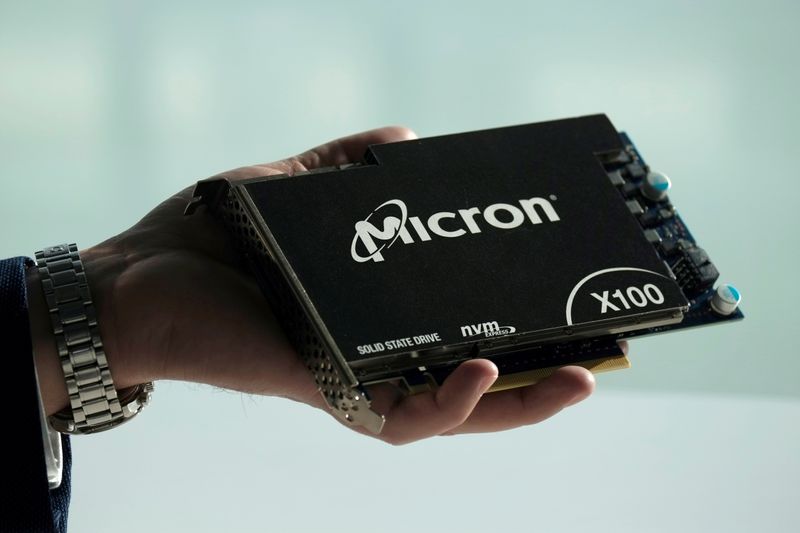
RBC Capital raised its Micron (MU) price target to $525 from $425 and maintained an Outperform as the stock trades at $426.13 (up 324% over the past year) and nears its 52-week high of $455.50. RBC bases the new target on 7x CY2027 EPS and 2.7x CY2027 book value, citing sustained HBM and DDR/eSSD demand; Micron trades at a P/E of 40.43 with a PEG of 0.2. Mizuho projects May-quarter revenue of $25.0B and EPS $11.13 (8% above consensus) and August-quarter revenue of $27.2B/$12.25, while Micron completed acquisition of Powerchip’s P5 fab in Taiwan and peers Baird/Wedbush have also raised targets to $500, signaling broad analyst bullishness.
Micron’s recent capacity moves and product mix shift create asymmetric market power: localized wafer-to-test integration shortens cycle times and raises the hurdle for opportunistic bit-supply entrants, which supports a multi-quarter pricing floor for higher-margin memory types. That dynamic amplifies second-order winners—server OEMs capture higher ASPs per box while memory equipment vendors face a lumpy, front-loaded capex cadence as customers race to secure differentiated HBM/advanced-DRAM stacks.
The path is not linear. Inventory and macro are the primary short-term choke points — a cloud capex pause or aggressive bit ramp from any major producer would flip pricing within 3–6 months, whereas structural platform transitions (AI HBM adoption) play out over 12–36 months. Geopolitical and export-control friction around Taiwan/assembly ecosystems remains a persistent tail risk that can shorten effective supply and spike volatility in single-day moves.
Consensus is pricing in sustained margin lift and multiple re-rating; the contrarian risk is that commodity DRAM cycles reassert themselves even as HBM grows, compressing headline EBITDA if bit growth outpaces demand. For portfolio construction, this is a time to express bullish structural exposure with defined-duration, capital-efficient instruments and use pair hedges tied to commodity-cycle vulnerable peers to protect against a 20–40% selloff in a de-risking episode.
AI-powered research, real-time alerts, and portfolio analytics for institutional investors.
Overall Sentiment
strongly positive
Sentiment Score
0.70
Ticker Sentiment
