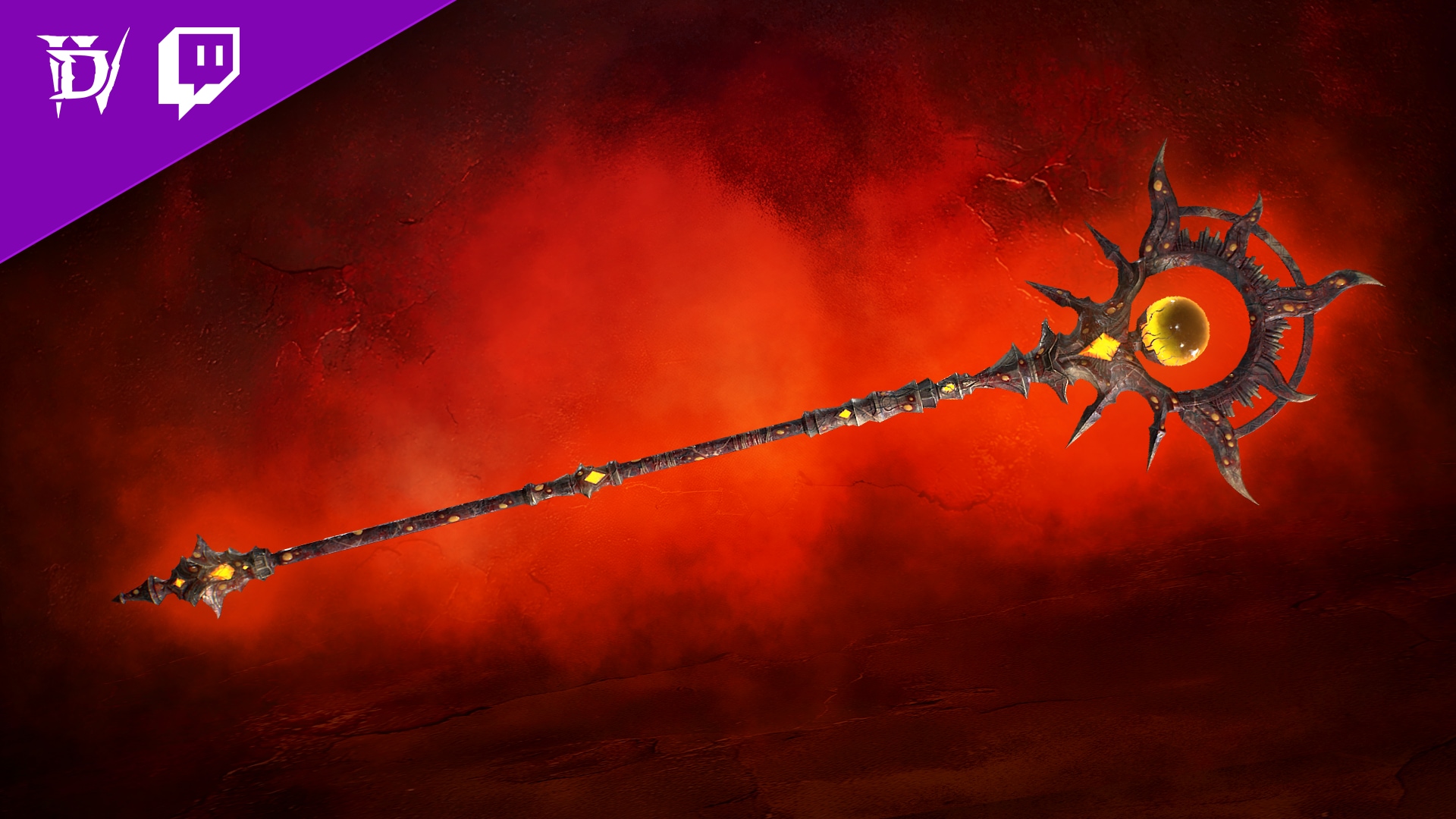
Blizzard announced a developer update livestream for Diablo IV on April 23 at 11:00 a.m. PT, covering the Lord of Hatred expansion, new Class Skill Trees, the Talisman system, Horadric Cube, and other endgame updates. The company also outlined Twitch Drop rewards, including the Decaying Corona staff cosmetic after 30 minutes and the Double Trouble sword cosmetic after 1 hour, available through April 24, 2026. The update is informational and promotional, with limited direct market impact.
This is less a direct game-sales catalyst than a high-frequency engagement event that should modestly lift near-term activity metrics without changing the long-run install base thesis. The real economic lever is retention: a live update tied to collectible drops increases session length, reactivates lapsed players, and raises the probability that seasonal content converts into repeat monetization rather than a one-off content spike. That matters most for platforms and publishers where live-service revenue depends on habit formation, not launch-week unit sales.
Second-order, the stream format is a cheap way to de-risk sentiment ahead of the expansion by compressing information uncertainty. If the update meaningfully expands class/build complexity or endgame depth, it should improve payer conversion among existing users more than it expands total audience. The market often underestimates how much incremental ARPU can come from existing cohorts when live-service systems become more sticky; a small improvement in retention can outweigh a larger but less durable top-of-funnel bump.
The main risk is that this is a marketing event masquerading as a product catalyst: if the livestream overpromises or the new systems look overly intricate, it can actually suppress conversion among returning players and increase churn after the initial spike in interest. The relevant horizon is days to weeks for engagement metrics, but one to two quarters for any real read-through on expansion attach rates and seasonality. If the follow-through data shows no lift in active users after the event, the market will likely fade the headline quickly.
Contrarian view: the consensus may be too focused on the event itself and not enough on the opportunity cost of complexity. In live-service RPGs, additional systems can deepen monetization for core users while shrinking the addressable casual audience; the upside is stronger if the update simplifies onboarding and clarifies progression, not if it merely adds layers. That creates a classic barbell outcome: strong retention with weak net-new growth, which is positive for cash flow but not necessarily for multiple expansion.
AI-powered research, real-time alerts, and portfolio analytics for institutional investors.
Request TrialOverall Sentiment
neutral
Sentiment Score
0.10
