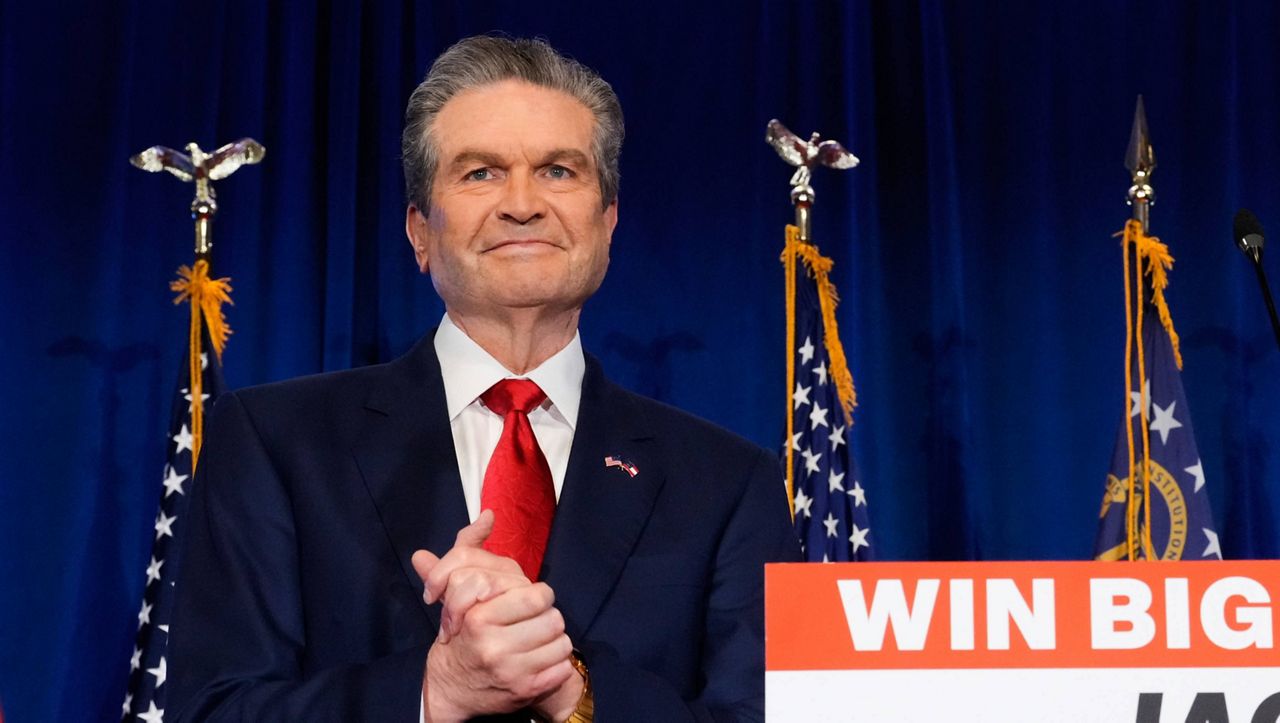
Trump-backed candidates had mixed results across Tuesday’s primaries: Rick Jackson defeated endorsed rival Burt Jones in Georgia’s governor runoff after spending more than $100 million, while Trump-backed Mike Collins won Alabama’s Senate runoff and Mike Mazzei advanced in Oklahoma. The article also highlights Democratic contests in D.C. and California, plus Georgia secretary of state and House races, with ranked-choice counting delaying some outcomes. Overall, the piece is a broad political roundup with limited direct market implications.
The immediate market signal is not about ideology; it is about capital intensity. Trump’s endorsement remains highly effective when the field is fragmented or underfunded, but the Georgia result shows that at the margin, self-funding can overwhelm the endorsement premium once spend reaches a nine-figure scale. That matters because it raises the implied cost of “buying” a nomination in high-salience races, which should make donor networks and PACs more important than personal wealth alone in future primary fights.
The bigger second-order effect is on candidate quality and policy volatility in down-ballot races. Endorsement losses in competitive states suggest that Trump’s brand is still powerful but less deterministic than headline narratives imply; that reduces the probability of a clean sweep of hardline nominees in purple states, especially where local establishment money can coalesce. For investors, that is mildly supportive for sectors sensitive to state-level governance drift—insurance, healthcare, education, and regulated utilities—because more moderate nominees are less likely to push abrupt regulatory changes.
The Georgia secretary-of-state race is the cleaner catalyst to watch over the next 1-2 quarters. Even when the rhetoric is softened, the race is still being filtered through election administration and audit politics, which means persistent headline risk around certification, access rules, and post-election disputes. That creates a small but nontrivial volatility premium for companies with large Georgia exposure, especially names dependent on public-sector procurement or labor stability.
Contrarian take: the market may be overestimating how much Trump can “deliver” in primaries and underestimating how often money and local dynamics override national branding. If that pattern holds, the next phase of GOP politics could be less uniformly populist than consensus expects, which would be a tailwind for incumbents and for regulated businesses that prefer predictability over ideological purity.
AI-powered research, real-time alerts, and portfolio analytics for institutional investors.
Request DemoOverall Sentiment
neutral
Sentiment Score
0.00
