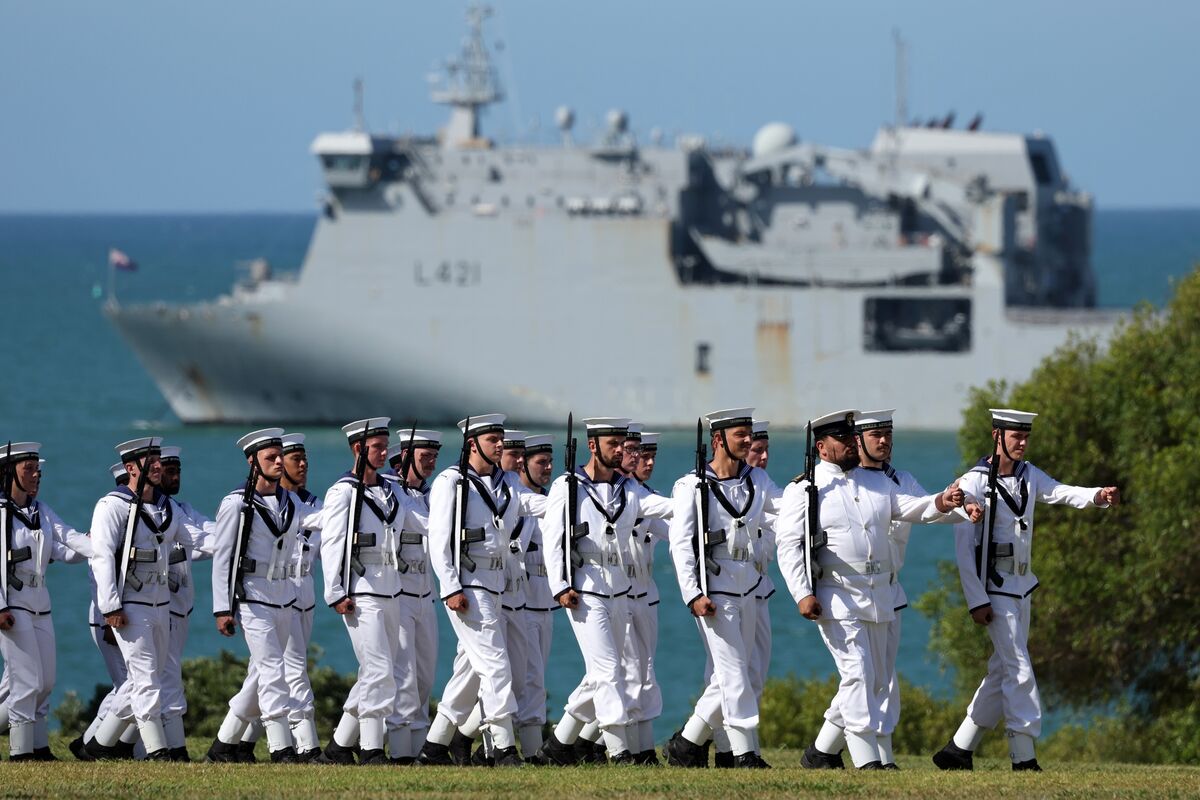
New Zealand plans to spend about NZ$1.6 billion ($936 million) on drones, ship maintenance, and naval upgrades to strengthen maritime security and protect supply routes. The package includes two drone types: a long-duration ISR platform for the southwest Pacific and a polar-capable vehicle for operations from naval vessels in the Southern Ocean. The announcement reflects a defensive policy response to rising geopolitical and supply-chain risks rather than an immediate market-moving event.
This is less a one-off procurement story than a signaling event that maritime security is moving up the capex queue across the Pacific rim. The second-order winner is the drone supply chain: not just airframes, but EO/IR sensors, secure datalinks, maritime autonomy software, and cold-weather hardened components. Because the spend is spread across maintenance and upgrades as well as platforms, the marginal beneficiary is likely the maintenance, systems-integration, and ISR stack rather than prime hardware alone.
The more important market implication is budget crowd-out. NZ$1.6B is meaningful for a small defense budget, so every dollar committed here reduces flexibility for other naval programs, which can shift awards toward modular, lower-capex, faster-deploy capabilities. That tends to favor vendors with dual-use products and recurring service revenue over bespoke shipbuilders; it also raises the odds of regional co-investment or alliance procurement, especially if Southern Ocean logistics are the real operational gap.
The contrarian point: this is probably a medium-term rather than immediate earnings catalyst. Defense procurement headlines often front-run cash spend by 12-24 months, and the operational bottleneck may be training, integration, and sustainment, not initial acquisition. If fiscal pressure intensifies or the geopolitical temperature cools, the program can be re-phased rather than canceled, which limits near-term revenue visibility for contractors but leaves the strategic demand signal intact.
For trade construction, the cleanest expression is via global defense and autonomy exposure rather than a country-specific bet. Any pullback in listed drone/ISR names on broader market weakness would likely be an opportunity, because the underlying thesis is about persistent maritime surveillance demand and not a one-quarter budget bump. The main risk is that investors overpay for a headline-driven move before contract awards and delivery schedules are visible.
AI-powered research, real-time alerts, and portfolio analytics for institutional investors.
Request DemoOverall Sentiment
neutral
Sentiment Score
0.10
