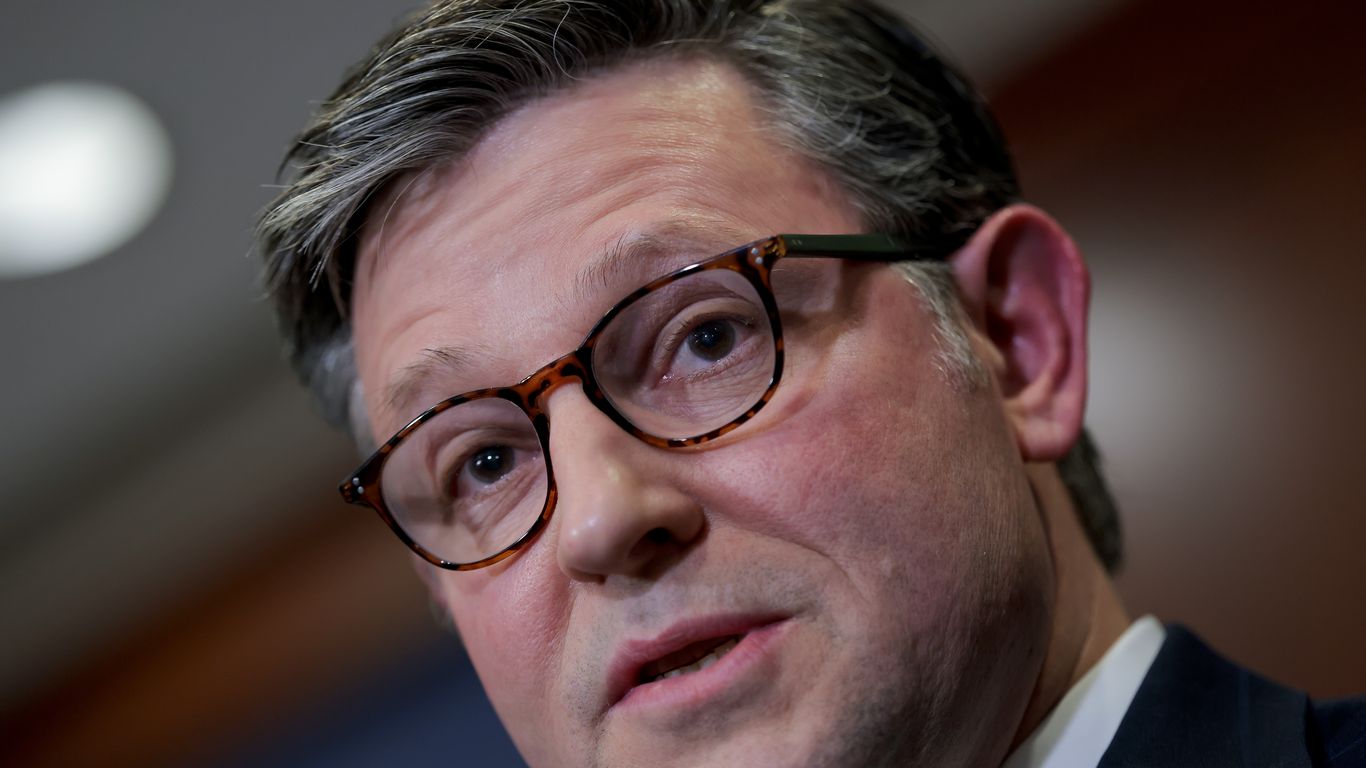
Key event: House Democrats are coordinating censure resolutions against Reps. Randy Fine (R‑Fla.) and Andy Ogles (R‑Tenn.) over recent anti‑Muslim social‑media posts after Speaker Mike Johnson declined to directly condemn the remarks. Censure requires only a simple majority in the House and is largely symbolic but politically charged amid recent violent attacks that have heightened partisan tensions. Monitor votes by swing‑district Republicans to gauge the political risk for the GOP in defending or distancing itself from these comments.
This episode is a governance shock with outsized political signaling power: censure votes are low-cost, high-visibility instruments that accelerate intra-party sorting without needing electoral resolution. In the near term (days–weeks) watch how swing-district Republicans vote — their choices will reveal the marginal political cost of defending incendiary rhetoric and set the probability of increased primary pressure or donor flight into 6–18 month horizons.
A weakened Speaker who tolerates inflammatory rhetoric raises legislative paralysis risk around high-impact fiscal cliffs (continuing resolutions, debt-limit negotiations) because a fractious conference lowers the party’s ability to deliver disciplined majorities. That raises tail volatility for macro-sensitive assets in the 1–3 month window as market participants price higher odds of stopgap funding and headline-driven spikes in Treasury volatility.
Second-order commercial effects are concentrated and tradeable: digital platforms and payment processors see asymmetric flows from viral controversies — small-dollar fundraising and targeted ad reallocations tend to boost payment volume for donor platforms while pressuring brand advertisers to pull spend from platforms perceived as unsafe. Consumer discretionary and travel-facing brands with national footprints are more exposed to campaign-driven boycotts than local businesses, so sector-relative positioning, not broad market calls, is the efficient lever.
Counterintuitively, this episode is more likely to increase demand for large-cap incumbents with scale and compliance budgets (legal/PR), and for defense/homeland-security contractors who benefit from securitization narratives — both play out over 3–12 months rather than in immediate index moves. The market often overreacts to individual controversies then normalizes; use headline windows to establish positions with event-aware sizing and tight stop rules.
AI-powered research, real-time alerts, and portfolio analytics for institutional investors.
Request DemoOverall Sentiment
neutral
Sentiment Score
0.00
