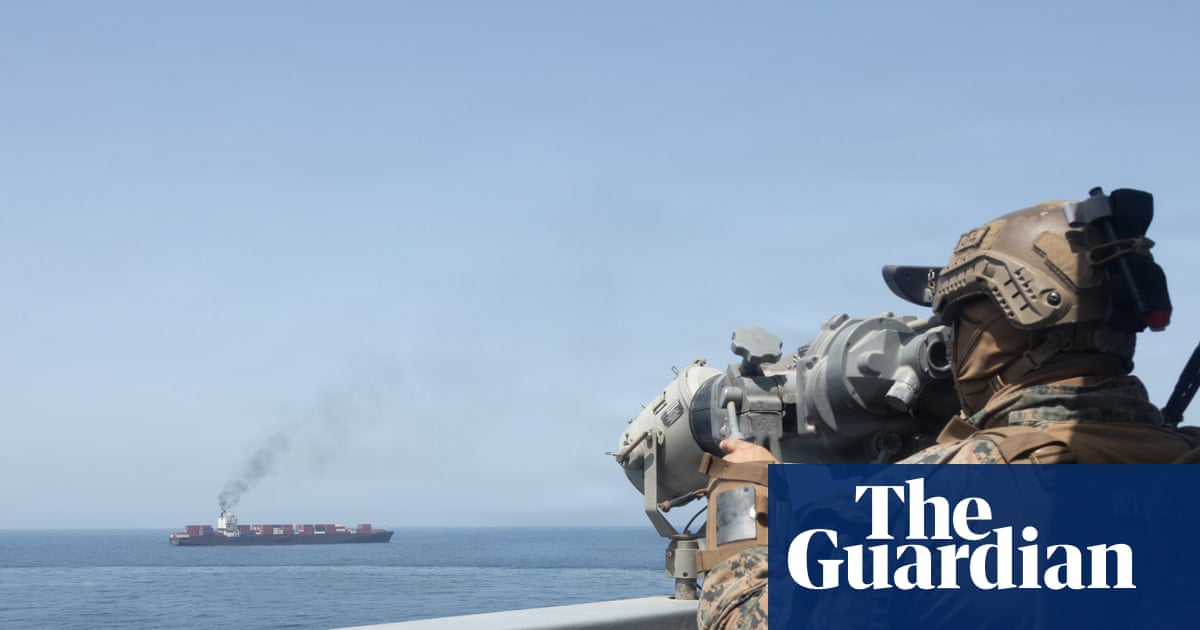
The US is extending its naval blockade of Iran indefinitely while also adding carrier strike groups, Marines, and airborne forces, signaling a prolonged military standoff in the Strait of Hormuz. The article says the fighting has already involved 13,000 US strikes and 18,000 Israeli bombs, yet Iran retains roughly half of its missiles and launchers and can still threaten shipping. With Kharg Island handling about 90% of Iran’s oil exports and further escalation still possible, the risk of sustained energy-market disruption remains elevated.
The market is underpricing the asymmetry between headline de-escalation and operational entrenchment. A prolonged blockade without a clean diplomatic off-ramp effectively transforms Hormuz into a rolling supply-risk premium rather than a one-time spike event, which is more supportive for implied volatility in crude than for a sustained directional move in spot prices. That favors option sellers only if they can survive gap risk; otherwise the better expression is long convexity in front-month energy vol rather than outright beta.
Second-order winners are not the obvious integrated producers alone, but assets with embedded geopolitical scarcity: LNG exporters with flexible cargoes, U.S. refiners with discounted inland feedstock access, and defense names tied to missile defense interceptors and maritime surveillance. The hidden loser set is downstream margin-sensitive users — airlines, chemical manufacturers, and small-cap transport — because even modest energy volatility compresses working capital and hedging costs before absolute prices move materially. The military munitions drawdown also creates a medium-term replenishment bid for theater air defense and precision-guided weapons, which is a more durable trade than the conflict itself if replacement cycles run 12-48 months.
The key catalyst window is days to weeks, not quarters: the temporary concentration of U.S. force assets increases the chance of a bluff being mistaken for a strike, and that makes any mine-laying incident or vessel seizure a near-term volatility trigger. But the contrarian read is that the U.S. may already be constrained by inventory depletion and alliance optics, which means escalation risk could peak before market participants price it in. If so, the safest macro position is to own volatility and relative winners rather than chase a linear oil breakout.
Consensus seems too focused on immediate crude upside and not focused enough on supply-chain substitution and political fatigue. If the blockade persists without a dramatic strike, the larger effect may be a slow re-pricing of Middle East routing insurance, tanker day rates, and defense procurement rather than a sustained Brent melt-up. That makes this a dispersion trade: long names with direct geopolitical optionality, short consumers with high fuel sensitivity, and avoid naked directional short-vol in energy until the next 2-3 headline cycle clears.
AI-powered research, real-time alerts, and portfolio analytics for institutional investors.
Request TrialOverall Sentiment
mildly negative
Sentiment Score
-0.35
